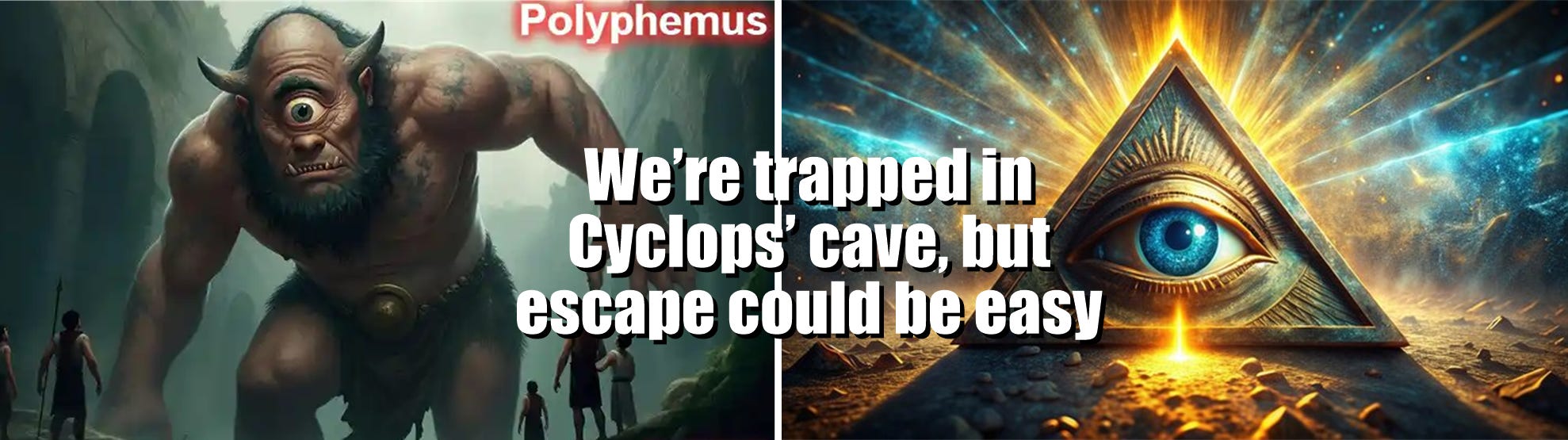
We are trapped in Cyclop’s cave, but escape could be easy...
We are trapped in Cyclop’s cave, but escape could be easy...
A Michigan nurse, one Tawanda Hall missed $900 on her property taxes. The county took her $308,000 home, sold it and confiscated the entire $286,000 in profit. The government took everything she owed, then everything she had: “They took my whole house, my whole family’s livelihood.” Journalist John Stossel pointed out to another case where a county seized a retiree’s home over an $8 debt. People shouldn’t have to fight in court to stop the government from taking their home over eight dollars. And they shouldn’t have to pay property taxes in the first place: it’s almost like you have to pay the government for the privilege of having property.
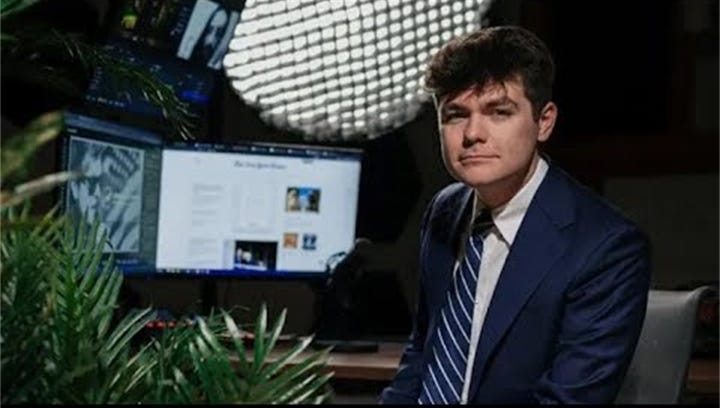
A few months ago, American political commentator Nick Fuentes posted a video message about the U.S. government seizing his funds. Here’s what happened: one day he discovered that he had zero dollars in his checking account. He called his bank and learned that, “your account is under review and we can give you no other information.” Some two weeks later the bank gave him three telephone numbers to call, all belonging to U.S. attorneys working for the the U.S. Department of Justice.
They can take your money. They don’t need a reason
Fuentes learned that he was under investigation and the government simply seized $483,592.78 from his bank account. His statement is worth pondering:
I called my lawyer and asked him, can I get my money back, is there anything I can do, do they have to release it? ... And the response is, basically, they can take your money, they don’t need a reason, and they can keep it as long as they want and they don’t have to give it back. ... If you find yourself the subject of an FBI investigation, if you find yourself a target of the federal government, there is really nothing more that you can do. ...
All of that concentrated power that’s been built up in Washington DC is being rotated and turned inwardly and the kind of shock-and-awe that we saw in 2003 or 2001, Patriot Act, panopticon surveillance state, that’s now being wielded by politicians, bureaucrats, connected wealthy elite people and they can now wield that and utilize that against people with people of American citizenship.
People that have done nothing wrong, are not criminals, are not a threat to society, but people that are merely an inconvenience or a problem to powerful people. And so at that point, that’s the total end of a free society. That’s the end of your rights, that’s the end of your property and it could be the end of your life.
Fuentes wasn’t accused of any crime, let alone convicted. Yet, nearly half a million dollars of his money was effectively confiscated by the Federal government.
Do we have the right to be wrong?
Some may shrug and dismiss this case because Nick Fuentes is a terrible person. He describes himself as a traditional Catholic and “America First” patriot, though critics from organizations like the Southern Poverty Law Center (SPLC) and Anti-Defamation League (ADL) label him a white supremacist and extremist. That’s good enough for some people to think that Fuentes deserved the trouble he’s in. The implication of that position is that he deserved it because he violated “our values” and norms. In other words: he failed to conform.
But this position is a contradiction of itself: part of “our values” and norms is that our property rights should be are sacrosanct. At the very least, that’s how most people in the west understand the social contract between themselves and their governments. The government can’t just steal your property because they decided that you’re a bad person, that your political views are wrong, that you are a racist, an antisemite, a homophobe, a transphobe, an antivaxxer or a climate denier. We should have the right to be wrong, shouldn’t we?
Your property rights are null and void
Of course, Fuentes isn’t the only victim of such government overreach. The number of cases probably count in thousands across Western jurisdictions. Another political activist in the U.S., Donald Trump’s friend Roger Stone also had his accounts frozen and balances seized. So did his attorney Rudy Giuliani. In the UK, journalist Graham Phillips also had his property confiscated because the government wasn’t happy about his reporting from the war in Ukraine.
For similarly arbitrary reasons, last December the Council of European Union (CEU) sanctioned a group of individuals including the former Swiss intelligence officer Colonel Jacques Baud, French journalist Xavier Moreau and political activist Nathalie Yamb. They were only the most famous ones of over 2,000 individuals sanctioned by the CEU since 2022. The immediate effect of being sanctioned is that such individuals’ bank accounts become frozen and from one day to the next they can no longer receive money, make purchases or pay their bills.
It would seem that in some way, our social contracts have been amended and the rule of law has been replaced with an arbitrary rule by a bureaucratic blob. If the blob can punish people like Nick Fuentes, Colonel Jacques Baud, or Xavier Moreau, none of whom have been accused of breaking any laws, they can do the same to anyone else and just like that, their property rights become null and void.
The disturbing implication of this is that all of our property rights are null and void: we only enjoy them, conditionally, with the kind indulgence of the blob, which can revoke them at any time. They don’t need a reason.
The source of risk and the remedy
It is important to recognize one obvious element to all these cases: the sanctioned persons had their bank accounts frozen. Our bank balances are the source of our vulnerability and risk. Cash or other liquid assets held outside the banks can’t be seized so easily. To defend our rights, it would seem that we have two choices: (1) to comply, conform and obey, or (2) to remove as much money as possible from the banks.
Being an obedient, compliant citizen may seem safe in the short term. However, this is exactly the gift that the blob demands of us, which enables it to devour the disobedient and the non-compliant one by one. Obedience only wins us the privilege of being devoured later. This is reminiscent of Homer’s Odyssey where Odysseus and his men find themselves trapped in Polyphemus’ (Cyclop’s) cave.
Cyclops is portrayed as a one-eyed savage who ignores the gods and civilized norms. As Cyclops begins to devour his men, Odysseus distracts the monster by offering him wine. Pleased, the intoxicated Cyclops rewards Odysseus with a promise to devour him last.
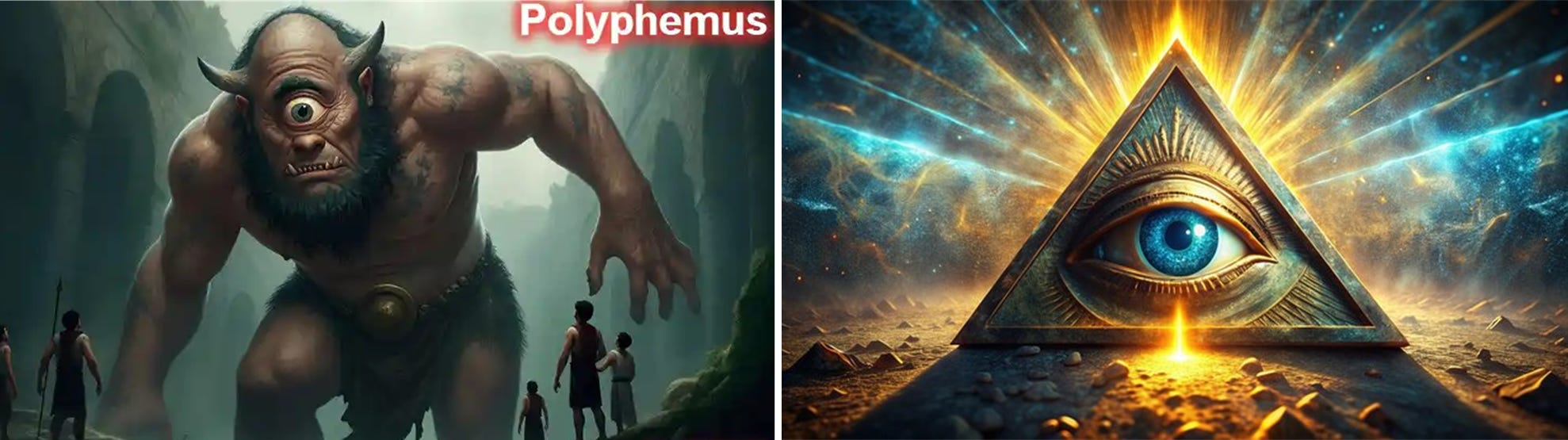
Like Odysseus and his men, we are also trapped in one-eyed monster’s cave. But we are trapped there by our own consent and escaping that cave could be as easy as withdrawing our consent. For an individual or a household, the first step should be to withdraw as much money as possible from the banking system and convert it into assets that we can control ourselves.
Sure, there’s always the risk that you might lose your money or that criminals might take it away from you. But that risk isn’t absent if you play by the rules and keep your money in a bank. It’s not a choice between criminals lurking out there and our “sacrosanct” property rights guaranteed by the modern one-eyed monster. Rather, it is a choice between two different classes of criminals, and the ordinary street thugs are far less dangerous than the ones running our banks.
Make black markets great again
The next step should be to transact as much business as possible with small and medium sized, family-owned businesses, preferably in grey and black markets which are emerging or will emerge as a reaction to the blob’s abuse of our social contract. This will have its limitations, but should also be emancipating in other ways. Wherever the ruling establishment imposes onerous restrictions on people and businesses, and resorts to abuse and illegal means to enforce such restrictions, people will develop alternatives.
Such alternatives come with their own risks and this is inevitable. The authorities will try to squash black markets. They’ll “devour” some of its participants and make examples of them to discourage and intimidate others. But ultimately, repression tends to dissipate and lose against the mass of people voting with their feet and wallets. In countries like Argentina and Venezuela, nearly half of the GDP is transacted in black markets. This is not because their governments allow it, but because they can’t control it.
Alternative systems will prove far less complicated than the control matrix that the one-eyed monster is scrambling to build all around us. In any case, it doesn’t seem that we have any choice anymore, unless we’re content with the dubious prize that we be among the last to be devoured.
Source: Alex Krainer's Substack


Comments
Post a Comment