From Bestiality to Beatification: How Depravity Is Sanitised
From Bestiality to Beatification: How Depravity Is Sanitised
Virtue-Signalling the Vile
Thoughts from the Shire
One of my first ever Substack articles was titled Kink covereth a multitude of sin, it was three years ago, and had four recipients. It was written in response to a moment of televised absurdity, when a man stripped naked on prime-time television and played the piano with his genitals, only to be lauded as “stunning and brave” rather than treated as any other man exposing himself in public would be.

The point then was simple: what would be unacceptable, indecent, and arrestable for an ordinary (non queer/kink) bloke suddenly became art, once it was wrapped in the language of kink and transsexual identity.
That was 3 years ago, however this week I saw another story, even more depraved and disturbing.
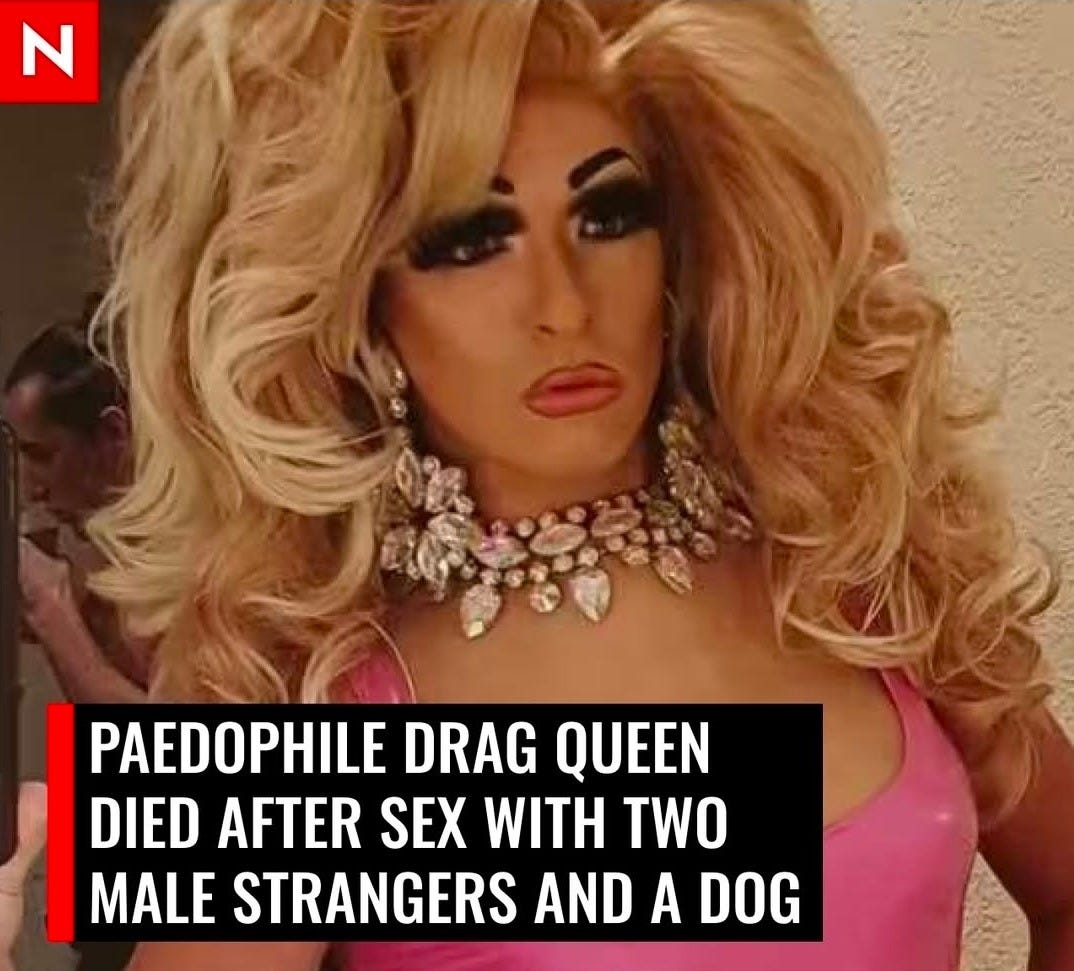
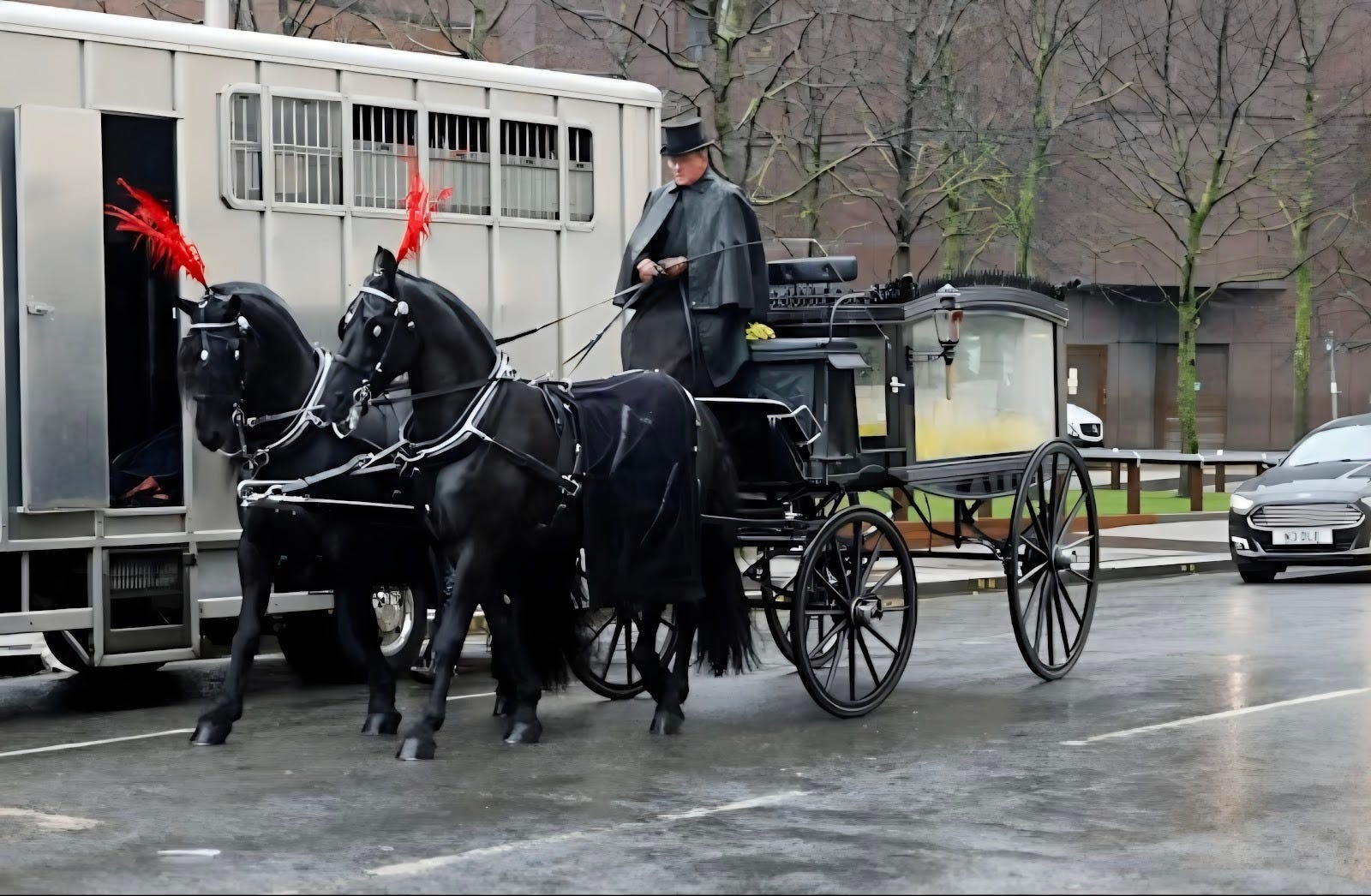
In January 2023, a well-known drag queen in Cardiff was found dead in a city-centre alleyway after a night out. The name was Darren Haydn Meah-Moore. The framing around him arrived instantly. Candles appeared, vigils were organised. Roads were later closed for a horse-drawn funeral procession. Statements spoke of “community”, “shock”, and “safety”. The story was presented as a symbolic wound, a civic moment of mourning.
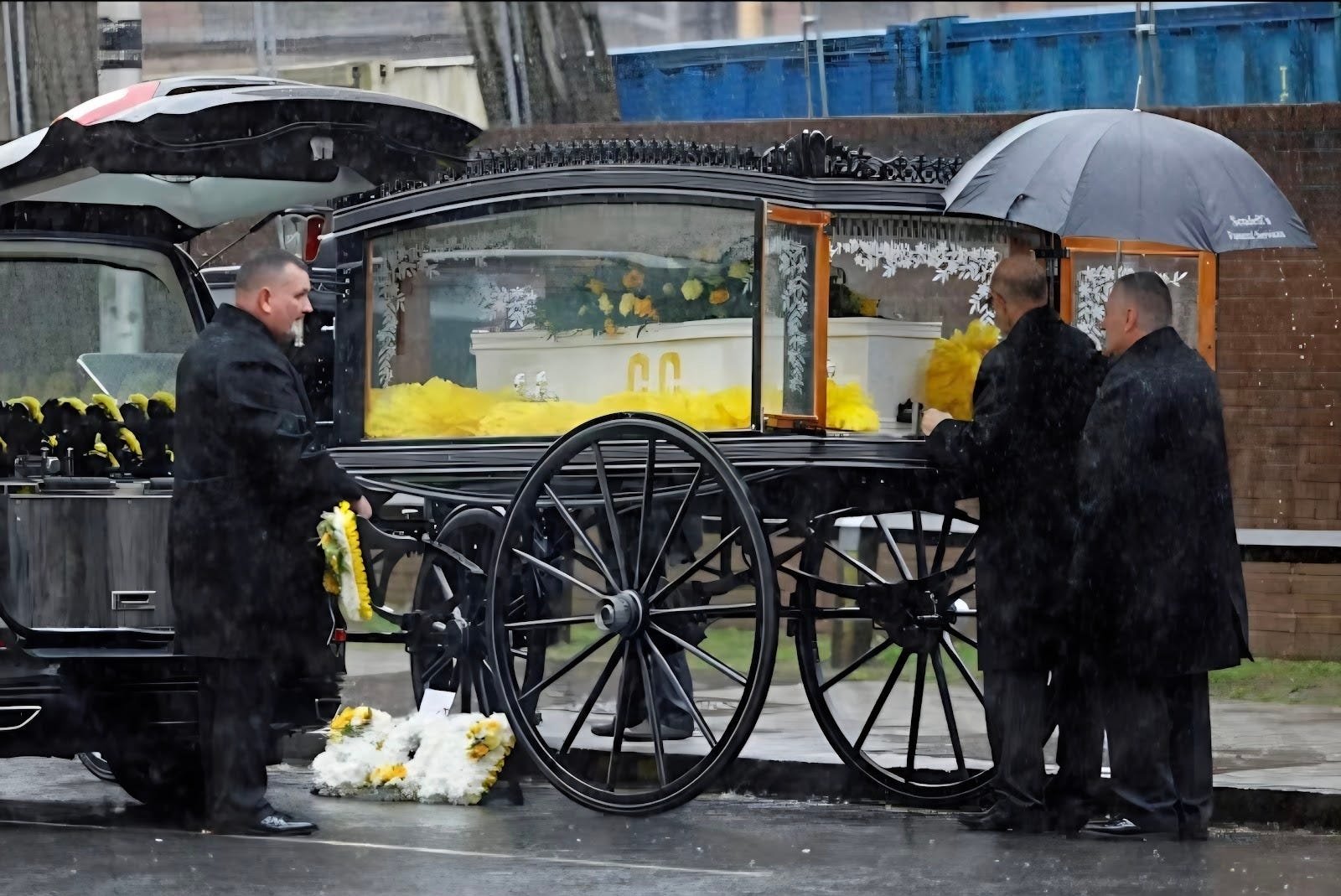
Before the facts were known, the ritual was performed.
The inquest into this death later revealed a far messier, uglier reality. His final hours involved alcohol, casual sex with at least two men, and disturbing evidence of sexual activity in with a dog, yeah you read that right, a dog. Forensic tests found both human and non-human semen, with DNA matching a dog owned by a man he ‘met’ that night. The coroner rejected the claim that the dog “spontaneously” joined in, saying human facilitation would have been likely, but could not determine exactly how it occurred or whether it caused the death. The official cause of death was recorded cautiously as sudden death in a man with asthma who had consumed alcohol, in temporal association with sexual activity.
None of this sat easily with the mood music that had already been set. Early coverage leaned heavily into the language of communal grief. Family tributes described him as “a loving husband… the life and soul wherever he went”, “right at the heart of Cardiff’s gay community”. Police statements reached for boilerplate slogans about “celebrating and protecting equality and diversity”. A fundraising page (that’s right a fund raising page for this degenerate) praised his “larger-than-life character and charisma”. All of this was circulated smoothly, reverently, without friction. Private grief was laundered into public sanctity.
You see today, any sort of judgement (at least when sexual degeneracy is concerned) is now treated as indecent. We are told to emote, not to assess, to light candles, not to ask what kind of life was actually lived. To treat every sordid end as a moral symbol, rather than as what it is: a sordid end. The modern ritual of grief is not about truth, it is about optics, and pushing the narrative, Kink and queerness immortalised for the angels they truly are.
The story so far is bad enough, but it gets a lot worse, for Moore was not merely a “well-known performer”. In 1999, Meah-Moore was convicted on four counts of raping a boy under sixteen. Twelve years later, he breached a sex offender order and received a ‘community sentence’ These are not mere footnotes, they are not “complexities”. They are defining facts about the moral character of the life now being wrapped in civic sentimentality, and celebrated. Yet in the early public narrative, these realities were backgrounded while the candles and sentimental statements did the work of moral softening.
The message is unmistakable, certain ‘identities’ now come pre-wrapped in moral insulation. Once a story can be placed inside that insulation, ordinary standards of judgement are suspended. The ugliness of the facts becomes awkward, the past crimes become inconvenient. The final degradation becomes something to be spoken about in hushed tones, if at all. The audience is gently nudged towards the correct feelings, and away from the correct conclusions.
A rational mind can hold two truths at once: that family and friends grieve, and that a life marked by abuse and squalor does not deserve public beatification. What we practise now is a thinner, more performative thing. We curate grief, we ritualise sentiment. We treat the death of anyone who fits the right cultural template as a moment for collective absolution, regardless of what their life actually consisted of.
The effect is corrosive, people see the gap between the official story and the facts that later emerge. We see candles and vigils laid down before the truth is known. We see criminal histories quietly set aside so that a cleaner narrative can be maintained.
There is a line from a song that keeps ringing in my ears: “if you tolerate this, your children will be next” A culture that trains itself to tolerate degradation, to sentimentalise it, to ritualise it, and to shield it from judgement, does not become kinder. It becomes confused, it loses the ability to draw distinct lines of judgement between right and wrong. And when a society loses the habit of drawing lines around what is acceptable, the costs are never borne by the people being ritualistically mourned. They are borne by those who grow up in the fog that follows, and thus it is little wonder kids these days are so confused, not knowing whether they are blown up or stuffed.
From bestiality to beatification, is an accurate description of the journey this story was forced to make by a culture that prefers rituals of compassion to the hard work of moral clarity. Modern Britain is not collapsing because people are too judgemental, it is collapsing because we are terrified to judge at all.
Until this sort of degeneracy is clearly called out instead of celebrated, then we deserve whatever fire, and brimstone that will inevitably fall.
Source: Thoughts From The Shire


Comments
Post a Comment