ZIM's Cold War on our culture, Part I
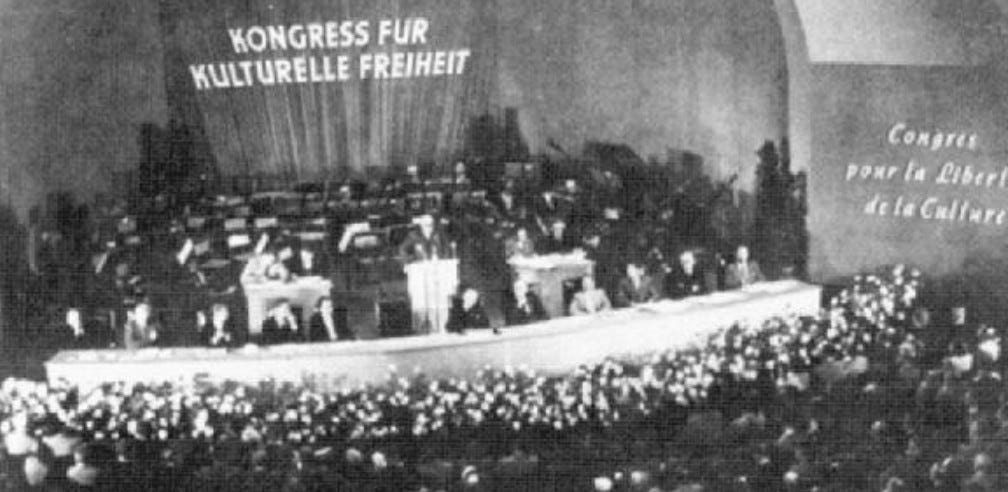
I have written before about the “binary bounce” ploy used by the zio-satanic imperialist mafia, ZIM, to control and manipulate individuals and societies. [1]
In the same way that it promoted fascism [2] and then used anti-fascism for its own purposes, ZIM created the totalitarian USSR and then immediately manufactured an anti-communist front organisation in the USA, as I explained in The False Red Flag. [3]
This process, of course, greatly accelerated after the end of the Second World War, with the period of binary-based control known as the Cold War.
In the 1980s, when I was a young man, most people were still stuck in the delusion that there were only two possible kinds of society – “capitalist” and “communist”. If you didn’t like our “Western” society, you were liable to be told to “go and live in Russia”.
Only a small and demonised “fringe” of anarchists, dissident leftists and “third positionists” dared to oppose both of these “rival” systems and suggest that they amounted essentially to the same thing.
I recently came across some fascinating and detailed information about ZIM’s Cold War “anti-communist” initiative in Frances Stonor Saunders’ Who Paid the Piper? The CIA and the Cultural Cold War, which also provided me with some useful insights into the Ford Foundation. [4]
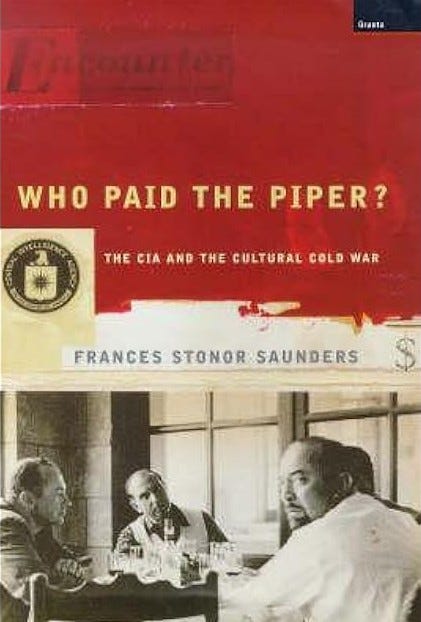
The book was published in 2000 – long enough after the end of the binary set-up to enjoy some perspective on the period and yet close enough to it that the author was able to personally interview a number of the individuals involved.
Drawing extensively on public and private archives, she delves deeply into the massive US-based campaign to influence public attitudes in Europe from the 1940s onwards.
The ostensible reason for this was that the USA’s binary twin, the USSR, was doing the same with its pro-communist cultural agenda.
A blitz of propaganda targeting western Europeans – presented as countering Soviet influence – could therefore plausibly be framed as being in the American national interest (and thus chargeable to the US taxpayer!) and also in the interests of the freedom and democracy which were so blatantly absent in the USSR.
Deceit was at the core of the project.
A National Security Council directive in 1950 described the “most effective kind of propaganda” as being the kind where “the subject moves in the direction you desire for reasons which he believes to be his own”. [5]
Writes Saunders: “A central feature of this programme was to advance the claim that it did not exist.
“It was managed, in great secrecy, by America’s espionage arm, the Central Intelligence Agency. The centrepiece of this covert campaign was the Congress for Cultural Freedom, run by CIA agent Michael Josselson from 1950 till 1967”. [6]
The operation was a massive one, as conveyed by Saunders’ description of one CIA front set up in 1949.
She writes: “Proliferating committees and sub-committees, boards of directors and trustees, the National Committee for a Free Europe boasted a membership which read like Who’s Who in America. Interconnectedness was vital… There were businessmen and lawyers, diplomats and Marshall Plan administrators, advertising executives and media moguls, film directors and journalists, trades unionists and, of course, CIA agents – plenty of them”. [7]
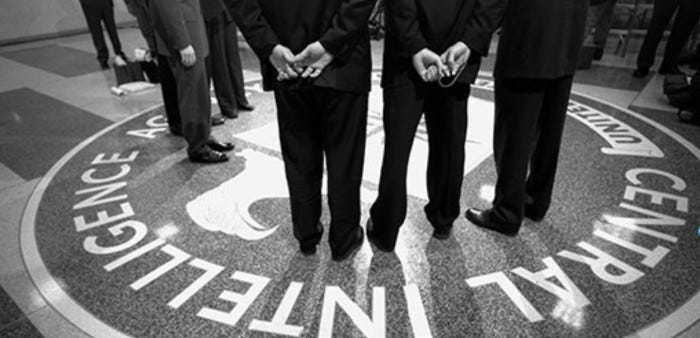
The CIA’s involvement in the likes of the Congress for Cultural Freedom and Encounter magazine is no secret today.
In Saunders’ book, the question of who was “witting” – in the know – or “unwitting”, at the time, revolves around this question.
But bubbling under the surface of her revelations is another layer of deceit that she occasionally touches on – namely that the goal of the project was not really to oppose communism at all, but to advance a very specific agenda, ZIM’s agenda, whose nature will become clearer as we proceed.
ZIM’s “fighting communism” cover story was cartoonish in its simplicity.
Saunders refers to “the noisy exploits of Captain America, the Marvel comic hero who had switched so easily from battling Nazis to exposing Communists and who now warned: ‘Beware, commies, spies, traitors, and foreign agents! Captain America, with all loyal, free men behind him, is looking for you, ready to fight until the last one of you is exposed for the yellow scum that you are!'” [8]
The same rhetoric was used to motivate recruits to the CIA, created in 1947. One officer said their mission “to save western freedom from Communist darkness” was initially conducted in “the atmosphere of an order of Knights Templars”. [9]
There are echoes of contemporary propaganda urging support for Israel in the claim made by Partisan Review in 1952 that “now America has become the protector of Western civilization”. [10]
It does not say much for the wisdom of a supposedly leading British intellectual like Malcolm Muggeridge that he adopted the same attitude, declaring that “in one of the most terrible conflicts in human history, I have chosen my side”. [11]
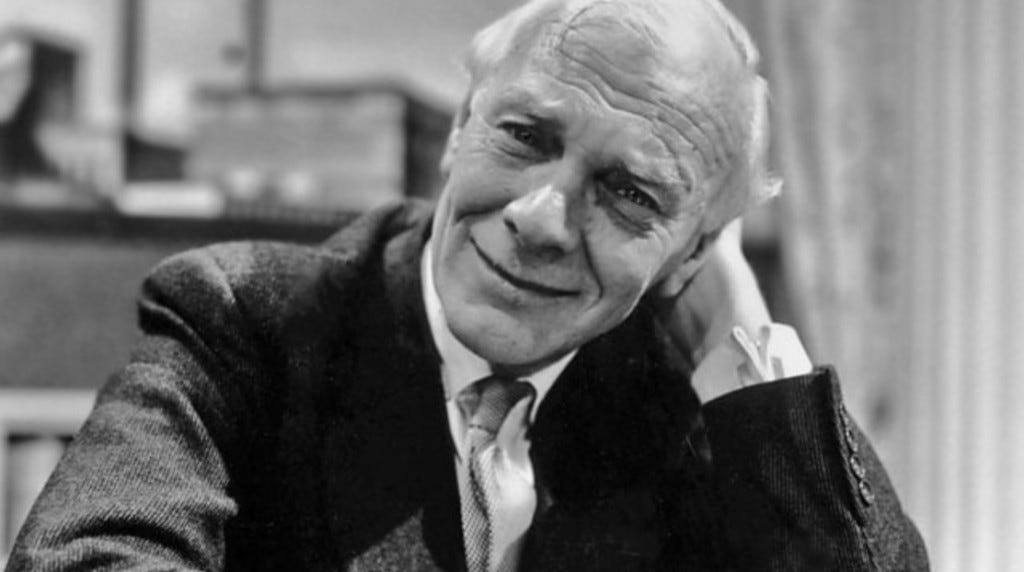
Muggeridge was heavily involved in the project and clearly aware that the CIA was behind it – he was duped, perhaps, on the question of the ultimate intent rather than on the involvement of the secret state.
But others seem to have been misled – by their entirely understandable opposition to communist despotism – into acting as useful idiots for the CIA and those behind it.
Referring to one such group of Americans, novelist Richard Elman said: “They were all Christians, in a non-sectarian, T.S. Eliot, kind of way. They believed in a higher authority, a higher truth which sanctioned their anti-Communist, anti-atheist crusade”. [12]
I was sorry to see that three writers whose work I greatly admire – Herbert Read, Mircea Eliade and Karl Jaspers – fell for the scam. [13]
George Orwell’s widow Sonia was also persuaded to play along, although in her case the decisive factor in signing over the film rights to Animal Farm was apparently a promise that she would able to meet her film star hero Clark Gable! [14]
The “anti-communist” mafia, inevitably, destroyed the sense of Orwell’s tale, removing the crucial moment at the end when “Communist pigs and Capitalist man are indistinguishable, merging into a common pool of rottenness”, as Saunders puts it. [15]
She explains that they later also changed the ending of 1984 and cast the story as being specifically anti-communist, rather than as “a protest against all lies, against all tricks played by governments”. [16]
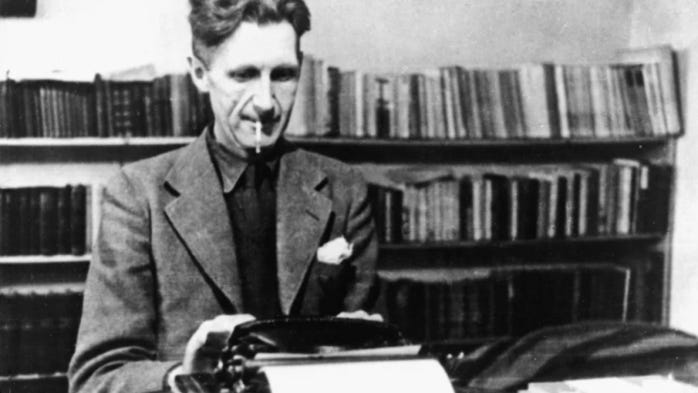
Orwell (pictured) would certainly not have wanted his work to have been used by ZIM. Saunders points out that he was “fiercely anti-Zionist” and had warned in 1949, a year before his death: “The Zionist Jews everywhere hate us and regard Britain as the enemy, even more than Germany”. [17]
One or two of those involved in the “anti-communist” deception later expressed indignation at having been tricked.
British liberal Stephen Spender, for instance, resigned as co-editor of Encounter in 1967 when he knew for sure of the CIA backing. [18]
His widow Natasha told Saunders: “Stephen had all the right credentials to be chosen as a front: he was one of the great recanters [of Communism] and he was eminently bamboozable, because he was so innocent.
“His father was bamboozled by Lloyd George. They’re a very trusting family; it never occurs to them to think that people are telling them lies”. [19]
She recalled listening in on a phone conversation in which her husband confronted Muggeridge, who had told him his salary came from The Daily Telegraph and from film director Alexander Korda.
Muggeridge replied: “So I did, dear boy, but you can’t bet your bottom dollar where it really came from”. [20]
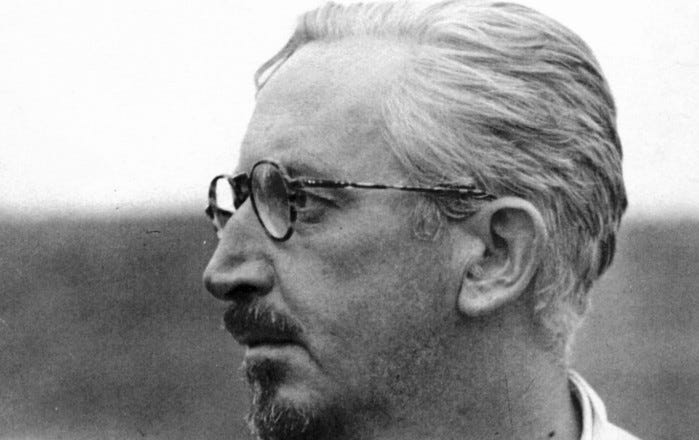
Spender’s colleague Dwight Macdonald (pictured) wrote to Josselson in 1967: “Do you think I would have gone on the Encounter payroll in 1956-7 had I known there was secret US Government money behind it?… I think I’ve been played for a sucker”. [21]
Some of those involved no doubt chose not to see anything suspicious, not least because of the large sums they were paid.
They were nourished by what Clement Greenberg approvingly called “an umbilical cord of gold”, [22] with Saunders adding: “Many intellectuals were unable to resist a ride on the gravy-train”. [23]
There were other rewards as well. “When visiting intellectuals came to New York, they were invited to great parties; there was very expensive food all round, and servants, and God knows what else”, notes Jason Epstein, unintentionally reminding us of the activities of his notorious namesake, Jeffrey. [24]
So if the aim of all this activity was not really to combat the threat of communism, what was behind it?
I think we can first identify a very pragmatic purpose – the seriousness of the identified menace was used to enable and justify behaviour by state agents that would not have otherwise been considered acceptable by Americans outside of a real war.
Saunders says that recruitment to the CIA of agents from the wartime OSS ensured a continuity of a certain attitude, with their “initiation into illegality and unorthodoxy” proving a “rich resource”. [25]
She remarks: “The founding of the CIA marked a dramatic overhaul of the traditional paradigms of American politics.
“The terms under which the Agency was established institutionalized the concepts of ‘the necessary lie’ and ‘plausible deniability’ as legitimate peacetime strategies, and in the long run produced an invisible layer of government whose potential for abuse, domestically and abroad, was uninhibited by any sense of accountability”. [26]
Saunders describes documents drafted in 1947 and 1948 which “piloted American intelligence into the choppy waters of secret political warfare for decades to come”. [27]
The nastiness of ZIM’s agents in Moscow was used to bounce its US puppets into using the same vile methods.
Senator William Fulbright wrote: “Our leaders became liberated from the normal rules of evidence and inference when it came to dealing with Communism. After all, who ever heard of giving the Devil a fair shake?” [28]
National Security Council Directive 10/2, of 1948, used the excuse of “vicious” Soviet activities to explicitly sanction American “propaganda, economic warfare, preventative direct action including sabotage, anti-sabotage, demolition and evacuation measures; subversion against hostile states including assistance to underground resistance movements, guerrillas and refugee liberation groups”. [29]
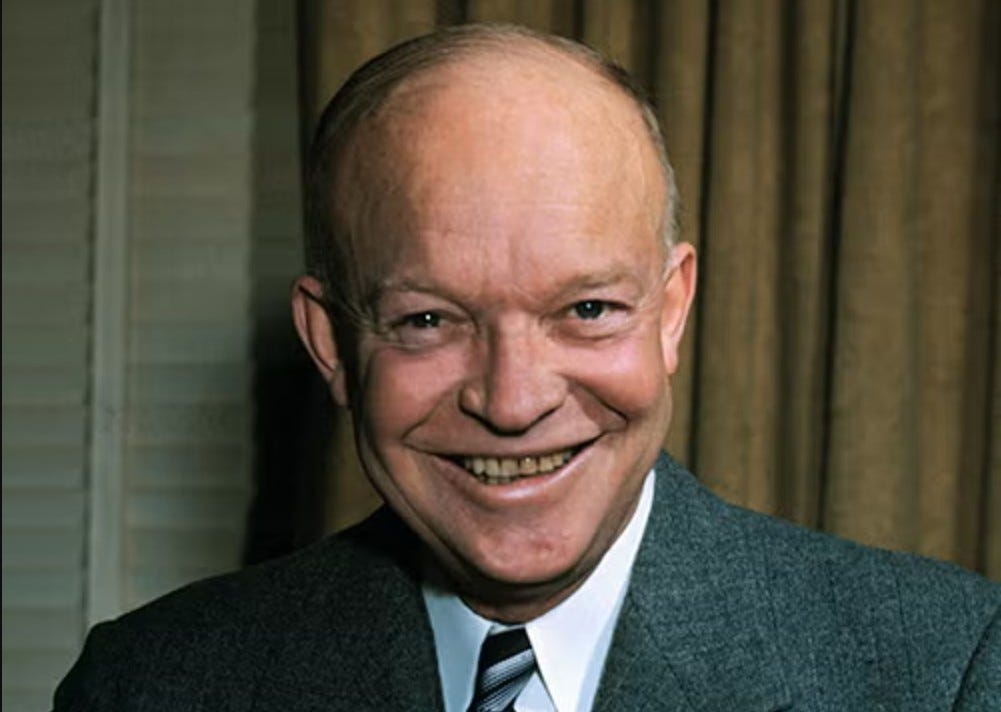
A 1954 report to president Dwight Eisenhower (pictured) set out, in no uncertain terms, the need for “an aggressive covert psychological, political and paramilitary organization more effective, more unique, and if necessary, more ruthless than that employed by the enemy… There are no rules in such a game. Hitherto acceptable norms of human conduct do not apply”. [30]
There is a certain irony in its warning that “we are facing an implacable enemy whose avowed objective is world domination by whatever means and at whatever cost”! [31]
Another aim of the overall project was to neutralise the non-communist left – which at the time seemed to represent a real threat to ZIM’s industrial-capitalist system – both in the USA and in western Europe.
The most obvious “bounce” technique was to smear left-wingers through association with the totalitarian communism that ZIM itself had created – in the same way that the idea of political, economic and cultural self-determination had been discredited by association with the totalitarian “national socialist” regime set up by ZIM in Germany.
Those left-wingers who sought to distance themselves from Soviet-style communism could be steered towards active support for the “alternative” American system.
But there were other approaches as well – the International Organizations Division of the CIA aimed to “manage” the non-communist left.
Saunders writes: “The purpose of supporting leftist groups was not to destroy or even dominate, but rather to maintain a discreet proximity to and monitor the thinking of such groups; to provide them with a mouthpiece so they could blow off steam; and, in extremis, to exercise a final veto on their publicity and possibly their actions, if they ever got too ‘radical'”. [32]
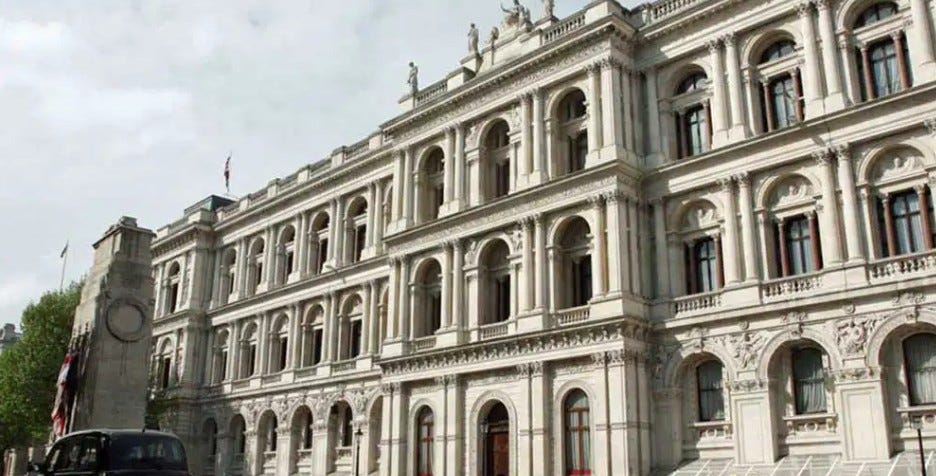
In the UK, the Information Research Department cosied up to left-wingers “first, to acquire a proximity to ‘progressive’ groups in order to monitor their activities; secondly, to dilute the impact of these groups by achieving influence from within, or by drawing members into a parallel – and subtly less radical – forum”. [33]
Arthur Koestler, a key figure behind this activity, launched a 1948 lecture tour of the USA and “exhorted American intellectuals to abandon their juvenile radicalism and engage themselves in a mature enterprise of cooperation with the power structure”. [34]
He declared: “It is time for the American radical to grow up”. [35]
In 1952 the Ford Foundation set up an Intercultural Publications programme under James Laughlin.
With an initial grant of $500,000, Laughlin launched the magazine Perspectives, which was targeted at the non-communist left in France, Britain, Italy and Germany – and published in all the relevant languages.
He stressed that its aim was not “so much to defeat the leftist intellectuals in dialectical combat as to lure them away from their positions by aesthetic and rational persuasion”. [36]
The CIA strategy “to create or support ‘parallel’ organizations which provided an alternative to radicalism over which they had no control” [37] was rolled out in several countries.
In France, the Congress for Cultural Freedom set up a magazine, Preuves, specifically to compete with the ideological influence of Jean-Paul Sartre’s review Les Temps Modernes.
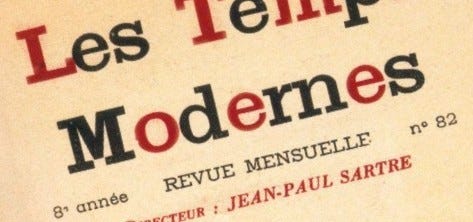
Historian Carol Brightman comments: “Who was the real antagonist? It wasn’t the Soviet Union or Moscow. What they were really obsessed with was Sartre and De Beauvoir. That was ‘the other side'”. [38]
A CCF insider confirmed: “The Left Bank intellectuals were the target. Or, perhaps, the people who listened to them were the target”. [39]
There is an obvious connection here to the take-over of the left-wing newspaper Libération, founded by Sartre, which I described in a previous essay – the final moment of triumph over the French left being the announcement that it had passed officially into the hands of the Rothschilds. [40]
Meanwhile, across Europe, the CIA was dishing out grants to a network of student and youth networks who “were at the cutting edge of a campaign of propaganda and penetration designed to draw the sting from left-wing political movements”. [41]
The task of one notorious agent, Jay Lovestone, was “to infiltrate European trade unions, weed out dubious elements, and promote the rise of leaders acceptable to Washington”, records Saunders. [42]
In Britain, the Labour Party was heavily compromised. In 1955 senior figure Anthony Crosland, whose influential book The Future of Socialism has been said to read “like a blueprint for an Americanized Britain” – [43] was even employed by the CCF to help plan its international seminars. [44]
The CIA/ZIM also poured money into the Fabian Society’s journal Venture and had close links to senior Labour politician Denis Healey. [45]

Hugh Gaitskell (pictured), party leader from 1955 to 1963, was a “key figure” in the shady network and when his successor Harold Wilson won the 1964 general election, Josselson of the CIA wrote: “We are all pleased to have so many of our friends in the new government”. [46]
Many of these “friends” were contributors to the CIA’s Encounter magazine, which was now brought “much closer to the political agenda of its hidden angels”, says Saunders. [47]
British philosopher Richard Wollheim judged: “It represented a very serious invasion of British cultural life – and it bore responsibility for the complacency of many British intellectuals and the Labour Party over the Vietnam War”. [48]
As elsewhere in Europe, the voice of the people, which should have been expressed organically through native writers and political leaders, was stifled and replaced by a manufactured, corrupted and foreign-controlled cultural “elite”.
The aim was to prevent any authentic opposition to the global zio-imperialist industrial system from arising and flourishing.
And, of course, the advancement of that system’s domination was the underlying purpose of the whole Cold War circus.
Central to this was an assault on the indigenous European culture and value systems which risked getting in the way of the push for centralised global control.
I used to regard this process as the “Americanisation” of our societies, but now I can see that the USA was merely the tool with which it was imposed on Europe.

What we are really looking at is the advance of ZIM’s culture-crushing, freedom-denying industrial slavery system, variously labelled “progress” or “development” or “planning” or “modernisation”. [49]
This reality was evoked by one of Encounter’s editorial team, the aforementioned Dwight Macdonald – a bad fit for the CIA/ZIM front who was regarded with suspicion by his boss Irving Kristol as “an anarchist and a pacifist”. [50]
He wrote a piece, unsurprisingly rejected by Encounter, in which, Saunders explains, he denounced America’s “rampant materialism unmatched by any spiritual growth, violent crime, the unhindered advance of advertising billboards…” [51]
And he declared: “When one hears Europeans complaining about the Americanisation of Europe, one wishes they could spend a few weeks over here and get a load of the real thing”. [52]
One of the weapons deployed in ZIM’s cultural, economic and political occupation was the promotion of so-called “modern” tastes – in other words those that reflected and celebrated its odious system.
For instance, the CIA-funded Masterpieces of the Twentieth Century exhibition in Paris in 1952 promoted “the validity of the creative effort of our century”. [53]
It received the full backing of “left-wing” paper Franc-Tireur – once regarded as dangerously “anti-American” but now safely edited by Georges Altman, a member of the CCF steering committee. [54]
Saunders explains that the modern style of art known as Abstract Expressionism was regarded by those promoting it as reflecting the American dream – it was “free enterprise painting” as Nelson Rockefeller put it, a visual representation of US “democracy”. [55]
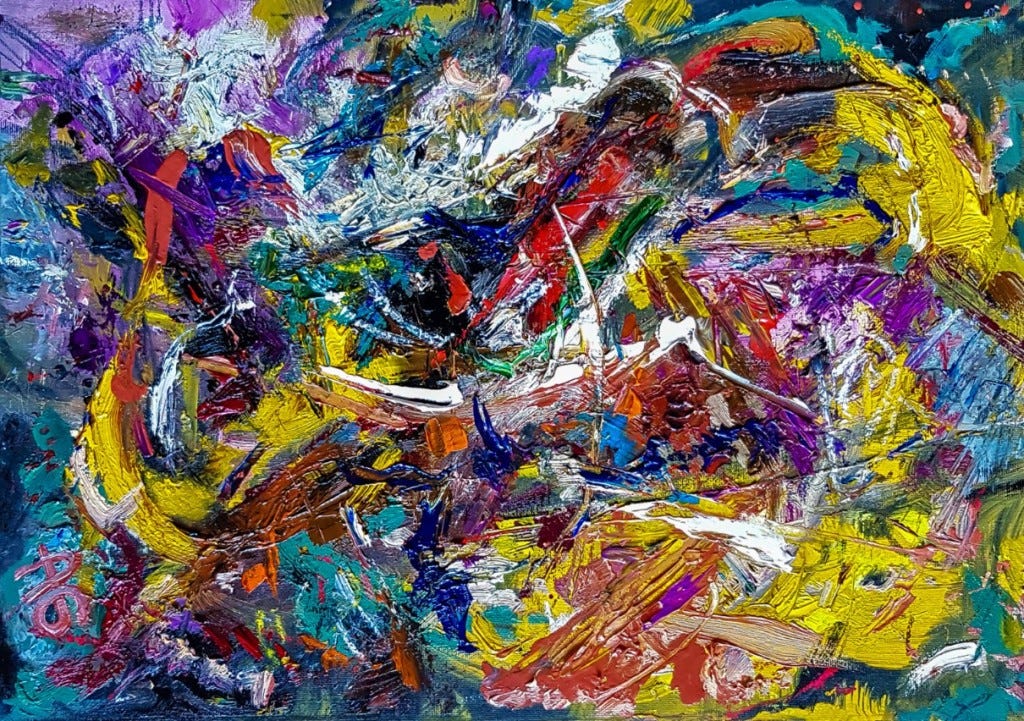
However, profoundly undemocratic methods had to be used to impose it on the public.
CIA man Tom Braden recalled: “We had a lot of trouble with Congressman Dondero. He couldn’t stand modern art. He thought it was a travesty, he thought it was sinful, he thought it was ugly.
“He put up a heck of a fight about painting, and he made it very difficult to get Congress to go along with some of the things that we wanted to do – send art abroad, send symphonies abroad, publish magazines abroad, whatever.
“That’s one of the reasons it had to be done covertly; it had to be covert because it would have been turned down if it had been put to a vote in a democracy”. [56]
Saunders details the incredibly close connections between New York’s Museum of Modern Art (MoMA), Rockefeller and the CIA. “On and on go the names, on and on go the links”, she sighs. [57]
She says the museum manufactured a history for Abstract Expressionism: “Ordered and systematic, this history reduced what had once been provocative and strange to an academic formula, a received mannerism, an art officiel.
“Thus installed within the canon, the freest form of art now lacked freedom. More and more painters produced more and more paintings which got bigger and bigger and emptier and emptier. It was this very stylistic conformity, prescribed by MoMA and the broader social contract of which it was a part, that brought Abstract Expressionism to the verge of kitsch”. [58]
And this art-denying new form of art was intended to perform a particular socio-political function.
As Eva Cockcroft has written: “Links between cultural cold war politics and the success of Abstract Expressionism are by no means coincidental…
“They were consciously forged at the time by some of the most influential figures controlling museum policies and advocating enlightened cold war tactics designed to woo European intellectuals”. [59]
When American taxpayers’ money could not be had to fund the sending of this cultural weapon to Europe, Rockefeller was ready to step in and pay for it. [60]
As I have previously shown, [61] Rockefeller networks have long been a front for ZIM’s godfathers, the Rothschilds, and it is thus no surprise to learn of the mafia-like tactics associated with the promotion of these cultural (or anti-cultural) products.
John Canaday revealed that, by 1959, “Abstract Expressionism was at the zenith of its popularity, to such an extent that an unknown artist trying to exhibit in New York couldn’t find a gallery unless he was painting in a mode derived from one or another member of the New York School”. [62]
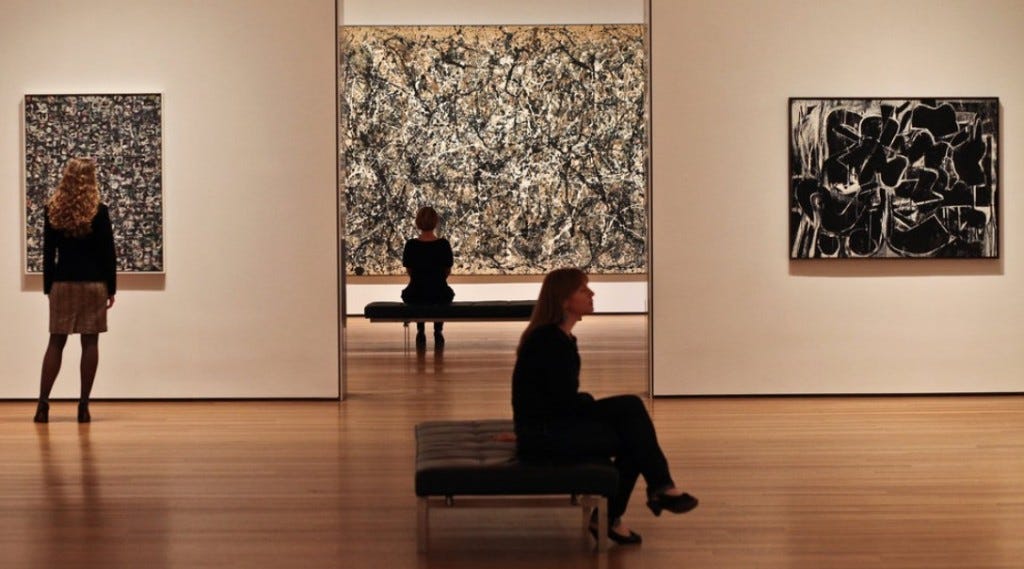
He said critics who “suggested that Abstract Expressionism was abusing its own success and that the whole monopolistic orgy had gone on long enough” could find themselves in a “painful” situation – he revealed that he himself had even received a death threat! [62]
Jason Epstein comments: “It was like the emperor’s clothes. You parade it down the street and you say, ‘this is great art’ and the people along the parade route will agree with you.
“Who’s going to stand up to Clem Greenberg and later to the Rockefellers who were buying it for their bank lobbies and say ‘This stuff is terrible’?”. [63]
And we should not forget, of course, that this whole “modern art” scam was, in the words of Peggy Guggenheim, “an enormous business venture”. [64]
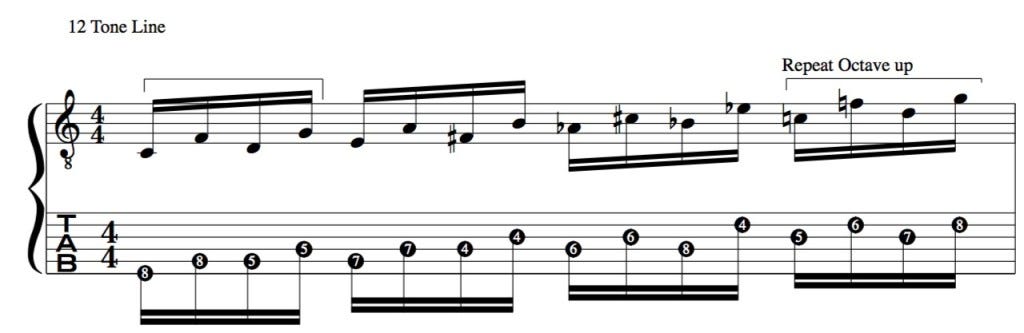
“Modern” music was also heavily promoted by CIA/ZIM, as with the International Conference scheduled for Rome in 1954, organised by CCF “front man” Nicolas Nabokov, [65] a composer and impressario.
Saunders writes: “For Nabokov, there was a clear political message to be imparted by promoting music which announced itself as doing away with natural hierarchies, as a liberation from previous laws about music’s inner logic.
“Later, critics would wonder whether serialism had broken its emancipatory promise, driving music into a modernist cul-de-sac where it sat, restricted and difficult, tyrannized by despotic formulae, and commanding an increasingly specialized audience.
“Towards its ‘squawks’ and ‘thumps’, wrote Susan Sontag, ‘we were deferential – we knew we were supposed to appreciate ugly music'”. [66]
It has been claimed by the New York Times that during the Cold War the CIA was involved in the publication of at least a thousand books – all, of course, designed in some way to influence people’s thinking. [67]
Richard Elman comments: “The CIA’s interest in imaginative literature and its creators and publishers has been depicted by some as misguided benevolence, or even a championing of Western values and human freedoms against the totalitarian mind, but it was also profoundly meant to be an Agency ‘dirty trick’, the means of influencing consciousness, an attempt to ‘preempt’ in Agency lingo”. [68]
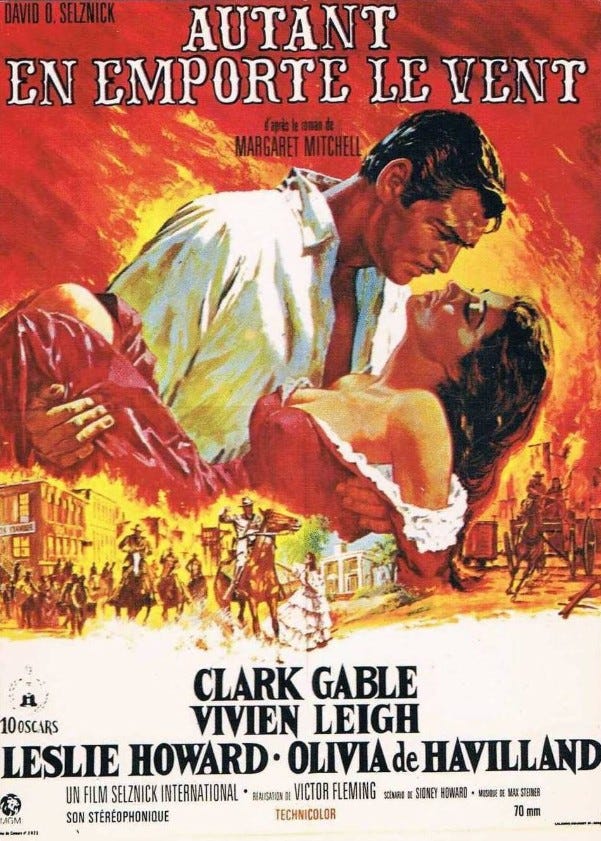
The most visible assault on European culture after the war came in the cinemas, with increased quotas of American films imposed on countries such as France by the small print of successive trade agreements. [69]
These “saturation levels of Hollywood imports” attracted widespread resentment, as people realised they were undermining traditional European outlooks. [70]
As Saunders says: “Movies, like propaganda, trade in fiction, but if this fiction is adroitly manufactured, it will be taken for reality”. [71]
The real agenda behind this cultural and intellectual war on Europe, thinly disguised as anti-communism, occasionally becomes visible through the cracks in the propaganda.
CIA/ZIM’s Julius Fleischmann explained how a $750,000 European tour by the US’s Metropolitan Opera promoted the ideal of the American “melting pot” and thus the associated idea of “some sort of European Federation”. [72]
Indeed, Saunders states that American foreign policy objectives specifically included the promotion of “a united Europe (through membership of NATO and the European Movement)”. [73]
The latter pressure group was “an umbrella organization which covered a range of activities directed at political, military, economic and cultural integration.
“Guided by Winston Churchill, Averell Harriman and Paul-Henri Spaak, the Movement was closely supervised by American intelligence, and funded almost entirely by the CIA through a dummy front called the American Committee on United Europe”. [74]
As I have previously noted, the zio-imperialist Rothschilds were enthusiastic builders of what has been variously called the Common Market, the EEC and the EU.
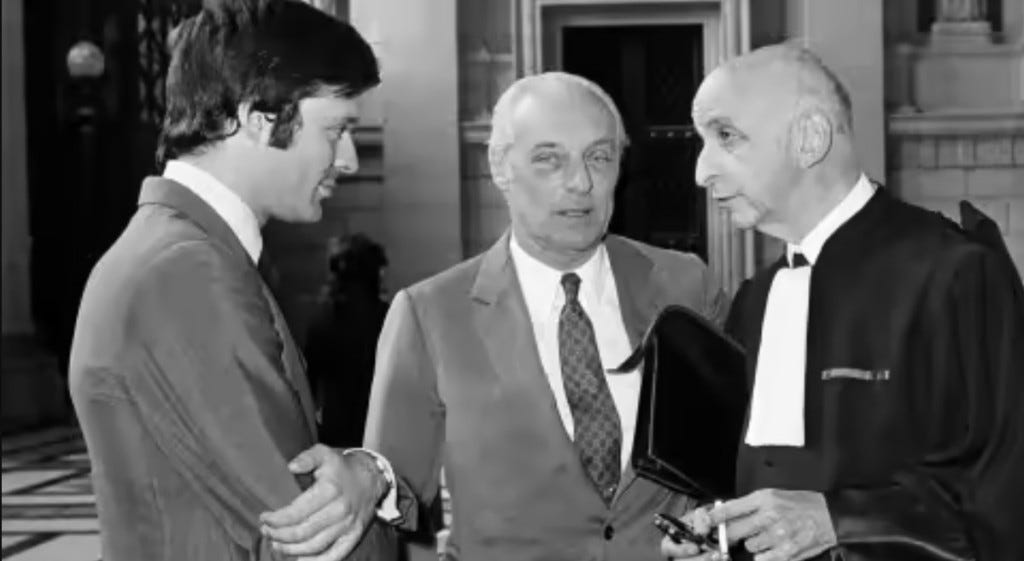
Guy de Rothschild (pictured, centre) became known as “EEC banker Rothschild” [75] and the family was behind the plan for a new transnational currency called the “eurco” (“European Composite Unit”), based on the values of nine major European currencies, the forerunner of the later ecu and now the euro. [76]
A centralised continental bloc was, after all, always going to be a necessary stepping stone towards the long-cherished aim of a ZIM-run world state
Allen Ginsberg wrote of literary conspiracies that “influenced the intellectual tone of the West”. [77]
He added: “Intellectual tone should be revolutionary, or at least Radical, seeking roots of dis-ease and Mechanization and dominance by unnatural monopoly… Instead, we had the worst of Capitalist Imperialism”. [78]
Saunders describes a small group “which ran American foreign policy and shaped legislation at home”.[79]
She writes: “Through think-tanks to foundations, directorates to membership of gentlemen’s clubs, these mandarins were interlocked by their institutional affiliations and by a shared belief in their own superiority”. [80]
“Internationalist, abrasive, competitive, these men had an unshakeable belief in their value system,” she says. “Their vision of a new world order began to take shape”. [81]
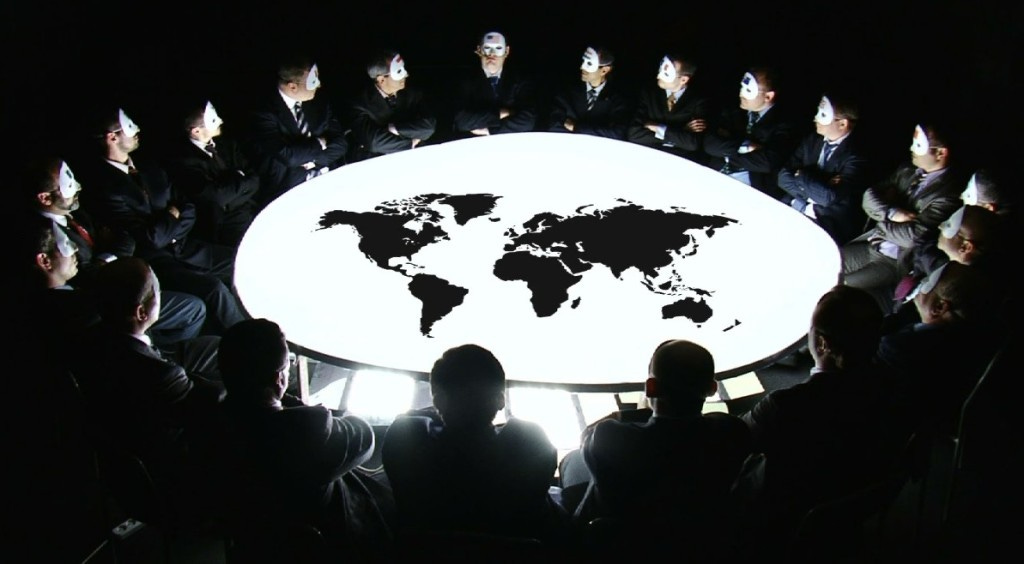
One horrified officer of the Psychological Strategy Board quoted in a memo from a plan issued in 1953 that he warned was “just about as totalitarian as one can get”.
This called for a “systematic and scientific” management of “all fields of human thought… all fields of intellectual interests, from anthropology and artistic creations to sociology and scientific methodology”.
It wanted to create “a machinery” to “break down worldwide doctrinaire thought patterns” that could prove “hostile to American [ZIM] objectives”. [82]
Its aim was to work on the “elites” in every field of thought so as to ensure that everyone ended up conforming to what it called “the philosophy of the planners”. [83]
Melvin Lasky of the CCF wrote with sneering condensation of the need for a “conversion” of backward Europeans to this sterile and authoritarian dogma of obedience to “the science”.
He said: “It would be foolish to expect to wean a primitive savage away from his conviction in mysterious jungle-herbs simply by the dissemination of modern scientific medical information.
“We have not succeeded in combatting the variety of factors – political, psychological, cultural – which work against US foreign policy, and in particular against the success of the Marshall Plan in Europe”. [84]
His comment confirms that the Marshall Plan – which provided a handy “slush fund” for CIA/ZIM activities [85] – aimed not jut to rebuild western Europe after WWII, but to reset it, to turn it into something that could be more easily controlled and exploited by the global “planners”.
But perhaps the clearest expression of the agenda came from President Eisenhower in a 1953 press conference in which he admitted that the US was involved in “psychological warfare… the struggle for the minds and wills of men”. [86]
America’s aim, he said, was to create “a world in which all people shall have opportunity for maximum industrial development”. [87]
In the second half of this essay, I will be taking a closer look at some of the individuals involved in ZIM’s Cold War on our culture.

[1] Paul Cudenec, ‘The old binary bounce routine’, https://winteroak.org.uk/2025/06/13/the-old-binary-bounce-routine/
[2] Paul Cudenec, ‘Adolf Hitler and the zio-imperialist mafia’, https://winteroak.org.uk/2025/05/08/adolf-hitler-and-the-zio-imperialist-mafia/
[3] Paul Cudenec, ‘The false red flag’, Against the Dark Enslaving Empire! A condemnation of the global criminocratic conspiracy (2024), pp. 67-111.
[4] Paul Cudenec, 'The Ford Foundation: a fork-tongued global mafia front', https://winteroak.org.uk/2025/09/01/the-ford-foundation-a-fork-tongued-global-mafia-front/
[5] National Security Council Directive, 10 July 1950, quoted in First Report of the Select Committee to Study Governmental Operations with Respect to Intelligence Agencies (Washington: United States Government Printing Office, 1976), cit. Frances Stonor Saunders, Who Paid the Piper? The CIA and the Cultural Cold War (London: Grant Books, 2000), p 4. All subsequent page references are to this work, unless otherwise stated.
[6] p. 1.
[7] p. 131.
[8] Quoted in Taylor D. Littleton and Maltby Sykes, Advancing American Art: Painting, Politics and Cultural Confrontation (Alabama: University of Alabama Press, 1989), cit. p. 192. Saunders provides no page numbers in her references.
[9] William Colby, Honorable Men: My Life in the CIA (New York: Simon & Schuster, 1978), cit. p. 33.
[10] ‘Our Country and Our Culture’, Partisan Review, May-June 1952, cit. p. 160.
[11] Malcolm Muggeridge, ‘An Anatomy of Neutralism’, Time, 2 November 1953, p. 174.
[12] Richard Elman, interview with Saunders, New York, June 1994, cit. p. 248.
[13] p. 213, pp. 92-93.
[14] pp. 293-294.
[15] p. 295.
[16] p. 296.
[17] George Orwell to Celia Kirwan, 6 April 1949, Information Research Department, Public Records Office, Kew, London, cit. p. 460.
[18] p. 389.
[19] Natasha Spender, telephone interview with Saunders, August 1997, cit. p. 173.
[20] Natasha Spender, interview, cit. p. 384.
[21] Dwight Macdonald to Michael Josselson, 30 March 1967, Congress for Cultural Freedom Papers, Joseph Regenstein Library, University of Chicago, Illinois, cit. p. 409.
[22] Clement Greenberg, ‘Avant-Garde and Kitsch’, Partisan Review, Fall 1939, cit. p. 259.
[23] p. 345.
[24] Jason Epstein, interview with Saunders, New York, June 1994, cit. p. 346.
[25] p. 35.
[26] pp. 32-33.
[27] p. 39.
[28] William Fulbright, ‘In Thrall to Fear’, The New Yorker, 8 January 1972, cit. pp 211-12.
[29] National Security Council Direction 10/2, quoted in Final Report of the Church Committee, 1976, cit. p. 39.
[30] Doolittle Study Group on Foreign Intelligence, quoted in Stephen Whitfield, The Culture of the Cold War (Baltimore: Johns Hopkins University Press, 1991), cit. p. 234.
[31] Ibid.
[32] p. 98.
[33] p. 60.
[34] p. 62.
[35] Arthur Koestler, quoted in Iain Hamilton, Koestler: A Biography (London: Secker & Warburg, 1982), cit. p. 62.
[36] James Laughlin, quoted in Kathleen D. McCarthy, ‘From Cold War to Cultural Development: The International Cultural Activities of the Ford Foundation 1950-1980’, Daedalus, vol 116/1, Winter 1987, cit. p. 140.
[37] p. 215.
[38] Carol Brightman, interview with Saunders, New York, June 1994, cit. p. 101.
[39] Diane Josselson, interview with Saunders, Geneva, March 1997, cit. p. 101.
[40] Paul Cudenec, ‘The stench of the system’, The Global Gang Running Our World and Ruining Our Lives (2025), pp. 117-151, https://winteroak.org.uk/wp-content/uploads/2025/03/the-global-gang-web.pdf
[41] p. 329.
[42] pp. 329-30.
[43] Neil Berry, ‘Encounter’, London Magazine, February-March, 1995, cit. p. 335.
[44] p. 330.
[45] Ibid.
[46] Michael Josselson to Daniel Bell, 28 October 1965, Michael Josselson Papers, Harry Ransom Humanities Research Center, Austin, Texas, cit. p. 331.
[47] p. 331.
[48] Richard Wollheim, quoted in Berry, ‘Encounter’, cit. p. 331.
[49] See: Paul Cudenec, ‘A developing evil: the malignant historical force behind the Great Reset, (2022) https://winteroak.org.uk/2022/08/02/a-developing-evil-the-malignant-historical-force-behind-the-great-reset/
Paul Cudenec, ‘The Big Plan and the Great Gaslighting’ (2025), https://winteroak.org.uk/2025/04/09/the-big-plan-and-the-great-gaslighting/
Paul Cudenec, ‘Modernisation means pillage and profit’ (2025), https://winteroak.org.uk/2025/01/31/modernisation-means-pillage-and-profit/
[50] Irving Kristol, interview with Saunders, Washington, July 1996, cit. p. 310.
[51] p. 316.
[52] Dwight Macdonald, ‘America, America!’, Dissent, Fall 1958, cit. p. 317.
[53] p. 118.
[54] p. 123.
[55] p. 258.
[56] Tom Braden, interview with Saunders, Virginia, June 1994. cit. p. 257.
[57] p. 263.
[58] p. 275.
[59] Eva Cockcroft, ‘Abstract Expressionism: Weapon of the Cold War’, Artforum vol 12/10, June 1974, cit. p. 263.
[60] p. 269.
[61] Paul Cudenec, The Single Global Mafia: The Rockefeller Foundation’s multiple links to Zionism and military-industrial-financial neo-imperialism (2024), https://winteroak.org.uk/wp-content/uploads/2025/01/cudenec-the-single-global-mafia.pdf
[62] John Canaday, New York Times, 8 August 1976, cit. p. 274.
[62] Ibid.
[63] Jason Epstein, interview with Saunders, New York, June 1994 cit. p. 275.
[64] p. 274.
[65] pp. 244-45.
[66] Susan Sontag, ‘Pilgrimage’, The New Yorker, 21 December 1987, cit. etc p. 223.
[67] New York Times, 25 December 1977, cit. p. 245.
[68] Richard Elman, The Aesthetics of the CIA, cit. p. 453.
[69] p. 288.
[70] Ibid.
[71] p. 287.
[72] Julius Fleischmann to C.D. Jackson, 17 February 1953, C.D. Jackson Papers and Records, Dwight D. Eisenhower Library, Abilene, Kansas, cit. p. 225.
[73] p. 99.
[74] p. 329.
[75] Niall Ferguson, The House of Rothschild: The World’s Greatest Banker 1849-1999 (New York: Penguin, 2000), p. 486, cit. Paul Cudenec, Enemies of the People: The Rothschilds and their Corrupt Global Empire (2022), p. 61.
https://winteroak.org.uk/wp-content/uploads/2024/09/enemiesofthepeopleol.pdf
[76] Ibid.
[77] Allen Ginsberg, ‘T.S. Eliot Entered My Dreams’, City Lights Journal, Spring 1978, cit. p. 248.
[78] Ginsberg, cit. pp. 248-49.
[79] p. 37.
[80] Ibid.
[81] Ibid.
[82] Charles Burton Marshall to Walter J Stoessel, 18 May 1953, C.D. Jackson Papers and Records, cit. p. 149.
[83] Marshall to Stoessel, cit. p. 150.
[84] Melvin Lasky, ‘The Need for a New, Overt Publication’, 7 December 1947, Office of Military Government United States, National Archives & NARA Records Administration, Washington, DC, cit. p. 29.
[85] Lawrence de Neufville, telephone interview with Saunders, February 1997, cit. p. 71.
[86] Dwight D. Eisenhower, quoted in Blanche Wiesen Cook, The Declassified Eisenhower: A Divided Legacy of Peace and Political Warfare (New York: Doubleday, 1981), cit. p. 148.
Source: Paul Cudenac


Comments
Post a Comment