ZIM's Cold War on our culture, Part II ~ Fake anti-communists

In the first half of this essay, I looked at how Cold War “anti-communism” served as a battering ram against the culture and values of western Europe.
Using the USA, and its taxpayers, as its vehicle, the zio-satanic imperialist mafia, ZIM, aimed to wipe out indigenous ways and replace them with a “modern” outlook that favoured unchecked industrial exploitation.
Right from the start, astute observers noticed that there was something fishy about these self-righteous Cold War partisans.
Frances Sonor Saunders says in her book Who Paid the Piper?: “Endorsed and subsidized by powerful institutions, this non-Communist group became as much a cartel in the intellectual life of the West as Communism had been a few years earlier (and it included many of the same people)”. [1]
British historian Hugh Trevor-Roper was appalled by the tone in which Arthur Koestler and fellow speakers addressed what was billed as a highbrow “anti-communist” event in 1950.
He told Saunders: “There was very little in the way of serious discussion. It wasn’t really intellectual at all in my opinion”. [2]
He said he realised it was “a reply in the same style” to Soviet propaganda conferences – “it spoke the same language”.
Trevor-Roper had hoped to hear a coherent defence of the values of the West – “but instead we had denunciations”.
“It left such a negative impression, as if we had nothing to say except, Sock them!”.
“And I felt, well, what sort of people are we identifying ourselves with? That was the greatest shock to me.
“There was a moment during the Congress when I felt that we were being invited to summon up Beelzebub in order to defeat Satan”. [3]
One intervention from the floor pointed out that Koestler, a Communist Party member before the war, was a “political convert”, who was now fervently opposing what he had once fervently supported, “thus showing he had never surrendered his dialectical materialism”. [4]
Others shared this suspicion. In the US, assistant secretary of state for international information Edward Barrett questioned the wisdom of “current tendencies to lionize… ex-Communists and put them on pedestals from which to lecture all citizens who had sense enough never to become Communists in the first place.
“Some of us suspect the typical ex-Communist – particularly the recent ex-Communist – has great value as an informer and tipster but hardly any as a propounder of eternal verities”. [5]
Hannah Arendt described ex-communists as communists “turned upside down” [6] and George Urban, a director of Radio Free Europe, later wrote of the “contrapuntal relationship” between communists and CIA-approved anti-communists: “They marched in negative step, but in step all the same”. [7]
The similarities were not just a matter of tone or personal history.
In November 1950 a meeting in Brussels determined the structure to be adopted by the “anti-communist” Congress for Cultural Freedom, explains Saunders.
“An International Committee of twenty-five was nominated, as were five Honorary Chairmen. Guiding their activities was an Executive Committee of five – Executive Director, Editorial Director, Research Director, Paris Bureau Director, Berlin Bureau Director – who in turn would be kept in check by the General Secretary.
“In [Melvin] Lasky’s diagram, this structure looked like a mirror image of a Cominform apparat”. [8]
Comments historian Carol Brightman: “They had names just like the Communist Party. The CIA set up these cultural foundations as shadow organizations of the Communist Party, including secrecy being at the core of it. They were really speaking to each other”. [9]
This very much reminds me of an important recent article on the Escapekey blog, entitled ‘The Moscow Connection’.
Here the author highlights the simultaneous historical emergence of the Planning-Programming-Budgeting System in the United States and the Kosygin economic reforms in the Soviet Union, which he says “represents one of the most remarkable cases of parallel institutional evolution in the Cold War era”.
He states: “When examined purely on technical grounds, the similarities between these systems are so extensive as to suggest a common intellectual foundation that transcended ideological boundaries”. [10]
I am now convinced that organised communism was (and is) a flag of convenience under which judeo-supremacists advance their plan for worldwide totalitarian domination.
Cold War “anti-communism” was merely the second ZIM wall in a binary-bounce manipulation that aimed to simultaneously push that very same agenda under the banner of US-led “freedom” and “democracy” – with a convergence foreseen further down the historical road.
As Jason Epstein said to Saunders: “When these people talk about a ‘counter-intelligentsia’, what they do is to set up a false and corrupt value system to support whatever ideology they’re committed to at the time.
“The only thing they’re really committed to is power, and the introduction of Tzarist-Stalinist strategies in American politics… They’re little, lying apparatchiks”. [11]
On that note, let’s now take a look (in alphabetical order) at some of the central figures in the politico-cultural assault launched on western Europe under the false flag of countering the “Soviet menace”.
Isaiah Berlin (1909-1997) was a leading UK-based academic and a key player in the British wing of ZIM’s deep state.
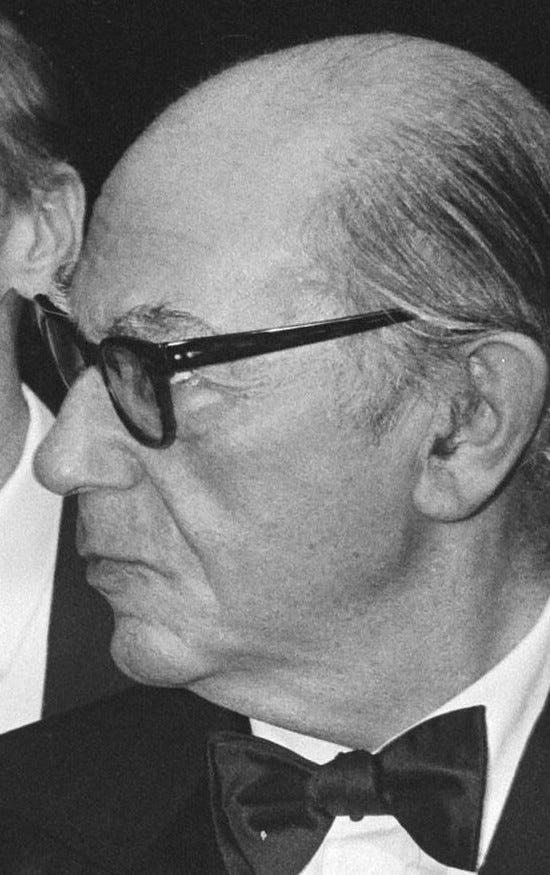
He was born in Riga, Latvia, then part of the Russian Empire, “into a wealthy Jewish family, the only son of Mendel Berlin, a timber trader (and a direct descendant of Shneur Zalman, founder of Chabad Hasidism), and his wife Marie (née Volshonok)”, states Wikipedia. [12]
Saunders says that by the early 1940s he “was already revered in Washington circles as ‘The Prophet'” and, with Charles Bohlen and George Kennan, formed “a homogeneous, congenial trio”. [13]
She writes: “The exact nature of Isaiah Berlin’s relationship with British and American intelligence will probably never be known.
“The British spy Robert Bruce Lockhart recorded several wartime meetings with the young Berlin, when he was working for the British government in Washington.
“Lockhart was under the impression that Berlin was working for the Psychological Warfare Executive…
“As for American intelligence, it can be said, at least, that Berlin enjoyed an informal relationship with the CIA, whose members were not shy of approaching the philosopher for his support, as recalled by Stuart Hampshire and Lawrence de Neufville, who said that Berlin was told of the Agency’s involvement in the Congress for Cultural Freedom”. [14]
When, in 1967, it became widely known that Encounter was a CIA front, Berlin distanced himself from the magazine and put on a public show of being shocked.
His biographer, Michael Ignatieff, even insisted that Berlin “certainly had no official or unofficial relationship with either British intelligence or the CIA”. [15]
Ridiculing this claim, Christopher Hitchens retorted: “The Encounter disavowal, taken literally, would mean that Berlin was abnormally incurious, or duller than we have been led to suppose, or had wasted his time in Washington”.
He said Berlin was clearly aligned with what he delicately called “the Anglo-American supranational ‘understanding'” which “frequently bore the stamp of realpolitik and, well, calculation”. [16]
Indeed, records unearthed by Saunders show that just before expressing public outrage at the CIA link to Encounter and the CCF, Berlin had been privately advising Melvin Lasky on how best to explain the thing away!
Saunders remarks: “If Berlin felt any moral compulsion at the complex deception he was here describing, he didn’t show it. Rather, he borrowed from the rhetoric of the open society to defend what in reality was the attempted management of that society by a closed shop”. [17]
Berlin was a Zionist and strongly attached to his Jewish identity. States Wikipedia: “Whenever he was described as an English philosopher, Berlin always insisted that he was not an English philosopher, but would forever be a Russian Jew: ‘I am a Russian Jew from Riga, and all my years in England cannot change this. I love England, I have been well treated here, and I cherish many things about English life, but I am a Russian Jew; that is how I was born and that is who I will be to the end of my life'”. [18]
In an article in the Jewish Chronicle in 1973, marking the 25th anniversary of the creation of the modern state of Israel, he wrote that since his schooldays he had been “a convinced believer in the need for a Jewish state in Palestine”. [19]
In 1979 he was awarded Israel’s Jerusalem Prize for the Freedom of the Individual in Society and an annual Isaiah Berlin Lecture is held at Wolfson College, Oxford, in Riga and at London’s Hampstead Synagogue. [20]
Wikipedia notes: “Berlin’s nephew is Efraim Halevy (Hebrew: אפרים הלוי), Israeli intelligence expert and diplomat, advisor to Ariel Sharon, 9th director of the Mossad and the 3rd head of the Israeli National Security Council”. [21]
Charles “Chip” Bohlen (1904-1974) was an American diplomat and ambassador who helped shape US foreign policy during WWII and the Cold War and “helped develop the Marshall Plan” to build back better post-war western Europe. [22]
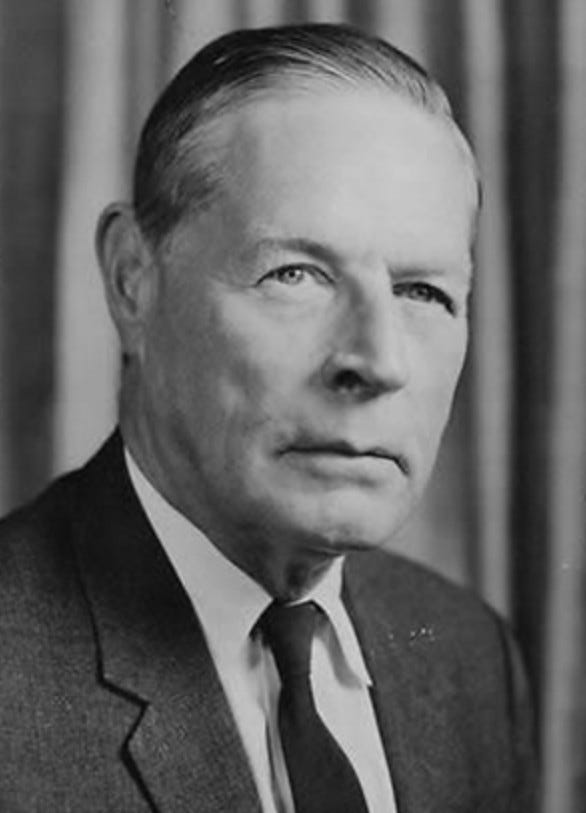
He is described by Wikipedia as an “expert on the Soviet Union”. It adds: “In 1934, he served as a diplomat in the first US embassy to the Soviet Union in Moscow as well as during and after World War II. He succeeded George F. Kennan as ambassador to the Soviet Union from 1953 to 1957”. [23]
Illustrating the strange intertwining relationship between “communists” and “anti-communists” like Bohlen, Saunders explains that he “was one of the founders of a novel branch of modern scholarship known as Kremlinology. He had lived in Russia, knew its leaders and bureaucrats, had studied its ideological literature”. [24]
Indeed, Bohlen’s interest in Russia and communism went back to his days at Harvard University.
Relates Walter Isaacson: “Bohlen’s late-night discussions at Harvard increasingly revolved around Russia. Though neither especially liberal nor political by nature, he avidly read Ten Days That Shook the World, and became fascinated with John Reed, who had died in Moscow, at age thirty-two, three years before Bohlen entered Harvard.
“Reed’s romantic Marxism appealed to the spirited, well-born young man with limited resources and unclear ambitions. He sang Russian songs, read Russian literature, and even had a Russian girl”. [25]
“Excited by the passion and energy of the Bolshevik experiment, Bohlen gamely tried to defend it to his skeptical clubmates”. [26]
Bohlen’s juvenile enthusiasm for communism even led him to a bizarre conclusion: “Freedom and democracy, he felt, were inherent features of true Marxism”. [27]
Despite having subsequently voiced his concerns at the totalitarian nature of Soviet society, “in later years, Bohlen would regret that he had not done more, that he had not tried harder to make Washington warm up to the Soviets after Stalin’s death”. [28]
“Bohlen was delighted when Eisenhower, pressed hard by England and France, agreed to a summit meeting with the Soviets in 1955”. [29]
The US issued a postage stamp in honour of Bohlen, with the Department of State noting: “Bohlen witnessed history being made at many of the most important summit conferences of the war.
“He served as interpreter for President Franklin D. Roosevelt in 1943 at the Teheran Conference, where Roosevelt, Stalin, and Churchill planned the final phase of the war against Nazi Germany, and again as both interpreter and adviser in 1945 at the Yalta Conference.
“Later, in 1945, he also served as interpreter at the Potsdam Conference, where Stalin, Churchill, and President Truman discussed the future of Europe and cooperation in the Pacific”. [30]
Bohlen seems to have exerted considerable influence on US governance: “He was an advisor to every US president from 1943 to 1968 and one of the nonpartisan foreign policy advisers who were known colloquially as ‘The Wise Men'”. [31]
This shadowy group is said to have “helped to craft institutions and initiatives” such as NATO and the World Bank. [32]
Julius Fleischmann (1900-1968) was a Jewish-American multi-millionaire businessman who, says Saunders, was “famed for his stinginess” but “in his element, dishing up CIA money and taking all the credit for it”. [33]
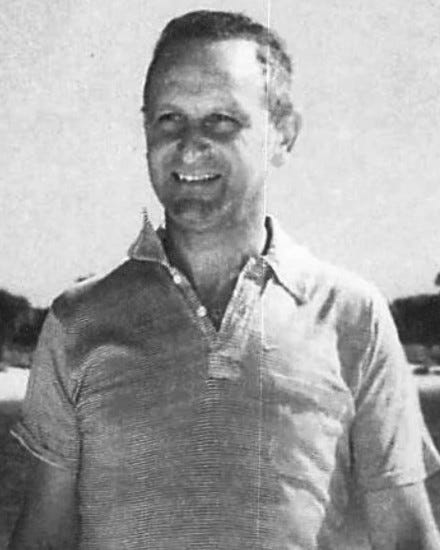
In fact, she describes him as “the CIA’s most significant single front-man”. [34]
She adds: “He had helped finance The New Yorker and boasted a bulging portfolio of artistic patronage: he was a director of New York’s Metropolitan Opera, a fellow of the Royal Society of the Arts, London, a member of the advisory committee of the Yale Drama School, a director of Diaghilev’s Ballet Russe de Monte Carlo and of the Ballet Foundation of New York, and a financial backer of many Broadway productions…
“His personal wealth and varied artistic patronage made him an ideally plausible angel for the CIA’s sponsorship of the Congress for Cultural Freedom”. [35]
“Case officer Lee Williams revealed that if there were problems with Congress [for Cultural Freedom] committees or affiliates or editors stepping too far out of line, then one way of getting the Agency’s veto in place without it being seen as such was to leap-frog all the bureaucracy and get a message directly to the offenders from someone ‘on high’ within the Congress structure. [36]
“This job usually fell to Julius Fleischmann, who on one famous occasion warned the editors of Encounter that their funding might be jeopardized if they insisted on running a controversial article”. [37]
A 2021 article in The Times of Israel celebrates the Fleischmann family’s contribution to Jewish life via their vast yeast and gin empire.
It says “innovative business practices brought them success” and then “they used their power to benefit their community”. [38]
Charles Fleishmann, the CCF man’s grandfather, even “created a resort village specifically for Jews. Eventually incorporated as Fleischmanns, New York, the town grew to include mansions, summer homes and hotels (many with kosher food to accommodate Orthodox customers)”. [39]
Tosco Fyvel (1907-1985) is described by Saunders as “a key member of the Congress [for Cultural Freedom] steering committee”. [40]
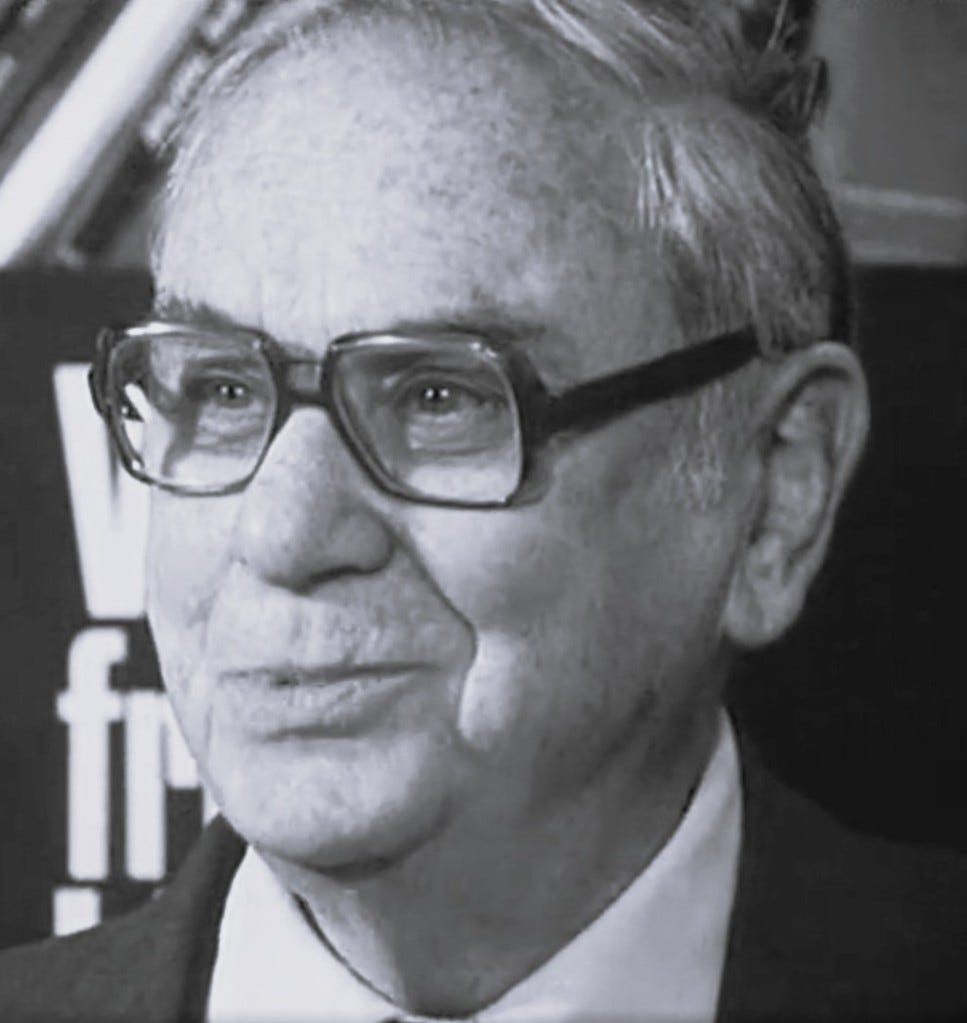
We learn from Wikipedia: “Fyvel was born in Cologne, Germany. His mother, Sterna (Schneerson), was from a Belarusian Jewish family, was a niece of essayist Ahad Ha’am, and had worked for Chaim Weizmann [Israel’s first president].
“His father, Berthold Feiwel, from a Moravian Jewish family, was an executive director of Keren Hayesod [United Israel Appeal]”.
“In 1936–1937, he was active in the Zionist movement in Palestine, then under the control of the British mandate, and worked with Golda Meir”.
“Returning to Britain, during the Second World War he worked in counter-intelligence”. [41]
In 1945, Fyvel succeeded George Orwell as literary editor of the “left-wing” Tribune newspaper. He was a founder of, and contributor to, the “anti-communist” Encounter.
There he wrote what Saunders calls “an essay of extraordinary obfuscation” about the virulent, and undoubtedly more authentic, form of anti-communism being voiced in the USA by Joseph McCarthy. [42]
With a Foreign Office directive to the Information Research Department insisting that none of its output “should appear to be attacking the United States in any way”, when McCarthyism was not simply ignored, it could certainly not be condemned.
Fyvel wrote that although McCarthyism was to be regretted, it had to be viewed in the context of America’s “insistent search for new national security, for a world, indeed, made safe for democracy”.
This, he concluded, was infinitely preferable to “European weariness, and scepticism of any such achievement”. [43]
From 1973 to 1983 Fyvel was literary editor of The Jewish Chronicle. [44]
C.D. Jackson (1902-1964) is described by Saunders as “one of the most influential covert strategists in America”. [45]
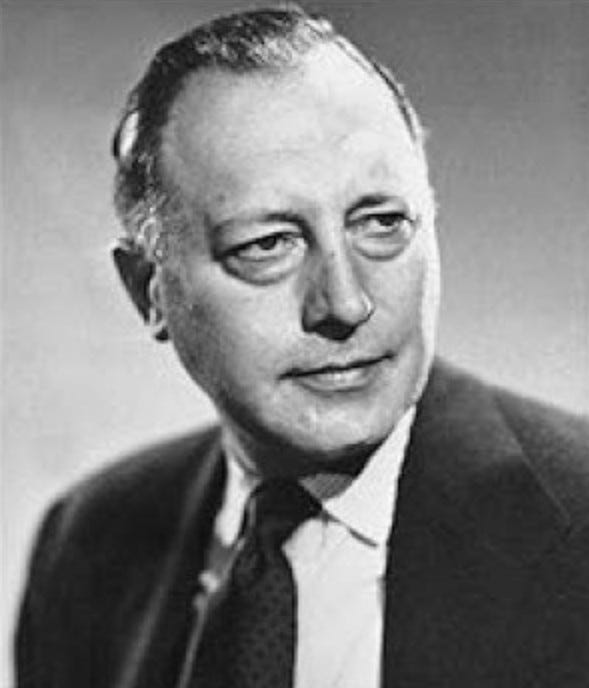
In the early 1950s, she says, he “did more than any other to set the agenda for American cultural warfare”. [46]
As a young man he became head of family firm C.D. Jackson and Company, importers of building material and “in this connection”, as the CIA puts it, travelled extensively all over Europe. [47]
Dwight Eisenhower knew Jackson from his wartime activities as deputy chief of the Psychological Warfare Division of SHAEF (Supreme Headquarters Allied Expeditionary Force) and “had been tutored by him in the art of manipulating audiences”. [48]
When Eisenhower entered the White House in 1953, Jackson was appointed special adviser to the president on psychological warfare, notes Saunders – “a position which made C.D. an unofficial minister for propaganda with almost unlimited powers”. [49]
“C.D. Jackson became the most sought-after figure in that tight circle of power which came to be known as ‘the invisible government’.
“Sitting like some eastern potentate or Delphic oracle, he received a steady flow of visitors seeking his wisdom on a wide range of matters. His detailed log files of these visits provide a unique insight into the world of clandestinity”. [50]
From this position of hidden power, Jackson pushed for expanded American “economic assistance” to boost ZIM’s global industrial agenda.
In this, Jackson “drew on advice from MIT economists Max Millikan and Walt Rostow”. [51]
Both of these ideologues of “planning” and “development” were Jewish and worked at some stage for US intelligence. [52]
Wikipedia records: “In August 1954, Rostow and Millikan convinced Eisenhower to massively increase US foreign aid for development as part of a policy of spreading American-style capitalist economic growth in Asia and elsewhere, backed by the military”. [53]
In view of this connection, it is not surprising to learn that “during 1953 and 1954, Jackson was key in establishing the Bilderberg Group and ensuring American participation. He attended meetings of the group in 1954, 1957, 1958, 1960, 1961, 1962, 1963, and 1964”. [54]
Jackson also worked for the United Nations and for Time-Life International, where he became managing director. [55]
The Wikispooks site reveals that Jackson was involved in the cover-up surrounding the assassination of president John F. Kennedy in 1963.
“After Abraham Zapruder took the famous film in Dallas on November 22, 1963, Jackson purchased it on behalf of Time/Life to ‘protect the integrity of the film’…that is, to ensure the truth was kept from the American people.
“Upon viewing it on Sunday morning he ordered it locked in a vault at the Time/Life building in Manhattan. He bought the rights to Marina Oswald’s memoirs and never published them”. [56]
Michael Josselson (1908-1978) was a Jewish CIA agent who set up the Congress for Cultural Freedom in 1950.
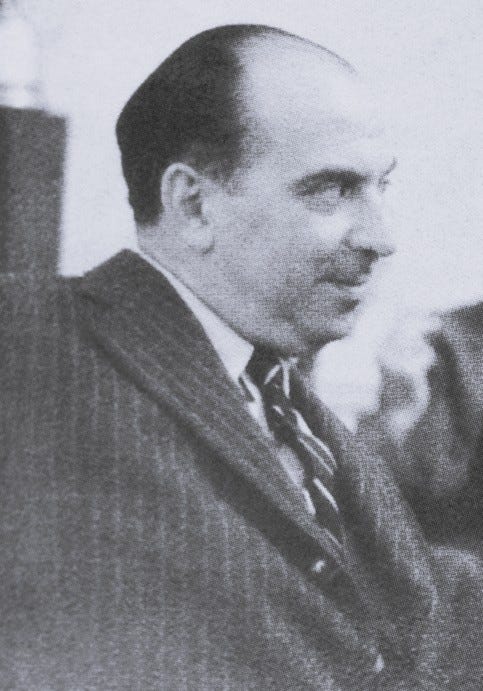
The Estonian Jewish Museum website tells us that Josselson was born in Tartu, Estonia: “His father was a first guild timber merchant Mordche (Mordechai) Josselson from Šiauliai, Lithuania. During the Russian Revolution Mordche Josselson moved his family to Berlin”. [57]
Having emigrated to the USA after the Nazis came to power, he returned to Germany at the end of the war as part of the American occupation under the Office of Military Government, United States (OMGUS).
Writes Saunders: “Speaking four languages fluently without a hint of an accent, Michael Josselson was a valuable asset in the ranks of American occupation officers. Furthermore, he knew Berlin inside out”. [58]
Josselson was part of the Intelligence Section of the Psychological Warfare Division, where he joined a special seven-man interrogation team (nicknamed ‘Kampfgruppe Rosenberg’ after its leader Captain G. Rosenburg).
The team’s job was to interrogate hundreds of German prisoners every week to ensure conformity to the ideological New Normal, a mission which he continued in his subsequent post as a “public affairs officer” involved in “screening of personnel” in the German press, radio and entertainment media. [59]
Josselson was one of the first recruits in Germany of The Office of Policy Coordination, the covert operation wing of the CIA, joining “the outfit” in late 1948. [60]
Christoph Nitschke of the German Historical Institute says: “Michael Josselson was a central figure in the so-called cultural Cold War of the postwar decades, and combined American foreign policy objectives with networking among cultural elites on both sides of the Atlantic”. [61]
He adds that Josselson was also connected to globalist think tanks like the RAND Corporation and Brookings Institution. [62]
The philosopher Stuart Hampshire, who at that time was working for MI6 in London, recalled: “His reputation had spread across Europe’s intelligence grapevine. He was the big fixer, the man who could get anything done. Anything.
“If you wanted to get across the Russian border, which was virtually impossible, Josselson would fix it. If you needed a symphonic orchestra, Josselson would fix it”. [63]
A commitment to telling the truth was not one of Josselson’s qualities, as Saunders makes quite clear in her account of his conversation with Frank Kermode over the revelation of the CIA’s funding of Encounter.
“‘I am old enough to be your father,” Josselson said, ‘and I would no more lie to you than I would to my own son’. Josselson was, of course, lying”. [64]
It also seems that he was not an entirely pleasant individual and Saunders refers to his notorious “heart of darkness”. [65]
One-time CIA colleague Ben Sonnenburg told her: “The name Michael Josselson still gives me the willies”. [66]
Jason Ridley, who was appointed secretary of the British Society for Cultural Freedom in 1952, gave Saunders what she calls a “chilling” account of his being summoned to CCF HQ in Paris.
“Nabokov questioned me, but his questions and my answers were interrupted by Josselson, who walked around the room, barking out questions and interjections… he could have been an actor playing the part of a domineering, bullying Soviet apparatchik”. [67]
George Kennan (1904-2005) was a deep state actor in the USA – a multiple Bilderberg attendee and a member of the notorious ZIM front, the Council on Foreign Relations. [68]
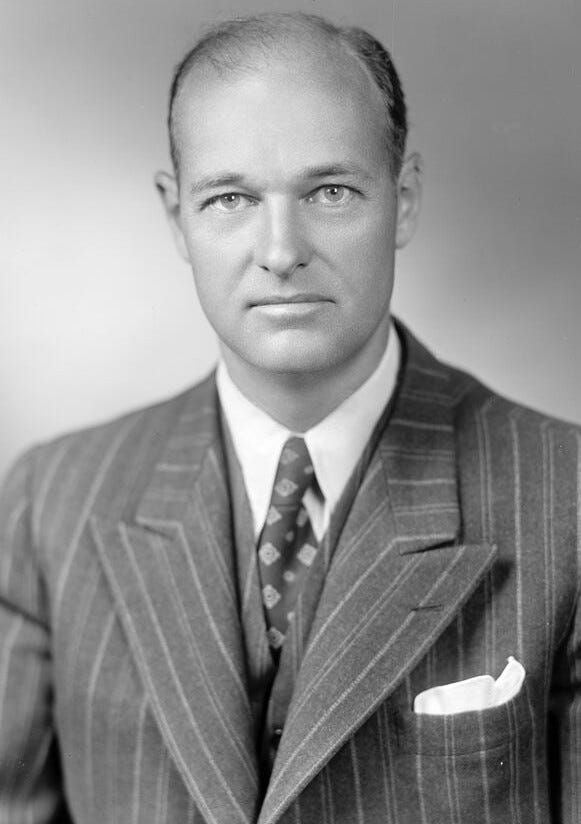
He was also briefly US ambassador to the Soviet Union in 1952 and, alongside Bohlen, was one of the so-called “Wise Men” who helped to create institutions like NATO and the World Bank. [69]
Henry Kissinger said that Kennan “came as close to authoring the diplomatic doctrine of his era as any diplomat in our history”. [70]
Saunders writes: “The foremost articulator of the shared convictions of America’s elite was George Kennan, diplomat-scholar, architect of the Marshall Plan, and as director of the State Department’s Policy Planning Staff, one of the fathers of the CIA”. [71]
Wikipedia describes how Kennan’s Marshall Plan subtly “Americanized” European countries “through new exposure to American popular culture, including the growth in influence of Hollywood movies and rock n’ roll”. [72]
I do not know to what extent Kennan would have been aware of the zio-imperialist agenda pushing America’s Cold War efforts – he may have been one of those duped into participation through the patriotic and anti-communist “bounce”.
Indeed, he argued that a state of Israel would undermine western European and American access to Arab oil and facilitate Soviet and communist expansion in the Middle East. [73]
But, wittingly or unwittingly, Kennan certainly played an important part in creating ZIM’s mechanisms of manipulation and was, for instance, “instrumental in persuading President Truman to sign a secret directive establishing the Psychological Strategy Board”, an entity described by Saunders as “Orwellian”. [74]
Arthur Koestler (1905-1983), the Hungarian-born Jewish writer, was, says Saunders, one of the “most important early advisers” to the British “anti-communist” Information Research Department.
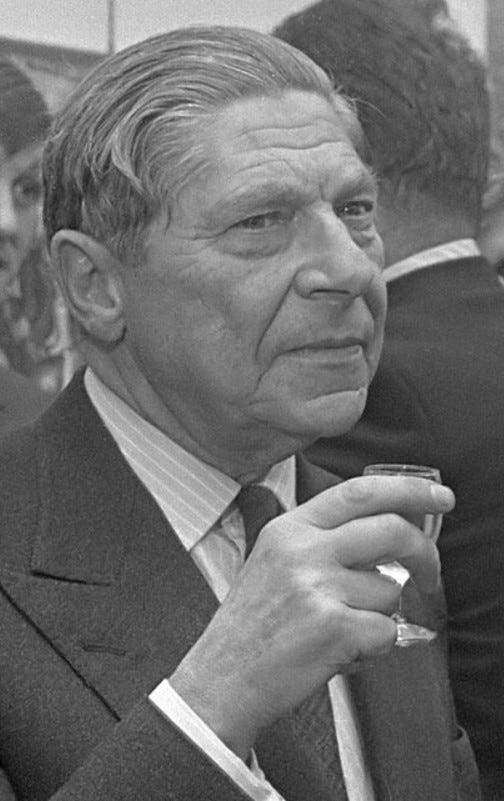
“Under his tutelage, the department realized the usefulness of accommodating those people and institutions who, in the tradition of left-wing politics, broadly perceived themselves to be in opposition to the centre of power”. [75]
As I set out in Part I of this essay, the plan spearheaded by Koestler aimed to neutralise the “left” as a source of authentic opposition to the system – I think we can say today that it proved a great and lasting success!
Saunders says he enjoined his fellow intellectuals in Europe and the USA “to help the power elite in its mission to rule”. [76]
Koestler’s novel Darkness at Noon, which condemned Soviet totalitarianism, was distributed as propaganda by the British Foreign Office.
But he had effectively been transferred across to the “anti-communist” side of the “bounce” from a similar role in the USSR.
Koestler had joined the Communist Party of Germany in 1931 and “in 1932 he went to Russia and wrote a propaganda book financed by the Communist International, Of White Nights and Red Days“, says Saunders.
“There, he fell madly in love with a clerk called Nadeshda Smirnova. He spent a week or two with her, and then denounced her to the secret police over a trifling matter. She was never heard of again”. [77]
He was active in “anti-fascist” movements (another ZIM “bounce” scam) and wrote propaganda under the direction of Willi Münzenberg, the Comintern’s chief propaganda director in the West. [78]
Saunders writes that Koestler was “one of the brains behind the Soviet Union’s pre-war network of front organizations”. [79]
Koestler later told people that his book Spanish Testament, of great influence to many on the “left”, had been virtually “dictated” by Münzenberg. [80]
When war broke out, Koestler made his way to the UK without an entry permit, was accordingly held in prison, came out in 1941 and was almost immediately, in March 1942, “assigned to the Ministry of Information, where he worked as a scriptwriter for propaganda broadcasts and films”. [81]
Extraordinary!
The key to Koestler’s ability to flit between the Soviet and British establishments, and to where his allegiances truly lay, can be traced back to his youth in the old Austro-Hungarian Empire.
He was from a well-off family and his mother was once a patient of Sigmund Freud.
We learn from Wikipedia: “In interwar Vienna he wound up as the personal secretary of Vladimir [Ze’ev] Jabotinsky (pictured), one of the early leaders of the Zionist movement”. [82]
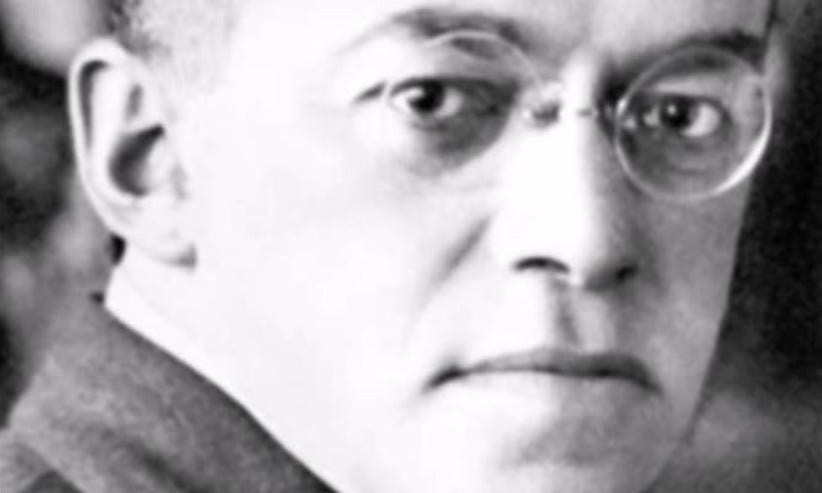
“In March 1926, he wrote a letter to his parents telling them he was going to Mandate Palestine for a year to work as an assistant engineer in a factory to gain experience and help him obtain a job in Austria. On 1 April 1926, he left Vienna for Palestine”.
“In early 1927, he left Palestine briefly for Berlin, where he ran the secretariat of Ze’ev Jabotinsky’s revisionist Zionist party Hatzohar.
“Later that year, through a friend, Koestler obtained the position of Middle East correspondent for the prestigious Berlin-based Ullstein-Verlag group of newspapers.
“He returned to Jerusalem, where he produced detailed political essays and some lighter reportage for his principal employer and other newspapers for the next two years. He was a resident at 29 Rehov Hanevi’im in Jerusalem.
“He travelled extensively, interviewed heads of state, kings, presidents, and prime ministers, and greatly enhanced his reputation as a journalist”. [83]
It was from this basis that Koestler began his political involvement as a “communist” and then an “anti-communist”, all the while keeping in touch with his roots.
“In December 1944, Koestler traveled to Palestine with accreditation from The Times. There he had a clandestine meeting with Menachem Begin, the head of the Irgun paramilitary organisation, who was wanted by the British and had a 500-pound bounty on his head”.
“In 1948, when war broke out between the newly declared State of Israel and the neighbouring Arab states, Koestler was accredited by several newspapers, American, British, and French, and travelled to Israel”. [84]
He wrote a stream of books on subjects close to his heart, including The Thirteenth Tribe (1971), which presents his Khazar hypothesis of Ashkenazi Jewish ancestry.
Saunders relates that in 1983 Koestler “committed suicide with an overdose of barbiturates and alcohol in his London flat. Dying with him was his third wife Cynthia Jeffries. He was seventy-seven, she was twenty years younger.
“In 1998 Koestler was literally taken off his pedestal when his bronze bust was removed from public display at Edinburgh University following revelations by biographer David Cesarani that he had been a violent rapist”. [85]
Irving Kristol (1920-2009) was the executive director of the American Congress for Cultural Freedom until 1954 and edited the London-based Encounter.
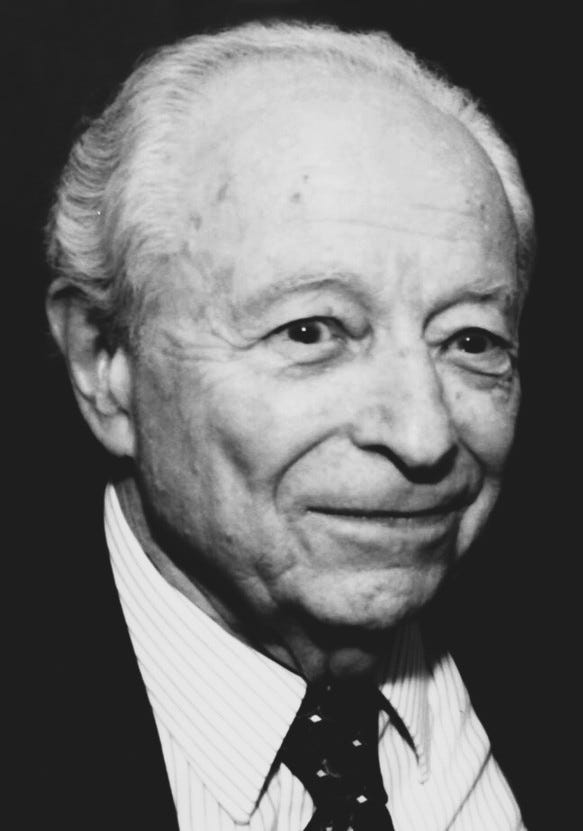
Like many in the network, he was a graduate of New York City College and he began his adult life as a Trotskyite. [86]
After his Encounter years, Kristol founded The Public Interest with Daniel Bell and in 1969 landed a post at New York University as “Professor of Urban Values” – whatever those might be! [87]
He was, somewhat inevitably, a member of the Council on Foreign Relations, attached himself to the American Enterprise Institute and the Wall Street Journal and “gave lectures to corporate groups for huge fees”. [88]
Kristol is considered a central figure in the emergence of the neocon phenomenon – being dubbed “the godfather of neoconservatism” – alongside another influential Jewish figure. [89]
Explains Jacob Heilbrunn: “Neoconservatism was turned into an actual movement by Kristol and Norman Podhoretz. Even today, the neoconservative movement is best understood as an extended family based largely on the informal social networks patiently forged by these two patriarchs”. [90]
On his death, Irwin Stelzer wrote in The Daily Telegraph that Kristol was “perhaps the most consequential public intellectual of the latter half of the 20th century”. [91]
He added: “Any doubts about the influence of Kristol and his magazines should have disappeared when President Ronald Reagan joked at a dinner that anyone wanting a job in his new administration should call the White House and say: ‘Irving sent me.’ No further vetting would be required.
“Or when President George W Bush conferred on Irving the Medal of Freedom, America’s highest civilian honour”.
Intriguingly, Stelzer noted that Gordon Brown, then UK prime minister, was “an unabashed fan” of Kristol’s historian wife Gertrude Himmelfarb. [92] Brown is very closely connected to the zio-imperialist mafia, as I revealed in 2024. [93]
In a 2009 article on the Jewish Telelgraphic Agency site, entitled ‘Irving Kristol, Defender of the Faith’, Jonathan Mark complained: “The Washington Post didn’t use the word ‘Jewish’ or ‘Israel’ at all in its obituary”.
He insisted: “If anything, Kristol arrived at a neocon religious and Zionist sensibility in the 1940s, long before his politics followed suit”. [94]
Contemporary neocon writer Bill Kristol is Irving Kristol’s son. [95]
Melvin Lasky (1920-2004) was a journalist who received Marshall Plan funding to create the “anti-communist” German-language journal Der Monat, helped set up the CCF and was for a long time editor-in-chief of the CIA’s Encounter. [96]
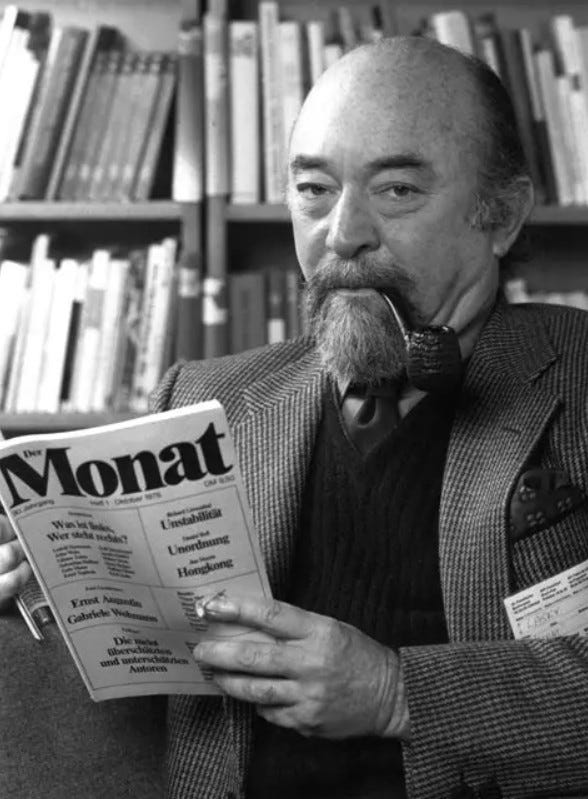
Saunders says he was born in the Bronx area of New York and grew up in the “looming presence” of his Yiddish-speaking grandfather, “a bearded, learned man who nourished the young Lasky with passages from the legends of the Jews”. [97]
Andrew Roth has written that in the 1930s Lasky “seemed an intellectual Trotskyist” but, at the age of 22, he became literary editor of the New Leader, “an organ of anti-Communist Jewish liberals”. [98]
In 1944 he “belatedly signed up, as a US Army combat historian in Europe”. [99]
Here, as part of the post-war US occupation of Germany, he was “taken under the wing” of the military governor General Lucius Clay and in December 1947 presented to Clay’s office what became known as “The Melvin Lasky Proposal” which called for “a radical shake-up in American propaganda” and “constituted Lasky’s personal blueprint for staging the cultural Cold War”. [100]
In an article on the Jüdische Allgemeine website, marking the 100th anniversary of Lasky’s birth, Marko Martin wrote that his editorship of the US-funded Monat allowed him “to provide the Jewish authors who had been expelled after 1933 with a journalistic home in their beloved language: Hans Sahl, Alfred Polgar, Max Brod, Siegfried Kracauer, Hilde Spiel, Walter Mehring, Karl Popper, Alphons Silbermann, Hermann Kesten, Hans Habe, Walter Laqueur”. [101]
Saunders notes that there was a certain “mysteriousness” about Lasky and, despite his consistent denials of being a CIA agent, “his constant presence at the forefront of the CIA’s cultural Cold War would not go unnoticed”. [102]
In 1967, as the truth about deep state funding of the “anti-communist” network was coming out, he felt obliged to give an account of his activities to colleague Frank Kermode, co-editor of Encounter.
Relates Saunders: “This was the moment of Lasky’s soi-disant confession: he admitted to Kermode that he had known of CIA support for some years now, but that he could not possibly say this publicly”. [103]
Like so many others in these circles, Lasky appears to have been a far-from-charming character. Saunders writes: “Using his oriental-shaped eyes to produce deadly squints, he had acquired from the brusque atmosphere of City College an ill-manner that rarely deserted him”. [104]
Cord Meyer (1920-2001) was a CIA officer and writer heavily involved in promoting its cultural war.
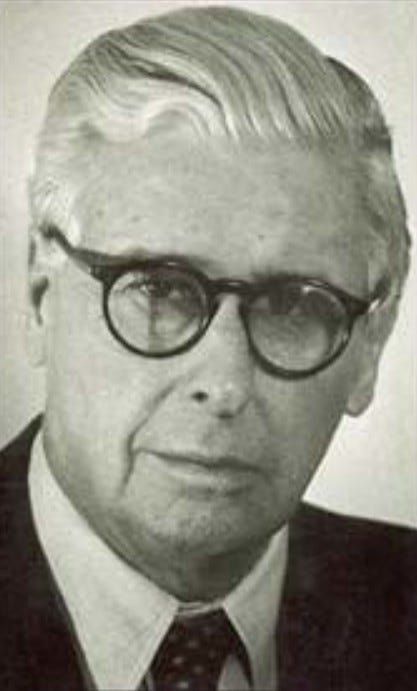
He came from a wealthy New York family of property developers and was an avowed globalist.
Wikipedia states: “He was an aide of Harold Stassen to the 1945 San Francisco United Nations Conference on International Organization. In 1947, he was elected president of the United World Federalists (UWF), the organization he helped to fund”. [105]
Meyer later recalled: “One technique that we used was to encourage those of our members who had influential positions in professional organizations, trade associations, or labor unions to lobby for passage at their annual conventions of resolutions favourable to our cause”. [106]
Meyer was part of Operation Mockingbird, the CIA programme to influence the mass media both in the USA and in other countries, notably Britain, and according to author Deborah Davis, he was Mockingbird’s “principal operative”. [107]
As head of the CIA’s International Organizations Division, Meyer oversaw the funding of groups such as the National Student Association, Communications Workers of America, the American Newspaper Guild, the United Auto Workers, National Council of Churches, the African-American Institute and the National Education Association. [108]
He also worked closely with “anti-communist” leaders of the trade union movement such as George Meany of the Congress for Industrial Organization and the American Federation of Labor. [109]
According to Frank Church, Meyer’s division constituted the greatest single concentration of covert political and propaganda activities of the by-now octopus-like CIA. [110]
He was, it seems, an abrasive character. Journalist Godfrey Hodgson described meeting him at a party and watching in horror as he harassed an elderly Canadian diplomat over the issue of Canadian secessionism.
“The diplomat, who had a serious heart ailment, was visibly distressed, but Meyer ploughed on, without wit, taste or mercy”. [111]
Frank Wisner (1909-1965) was a US deep state operative who began his intelligence career in the Office of Strategic Services in World War II and was then one of the founding officers of the CIA, playing a major role in its operations throughout the 1950s.
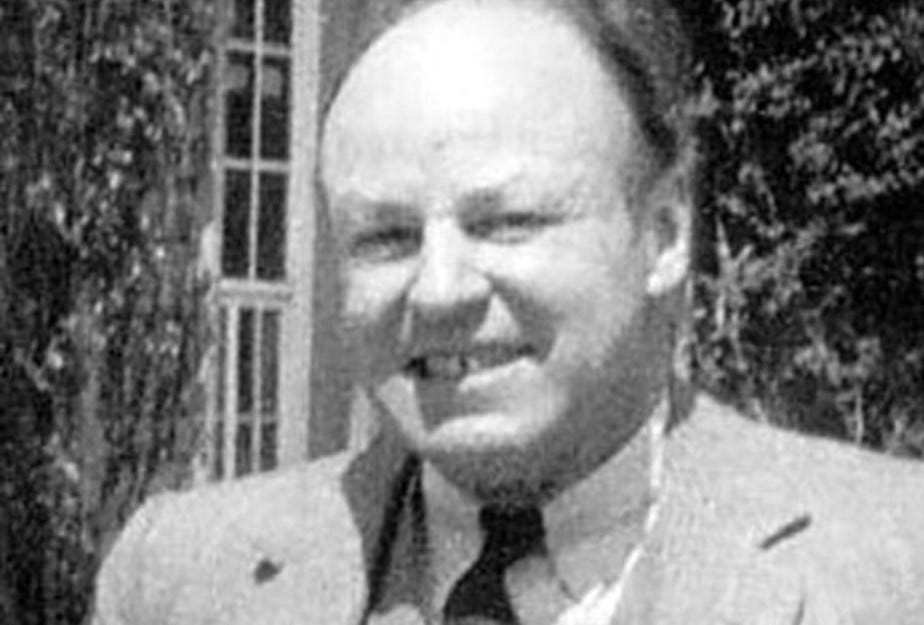
The former Wall Street lawyer gave his name to the Wisner Gang, aka the Georgetown Set, an informal group in Washington that also included Charles Bohlen, George Kennan and Cord Meyer. [112]
Wisner and his co-conspirators pushed for the creation of what was to become the Office of Policy Coordination (OPC) – the espionage and counter-intelligence branch of the CIA.
Writes Saunders: “Virtually unlimited in scope and secrecy, OPC was without precedent in peacetime America. Here was the dirty tricks department that Allen Dulles and the Park Avenue Cowboys had been campaigning for”. [113]
She reveals that the CIA’s “Propaganda Assets Inventory”, which included the Congress for Cultural Freedom, was known informally as “Wisner’s Wurtlitzer”.
“The nickname reveals the Agency’s perception of how these ‘assets’ were expected to perform: at the push of a button, Wisner could play any tune he wished to hear”. [114]
Wisner was also responsible for setting up Operation Mockingbird, alongside Meyer. According to Deborah Davis, “by the early 1950s, Wisner had implemented his plan and ‘owned’ respected members of the New York Times, Newsweek, CBS, and other communications vehicles, plus stringers, four to six hundred in all”. [115]
A certain ambiguity lurked behind Wisner and his accomplices’ “anti-communism”.
Writes John Simkin: “J. Edgar Hoover of the FBI described the OPC as ‘Wisner’s gang of weirdos’ and began carrying out investigations into their past.
“It did not take him long to discover that some of them had been active in left-wing politics in the 1930s. Hoover also gave [Joseph] McCarthy details of an affair that Frank Wisner had with Princess Caradja in Romania during the war. Hoover claimed that Caradja was a Soviet agent”. [116]
After the war, Wisner “was given responsibility for liaising with the Gehlen organization, the German Army intelligence unit preserved intact by the Americans to spy on Russia”. [117]
The Nazi regime had, as we now know, [118] been secretly financed and installed by the same zio-satanic imperialist mafia behind the CIA, so this co-operation was only to be expected.
“Wisner was not a man to be delayed by moral arguments,” notes Saunders. [119]
Harry Rositzke, a close colleague in the OSS and later the CIA, explained: “It was a visceral business of using any bastard as long as he was anti-Communist”. [120]
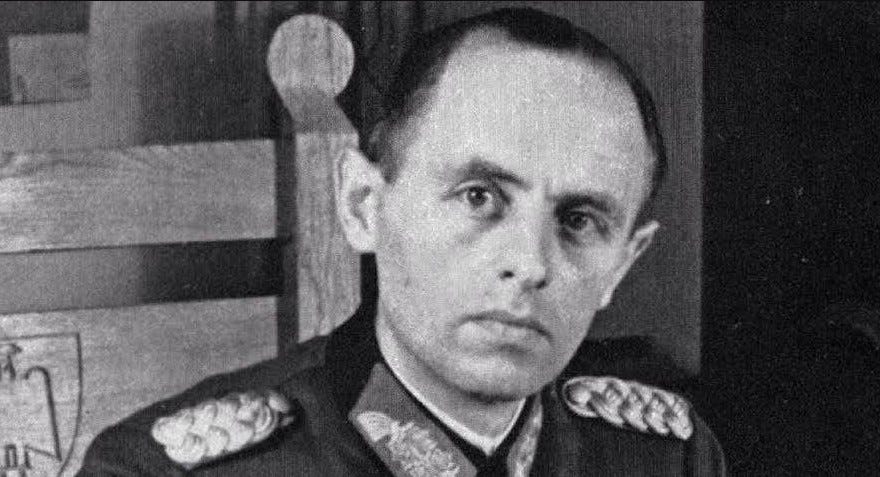
SS General Reinhard Gehlen (pictured below) was not the only Nazi used by Wisner in the CIA’s oh-so noble endeavours to “fight totalitarianism”.
Another former colleague, Tom Braden, told Saunders: “Wisner brought in a whole load of fascists after the war, some really nasty people”. [121]
I am not alone in identifying the (obvious) presence of the zio-imperialist industrial mafia behind the Cold War “anti-communist” network.
Saunders explains that one group of “conservative” intellectuals in New York – which included James Burnham, Arnold Beichmann, Clement Greenberg and Elliot Cohen – “was jokingly referred to as ‘the Upper West Side Kibbutz'”. [122]
Malachi Haim Hacohen wrote an essay in 2020 entitled ‘The Jewishness of Cold War Liberalism’.
Here he explained that “the Cold War Liberals were a generation of Jewish intellectuals on both sides of the Atlantic that included Raymond Aron, Isaiah Berlin, Manès Sperber, Daniel Bell, and Sydney Hook…
“All were active in the Congress of Cultural Freedom and its trans-Atlantic network. Decidedly secular, they rarely spoke of their own Jewishness, and tried to reconcile their growing support for Israel with their cosmopolitanism. In the aftermath of 1968, they rediscovered their Jewishness and religion”. [123]
And Rhodri Lewis wrote in Prospect magazine in 2022: “To many of those on the left, the exposure of CIA funding merely confirmed that which they already believed to be true: liberal pluralism was a sham designed to spare the blushes of a military-industrial complex that, in its turn, propped up the inequitable structures of capitalist society”. [124]
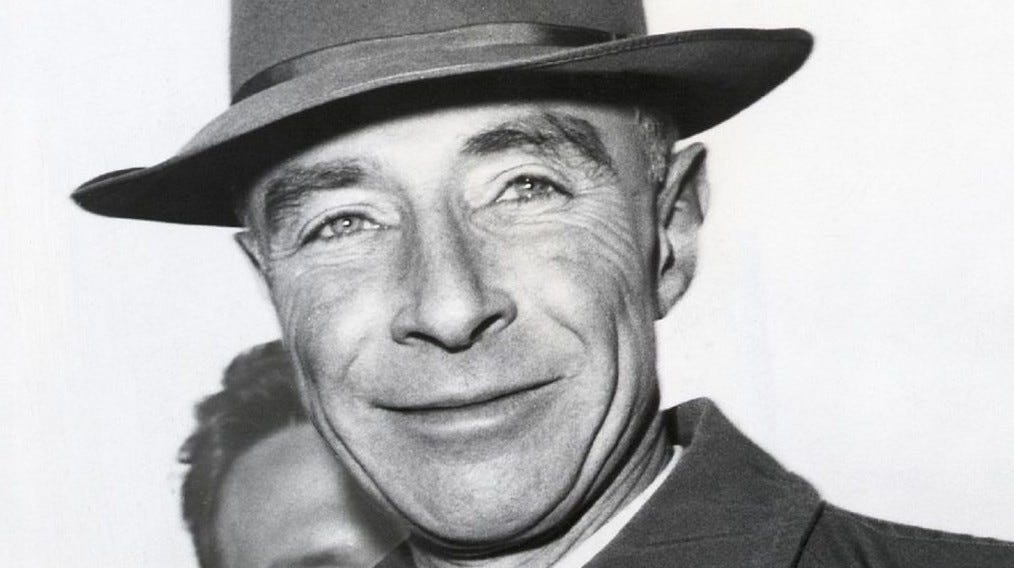
When the truth about the CIA’s funding of the Congress for Cultural Freedom was coming out, its officers turned for help to Robert Oppenheimer, the Jewish scientist credited with inventing the atom bomb who made several visits to Israel, had an advisory role at its Weizmann Institute and made speeches indicating “that he empathized with the Zionist enterprise”. [125]
Oppenheimer (pictured) agreed to sign a letter testifying that the CCF was completely independent – even though this was obviously far from being true.
British spy Stuart Hampshire said: “He was half in it himself. He knew full well. He was part of the apparat. I don’t think it bothered him morally. If you’re imperially-minded… you don’t think much about whether it’s wrong or not”. [126]
Further evidence of this imperialist, nay supremacist, outlook came in a letter to Michael Josselson from Edward Schils, who broke with the CCF in 1970.
Schils (1920-1995) was a sociologist “known for his research on the role of intellectuals and their relations to power and public policy”. [127]
Reveals Saunders: “He wrote that he had no news of the Congress, though he had received an invitation to meet some ‘leading goyim’, to which his response was a flat refusal”. [128]
For those who are unaware, “goyim” is a derogatory and racist Jewish term referring to the 99.8% of the human species who have not been “chosen” to rule over everyone else.
Finally, let’s look at the funding arrangements behind ZIM’s “anti-communist” cultural war.
Needless to say, vast amounts of money were involved. Saunders says: “The CIA was to pump tens of millions of dollars into the Congress for Cultural Freedom and related projects”. [129]
CIA agent Gilbert Greenway recalled: “We couldn’t spend it all. I remember once meeting with Wisner and his comptroller. My God, I said, how can we spend that? There were no limits, and nobody had to account for it. It was amazing”. [130]
As far as I can tell, the overall aim was to use taxpayers’ money, mostly American, to fund the agenda under the pretext of boosting national security in the face of the Soviet menace, spreading democracy and building Europe back better.
This reality was concealed by the use of blatant fronts like the Farfield Foundation or the Kaplan Foundation and also by laundering money through established and therefore “respectable” ZIM entities like the Rockefeller Foundation and the Ford Foundation.
Says Saunders: “A central feature of the Agency’s efforts to mobilize culture as a Cold War weapon was the systematic organization of a network of ‘private’ groups or ‘friends’ into an unofficial consortium.
“This was an entrepreneurial coalition of philanthropic foundations, business corporations and other institutions and individuals, who worked hand in hand with the CIA to provide the cover and the funding pipeline for its secret programmes in western Europe”. [131]
It is difficult to know to what extent these “private” bodies also contributed their own funds to the operation, but Saunders records that the Ford Foundation had granted $7 million to the CCF by the early 1960s. [132]
CIA man Tom Braden told her: “It was a criss-cross of money. There was never any danger of the CIA running out of money”. [133]
One “innovative” financial manoeuvre involved “counterpart funds” from the Marshall Plan – “a secret fund of roughly $200 million a year” – being made available as a war chest for the CIA. [134]
“This was most definitely a grey area”, admitted Richard Bissell, deputy administrator of the Marshall Plan. [135]
The deliberate murkiness is well illustrated by Saunders’ account of the funding of the CCF’s German publication, Der Monat.
“Across the years, Der Monat was financed through ‘confidential funds’ of the Marshall Plan, then from the coffers of the Central Intelligence Agency, then with Ford Foundation money, and then again with CIA dollars”. [136]
Another example is the use of the British Society for Cultural Freedom, which became a mere channel for the surreptitious transfer of funds from the deep state.
And those who have read my pieces ‘The stench of the system’ and ‘A deep state of denial’ will not be too surprised at the involvement of a certain well-known ZIM godfather. [137]
Saunders explains: “With Encounter serving the interests which the British Society had been created to advance, the Society itself had ceased to function.
“But it was a useful front for MI6’s subsidies, for which Victor Rothschild (pictured) had now become the principal conduit.
“Correspondence between Rothschild, Warburg and Muggeridge reveals how the money was first passed to Rothschild’s account in the Bury St Edmund’s branch of the Westminster Bank, then to the Secker and Warburg Private Account, before being transferred to the Barclays Bank account of the British Society, which then ‘donated’ the same amount to Encounter”. [138]
But this convoluted means of delivering money to the “anti-communist” magazine’s coffers at Panton House in London was not to the taste of Fredric Warburg, the Jewish publisher who had brought out Adolf Hitler’s Mein Kampf. [139]
In July 1960 he suggested that “this lunatic procedure of going through a non-existent society with two members, Malcolm Muggeridge and F.J. Warburg”, be replaced by a “direct payment made between the house of Rothschild and Panton House”. [140]
In 1965, Encounter’s credibility was being threatened by reports that it was being funded by “the Foreign Office”, so “the search for private angels began in 1964”, writes Saunders. [141]
As a result it was announced that in future all of the magazine’s financial and business affairs would be handled by International Publishing Corporation, chaired by Cecil King, who coincidentally the following year became a director of the Bank of England. [142]
As part of the deal, a controlling Trust was set up consisting of Michael Josselson, Arthur Schlesinger and Victor Rothschild. [143]
Saunders notes: “Rothschild was closely connected to the magazine until the mid-1960s, but always as a shadow, never in the open”. [144]
Part I of this essay can be read here.

[1] Frances Stonor Saunders, Who Paid the Piper? The CIA and the Cultural Cold War (London: Grant Books, 2000), p 2. All subsequent page references are to this work, unless otherwise stated.
[2] Hugh Trevor-Roper, interview with Saunders, London, July 1994, cit. p. 78.
[3] Trevor-Roper, interview, cit. pp. 78-79.
[4] Sidney Hook, ‘The Berlin Congress for Cultural Freedom’, Partisan Review, vol. 17/7, 1950, cit. pp. 79-80.
[5] Edward Barrett, Truth is our Weapon (New York: Funk & Wagnalls, 1953), cit. p. 80. Saunders provides no page numbers in her references.
[6] p. 450.
[7] George Urban, Radio Free Europe and the Pursuit of Democracy: My War Within the Cold War (New York: Yale University Press, 1997), cit. p. 229.
[8] p. 89.
[9] Carol Brightman, interview with Saunders, New York, 1994, cit. p. 89.
[10]

[11] Jason Epstein, interview with Saunders, New York, August 1996, cit. p. 229. The italics are mine.
[12] https://en.wikipedia.org/wiki/Isaiah_Berlin
[13] p. 36.
[14] p. 471.
[15] Michael Ignatieff, Isaiah Berlin: A Life (London: Chatto, 1998), cit. p. 387.
[16] Christopher Hitchens, ‘Moderation or Death’, London Review of Books, 26 November 1998, cit. p. 387.
[17] p. 387.
[18] https://en.wikipedia.org/wiki/Isaiah_Berlin
[19] Jewish Chronicle, Colour Magazine, 4 May 1973, pp. 28–34.
https://isaiah-berlin.wolfson.ox.ac.uk/sites/default/files/2020-08/Bib.135-IBO%20%282%29%20-%20Israel%2C%20A%20Nation%20Among%20Nations.pdf
[20] https://en.wikipedia.org/wiki/Isaiah_Berlin
[21] Ibid.
[22] https://en.wikipedia.org/wiki/Charles_E._Bohlen
[23] Ibid.
[24] p. 36.
[25] Walter Isaacson, The Wise Men (London: Faber & Faber, 1986), p 96.
https://archive.org/details/wisemensixfriend00isaa_0/page/96/mode/2up?q=bohlen
[26] Isaacson, p. 96.
[27] Isaacson, p. 162
[28] Isaacson, p. 576.
[29] Isaacson, p. 577.
[30] https://2001-2009.state.gov/r/pa/ei/rls/stamps/67018.htm
[31] https://en.wikipedia.org/wiki/Charles_E._Bohlen
[32] https://en.wikipedia.org/wiki/The_Wise_Men_(book)
[33] p. 119.
[34] p. 126.
[35] Ibid.
[36] Lee Williams, interview with Saunders, Washington, July 1996, cit. p. 205.
[37] p. 205.
[38] https://www.timesofisrael.com/how-fleischmanns-yeast-built-the-jewish-catskills/
[39] Ibid.
[40] p. 111.
[42] p 203.
[43] T.R. Fyvel, ‘The Broken Dialogue’, Encounter, April 1954, cit. p. 204.
[44] https://en.wikipedia.org/wiki/T.R._Fyvel
[45] p. 146.
[46] Ibid.
[47] CIA profile, https://www.cia.gov/readingroom/docs/CIA-RDP75-00001R000200140002-9.pdf
[48] p. 147.
[49] Ibid.
[50] p. 151.
[51] https://en.wikipedia.org/wiki/History_of_the_United_States_Agency_for_International_Development
[52] https://www.futureofcapitalism.com/2015/03/mit-economics https://en.wikipedia.org/wiki/Max_Millikan https://en.wikipedia.org/wiki/Walt_Rostow
[53] https://en.wikipedia.org/wiki/Max_Millikan
[54] Aubourg, Valerie (2003), ‘Organizing Atlanticism: The Bilderberg group and the Atlantic Institute, 1952-1963’. Intelligence and National Security. 18:2 (2): 92–105. doi:10.1080/02684520412331306760. S2CID 153892953. https://en.wikipedia.org/wiki/Charles_Douglas_Jackson
[55] https://wikispooks.com/wiki/C._D._Jackson
[56] Ibid.
[57] https://muuseum.jewish.ee/stories/Josselson.pdf
[58] p. 11.
[59] p. 12.
[60] p. 42.
[61] https://www.transatlanticperspectives.org/entries/michael-josselson/
[62] Ibid.
[63] Stuart Hampshire, interview with Saunders, Oxford, December 1997, cit. p. 11.
[64] p. 380.
[65] p. 109.
[66] Ben Sonnenberg, interview with Saunders, New York, February 1997, cit. p. 109.
[67] Jasper Ridley, telephone interview with Saunders, August 1997, cit. pp. 439-40.
[68] https://wikispooks.com/wiki/George_Kennan See Paul Cudenec, The Global Gang Running Our World and Ruining Our Lives (2025). https://winteroak.org.uk/wp-content/uploads/2025/03/the-global-gang-web.pdf
[69] https://en.wikipedia.org/wiki/George_F._Kennan
[70] https://web.archive.org/web/20051101150423/http://www.foreignpolicy.com/story/cms.php?story_id=2817
[71] p. 38.
[72] https://en.wikipedia.org/wiki/Marshall_Plan#Loans_and_grants
[73] https://www.hoover.org/research/state-department-vs-zionist-project-dawn-cold-war
[74] p. 148.
[75] p. 60.
[76] p. 62.
[77] p. 61.
[78] https://en.wikipedia.org/wiki/Arthur_Koestler
[79] p. 60.
[80] https://wikispooks.com/wiki/Brian_Crozier
[81] https://en.wikipedia.org/wiki/Arthur_Koestler
[82] Ibid.
[83] Ibid.
[84] Ibid.
[85] p. 423.
[86] p. 170.
[87] p. 419.
[88] Ibid.
[89] https://wikispooks.com/wiki/Irving_Kristol
[90] Jacob Heilbrunn, They Knew They Were Right: The Rise of the Neocons (Doubleday, 2008), p. 68, cit. https://wikispooks.com/wiki/Irving_Kristol
[91] Irwin Stelzer, ‘Irving Kristol’s gone – we’ll miss his clear vision’, The Daily Telegraph, 22 September 2009. https://web.archive.org/web/20090927021930/http://www.telegraph.co.uk/news/worldnews/northamerica/usa/6219496/Irving-Kristols-gone—well-miss-his-clear-vision.html
[92] Ibid.
[93] Paul Cudenec, ‘Gordon Brown and the single global mafia’, https://winteroak.org.uk/2024/12/13/gordon-brown-and-the-single-global-mafia/
[94] Jonathan Mark, ‘Irving Kristol, Defender of the Faith’, Jewish Telelgraphic Agency, 22 September, 2009, https://www.jta.org/2009/09/22/ny/irving-kristol-defender-of-the-faith
[95] https://en.wikipedia.org/wiki/Irving_Kristol
[96] https://en.wikipedia.org/wiki/Melvin_J._Lasky
[97] p. 27.
[98] https://www.theguardian.com/news/2004/may/22/guardianobituaries
[99] Ibid.
[100] p. 28.
[101] https://www.juedische-allgemeine.de/kultur/blattmacher-wahlberliner-freiheitsfreund/
[102] p. 44.
[103] p. 384.
[104] p. 28.
[105] https://en.wikipedia.org/wiki/Cord_Meyer
[106] Cord Meyer, Facing Reality: From World Federalism to the CIA (Maryland: University Press of America, 1980), cit. p. 136.
[107] Deborah Davis, Katharine the Great: Katharine Graham and the Washington Post (1979), cit. John Simkin, ‘Cord Meyer’, https://spartacus-educational.com/JFKmeyerC.htm
[108] Simkin, ‘Cord Meyer’.
[109] Hugh Wilford, The Mighty Wurlitzer: How the CIA Played America (2008) p. 90, cit. Simkin, ‘Cord Meyer’.
[110] Frank Church Senate Committee (1975-76), cit. Simkin, ‘Cord Meyer’.
[111] Godfrey Hodgson, ‘Superspook’, Sunday Times Magazine, 15 June 1975, cit. p. 422.
[112] John Simkin, ‘The Georgetown Set’, https://spartacus-educational.com/JFKgeorgetown.htm
[113] p. 40.
[114] p. 85.
[115] Davis, cit. Simkin, ‘Cord Meyer’.
[116] Simkin, ‘The Georgetown Set’.
[117] p. 40.
[118] Paul Cudenec, ‘Adolf Hitler and the zio-imperialist mafia’, https://winteroak.org.uk/2025/05/08/adolf-hitler-and-the-zio-imperialist-mafia/
[119] p. 40.
[120] Harry Rositzke, quoted in Evan Thomas, The Very Best Men: The Early Years of the CIA (New York: Touchstone, 1996), cit. p. 40.
[121] Tom Braden, interview with Saunders, August 1996, cit. p. 40.
[122] p. 158.
[123]https://link.springer.com/chapter/10.1007/978-3-030-48240-4_16
[124] Rhodri Lewis, ‘The mystery behind “Encounter” magazine’, Prospect, July 2022, https://www.prospectmagazine.co.uk/culture/38835/the-mystery-behind-encounter-magazine
[125] Jacob Sivak, ‘Was J. Robert Oppenheimer a Zionist? Sort of’, The Jerusalem Post, 17 December 2014.
https://www.jpost.com/opinion/article-832657
[126] Stuart Hampshire, interview with Saunders, Oxford, December 1997, cit. pp. 378-79.
[127] https://en.wikipedia.org/wiki/Edward_Shils
[128] Edward Schils to Michael Josselson, 11 December 1975, Michael Josselson Papers, Harry Ransom Humanities Research Center, Austin, Texas, cit. p. 413.
[129] p. 129.
[130] p. 105.
[131] p. 129.
[132] p. 142.
[133] Tom Braden, interview with Saunders, Virginia, June 1994, cit. p. 135.
[134] pp. 105-06.
[135] Richard Bissell, Reflections of a Cold Warrior: From Yalta to the Bay of Pigs (New York: Yale University Press, 1996), cit. p. 106.
[136] p. 30.
[137] Paul Cudenec, ‘The stench of the system’, The Global Gang Running Our World and Ruining Our Lives (2025), pp. 117-151,
https://winteroak.org.uk/wp-content/uploads/2025/03/the-global-gang-web.pdf
Paul Cudenec, ‘A deep state of denial’, https://winteroak.org.uk/2025/06/10/a-deep-state-of-denial/
[138] pp. 327-28.
[139] https://www.jewage.org/wiki/en/Article:Fredric_Warburg-_Biography
[140] Encounter Papers, Secker & Warburg, MS 1090, Reading University, Reading, cit. p. 328.
[141] p. 374.
[142] https://en.wikipedia.org/wiki/Cecil_Harmsworth_King
[143] p. 374.
[144] p. 175.
Source: Paul Cudenac


Comments
Post a Comment