The Garden Before the Machine
The Garden Before the Machine
On the lost vegetables of the Medieval Age, and why they are coming back
Morgoth
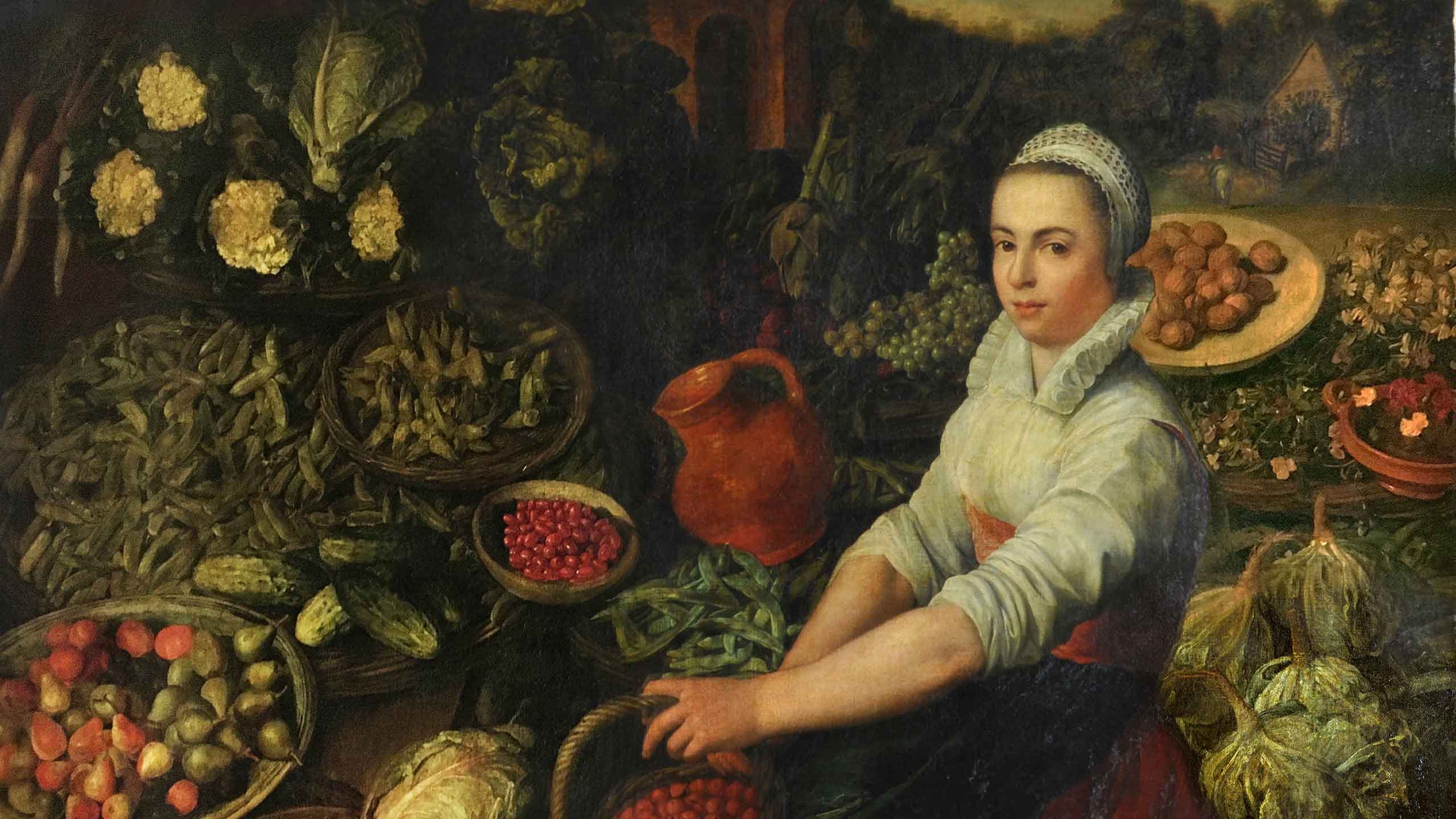
Autumn has arrived to call time on my third growing season at the veg patch. I still have some hardier brassicas, such as cabbage, sprouts, and broccoli, in the plot. Still, the good times are indeed over, and my decidedly unexciting overwintering crops, such as leeks, onions, and garlic, are almost ready to go in. Looking back on the growing season, I can recount my successes and failures.
I planted tomatoes for the first time and found them to be an astonishingly weak and needy plant. First, as seedlings, there wasn’t enough daylight; then, as plants, it was too cold; then they had too much water; then they demanded expensive fertiliser. During the summer heatwave, it was too hot.
Conversely, a great success story this year was the scarlet runner beans. As the tomatoes cried out for attention in the greenhouse, the scarlet runners happily climbed a makeshift trellis and delivered copious numbers of foot-long (!) pods.
I had a huge potato harvest, though the peas turned out to be a complete disaster as I once again didn’t account for how tall they would grow.
Sitting alongside my onion and leek seedlings are a few rarer, more unusual plants that I’m experimenting with.
And there’s a story behind that…
Unsurprisingly, the YouTube algorithm pushes gardening “content” quite aggressively onto my video feed. Earlier this year, I was recommended a video titled 15 Forgotten Vegetables Medieval Farmers Grew That NEED to Come Back. The video, which I suspect was primarily AI-generated, listed numerous herbs and vegetables from the Middle Ages that have since fallen out of our daily diets. Despite the “slop” nature of the content, I was intrigued by the premise and investigated further.
I have to admit I hadn’t given much thought to how our food has changed over the centuries. If William Shakespeare saw a potato at all, it would have been considered an oddity, perhaps an aphrodisiac. The Romans never knew what a tomato was. Neither did Leonardo da Vinci.
As European men sailed on into the uncharted, untamed wildernesses of the world, they returned with novel crops that slipped into our daily diets until we no longer recognised them as foreign. Traditional crops that would have been familiar to a medieval monk or peasant were pushed to the edge of the plate, so to speak, then forgotten about entirely.
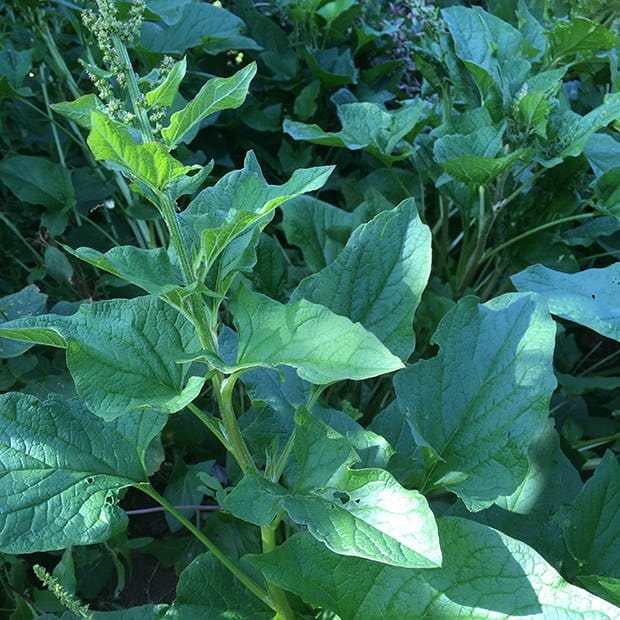
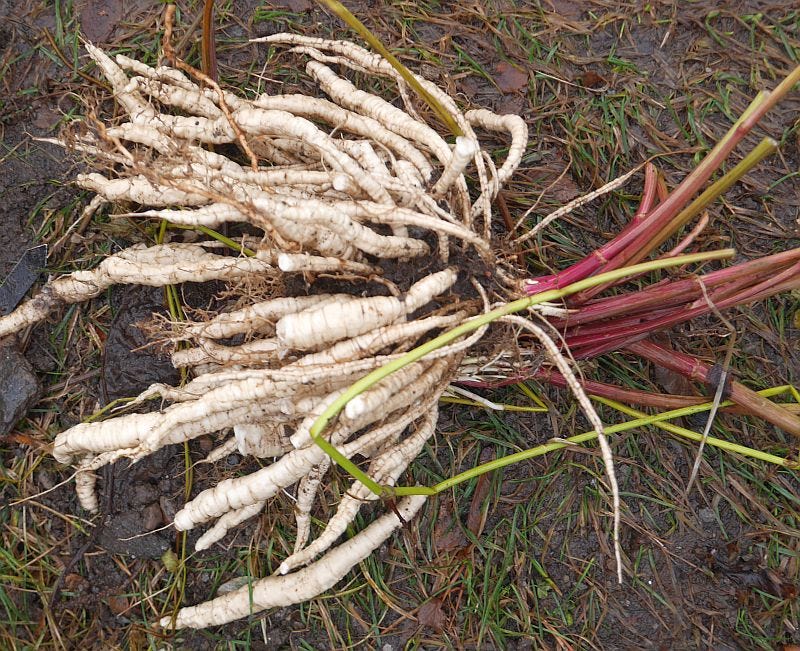
Who today has heard of Good King Henry? It was also called “Poor Man’s Spinach” or “perennial goosefoot”. Another is lovage, a relative of parsley and celery. Tansy is a pretty aromatic plant with bright yellow button flowers and a wide array of uses, some of which seem decidedly dubious, if not downright dangerous. Then there’s skirret, a relative of the carrot and parsnip that forms a thick mop of nutritious bulbs. Another root vegetable we don’t hear much about these days is salsify, which is said to have a seafood taste.
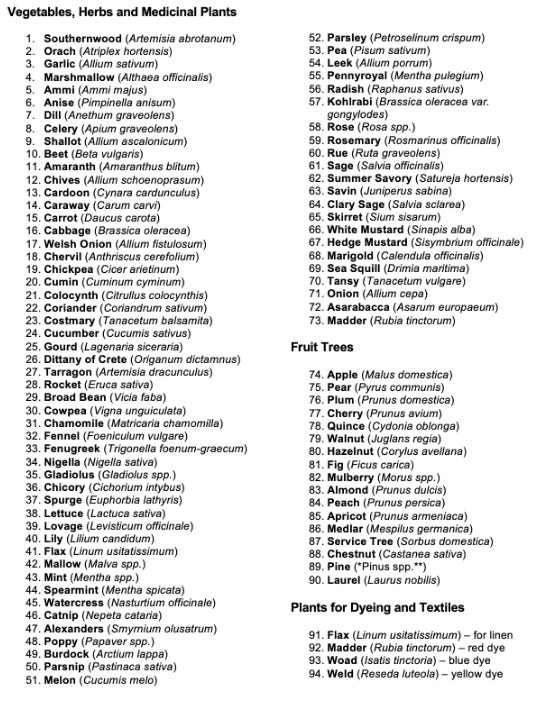
The list of foods we no longer eat, grow, or even remember is long. The administration of Emperor Charlemagne produced a document titled The Capitulare de villis which, among many other administrative edicts, prescribed which plants were to be regarded as beneficial to the people and the Empire more generally.
The further I read about the changing tastes and culinary habits of Europeans, the more I felt as if I were in a murder mystery. Why, for example, had I never even heard of lovage, never mind seen it in a supermarket? Was skirret really an inferior potato or carrot that had to be tossed into the historical and cultural phantom zone? Was it a conspiracy? If Good King Henry is a poor man’s asparagus and spinach, why wasn’t it readily available?
The first clue dawned on me when I realised why I suddenly wanted to order seeds and try to grow some of these forgotten plants: they were perennials.
(A plant that is sown and goes through its entire lifecycle within a year is called an annual. A tomato or a bean is an annual. A plant that sits in the ground for years and years, delivering crops seasonally, is called a perennial. Rhubarb or an apple tree is a perennial.)
As we head deeper into the mystery, we discover that it is not so much the case that tastier foreign crops displaced and replaced older, native ones, but that herbs and vegetables began to be chosen for their growing cycles. For a medieval monk or peasant, the incentive was to grow reliable crops that required minimal effort and were as close to the kitchen as possible. Therefore, a tough, hardy crop such as skirret or lovage was ideal as, once planted, it delivered year after year.
It is, quite literally, a matter of rootedness.
To be sure, the Middle Ages gardener did not only grow perennials, but also annuals, which fit into a more rhythmic existence where core crops were settled and the plot merely needed to be tended.
The problem is that such a system does not replicate or survive well in a mass, scale-based civilisation. Indeed, during the Industrial Revolution, the peasantry was mainly shuffled off the land and into the mills, mines, and yards. Food staples became rationalised; the incentive was toward scalability and efficiency.
A landowner or a market shareholder needed to be able to assess costs and benefits across the entire year. The market needed to adapt quickly to weather, rotted seeds, or problematic supply chains. Workers needed to be supplied with nutritious food at ever greater volume. Here, a crop such as a potato outstripped the skirret on almost every metric except durability and hardiness.
The deep roots were severed and replaced by a more transient, market-friendly model. Europeans ceased to be part of the natural order, no longer bringing it forth into life but commanding it through technique. Nature became a uniform standing reserve, its rhythms subordinated to production schedules and profit margins. That transformation shaped more than crops; it shaped our senses.
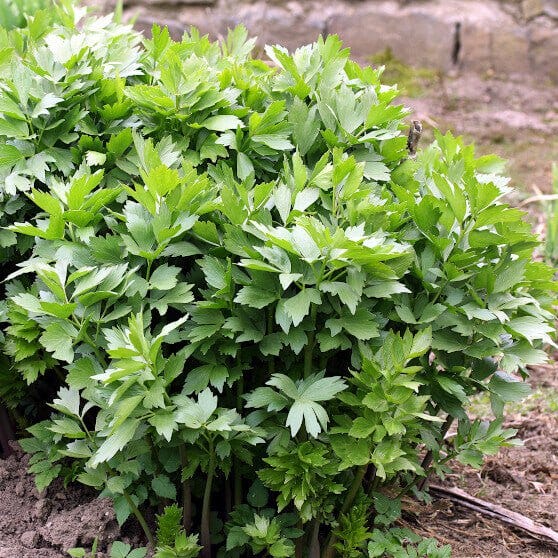
We never truly decided that celery was tastier than lovage — it isn’t — we simply had our choices made for us by a mechanised system that required mildness, uniformity and speed.
It is a story of the triumph of the “Reign of Quantity” regardless of culinary tastes and aesthetics. Technique favours the generic, the Disneyfied, and the bland, which is why so many people would view the clumpy mass of gnarled roots of the skirret plant as hideous, and the childlike orange demeanour of the carrot as comforting and familiar.
Yet, as this society of mass and scale slips ever further into outright madness and nihilism, we yearn for an off-ramp, a bolt-hole that will take us back to rootedness and belonging. How often have we unknowingly wandered past a clump of Good King Henry by a crumbling old wall? Or a tangle of lovage nestled in a hedgerow?
My interest in these vegetables began because they were perennials, because they’d be there regardless of other conditions. The definition of perennial is:
lasting or existing for a long or apparently infinite time; enduring or continually recurring.
It is a glimpse into another, older world, where time operates differently and independently of the demands of digitised processes; it is of the past, and very probably of the future too.
In a world that has passed beyond uniformity —the standardised, the generic —perhaps they will have their revenge.
Source: Morgoth's Review


Comments
Post a Comment