Florida Gothic
Florida Gothic
Zora Neale Hurston and the Sunshine State's Crime of the Century
Librarian of Celaeno
On August 3, 1952, Ruby McCollum, a black woman living in Live Oak, Florida, drove with her two youngest children to the office of Leroy Adams, a beloved local white doctor and newly elected state senator, and shot him to death in his waiting room. She was arrested shortly after and put on trial in a case that attracted national news. It was a real life story that resembled nothing less than the plot of a Southern Gothic novel, and it is thus fitting that the most notable reporter that showed up to cover the proceedings was one of the greatest Southern writers, Zora Neale Hurston. It was her story, a crime story, a black story, a Southern story, and a Florida story, particular in all those ways, and yet something Aeschylus would have recognized as the tragic course of human nature.
I’ve written about Florida before- my native state, my favorite state. Its past is as fascinating as its present. In the period before the Civil War, it was very much a Southern state, but the whites who settled in the torrid, malarial, hurricane-blasted land were a breed apart. Even the area of the Cotton Belt, that triangle bounded by Tallahassee, Jacksonville, and Gainesville, where most of the population lived in those days and where the climate was considered the most salubrious, had to tough out an existence mitigated elsewhere by a more gentle progression of seasons. Like their mostly Scots-Irish forbears they were hardy and violent, but also eccentric and- in interesting ways- somewhat fanatical. Florida was the third state to secede from the Union, close on the heels of fire-eating South Carolina and the very Mississippian Mississippi. But the commitment of those latter two states to the cause was dwarfed by the energy coming out of the Citrus Kingdom. Florida had the smallest white population of any Confederate state but contributed by far the highest per capita ratio of military participation, with an astonishing 94% enlistment rate among eligible whites, along with arguably the highest death rate at a staggering 33%. The secessionist governor, John Milton, killed himself rather than surrender, like some Japanese general from WWII. Jefferson Davis and Robert E. Lee just went on with their lives.
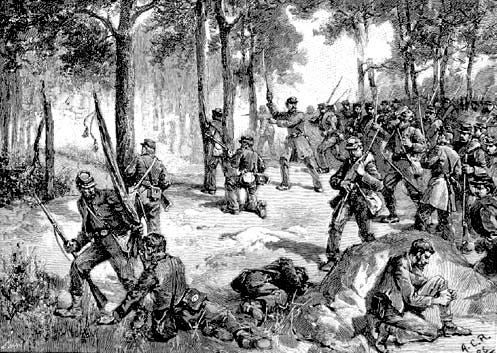
The Battle of Olustee in 1864 was one of the few major battles fought in Florida proper, where the South was naturally victorious.
The black population of Florida, nearly half the state at the time, was naturally less enamored of the now-Lost Cause than their white neighbors, and attempts by the occupying Union government to enforce racial equality were met with no small amount of what we in the South might call “unpleasantness” on the part of the latter. During the period known to historians as the Nadir of American Race Relations, Florida achieved the lamentable distinction of having the highest per-capita lynching rate of any state. Interestingly, though black Floridians left the state in significant numbers during the period of the Great Migration, others moved in, and the state’s black population actually experienced a net increase. Florida, after all, hadn’t been ravaged by Union marauding like its neighbors to the north, and also interestingly, for all the racial tensions, Florida was actually home to prosperous black communities that had long thrived even in the Antebellum period. With a growing agricultural economy, a booming shipping industry, and plenty of inexpensive land, Florida made for an attractive place for blacks looking to move up in the world.
There’s a side that isn’t grimy?!
The Hurston Family was one such group, making their way down from northern Alabama in 1894, the toddler Zora (b. 1891) riding with her mother on a horse-drawn carriage. John Hurston and wife Lucy had heard about Eatonville, a town in Florida inhabited and governed solely by black people, and John set up shop there as a carpenter and itinerant Baptist preacher. He did well; the eight Hurston children grew up in a spacious, two-story, eight room house on five acres in the center of town. Eatonville, just northeast of Orlando, was a wholly black community not because of segregation, but by the choice of its founders, who departed the mixed yet more-or-less racially harmonious nearby town of Maitland for still better prospects on their own. Hurston would claim for the rest of her life to have been born there and may have believed it to be true, but as we’ll see, in many ways she was her own most complex fictional character.
Growing up in a confident and prosperous world comprised solely of fellow black people profoundly influenced Hurston. Being black was both the most and least significant thing about her; she was at once almost the pure product of a black American Bildungsroman and yet fiercely determined to be seen as a black woman individual, not a cipher for her race. She would, in her time, be at the forefront of avant garde black art and culture across an astonishing array of mediums as well as a researcher into the most fundamental aspects of the traditional black experience, but scorned the prospect of black causes as such, especially any political movement she saw as emphasizing victimhood or dependence. In this, she would befriend (and alienate) a staggeringly long list of important black and white intellectuals throughout her life, and it would be they, rather than the frictions of the wider white world, that would prove a source of strength and a persistent drag.
Two things stood out early. First, she was determined to be independent, which for her meant freedom from attachments. The example of her strong and hardworking but hypocritical and philandering father showed what she might expect from living as her mother did. In addition to not being a housewife, she would do everything she could to avoid regular, paid employment. Second, she had an intense intellectual drive quite unlike any other black figure of her day. Her mind was eclectic, capacious, and never satiated, but most of all characterized by a spirituality informed by the rejected Baptist Church of her youth but fundamentally more primal and questing. She had visions as a girl, each of which she would claim came true, and which she followed as her guide in favor of any council any person might give her. Valerie Boyd’s eminently readable biography of Hurston gives this anecdote of her as a young girl encountering some books sent to her school by missionaries from Minnesota:
… She was enamored of characters who exhibited strength and who thirsted for knowledge. She particularly loved “the great and good Odin, who went down to the well of knowledge to drink, and was told that the price of a drink from that fountain was an eye. Odin drank deeply, then plucked out one eye without a murmur and handed it to the grizzled keeper, and walked away. That held majesty for me,” Hurston would remember (37).
On the right, it’s common to encounter the notion that aesthetics and culture and race are all bound up with each other; it’s thus an interesting counterexample to see a preteen black girl from the rural Florida of more than a century ago being shaped by the Eddas as surely as if she were some contemporary German nationalist. Her life would be dedicated to the single-minded pursuit of knowledge and the work she produced- fiction and nonfiction- was the creative expression of that very Odinic drive. It was a quest for which she was quite willing to sacrifice everything a normie might hold dear.
Ruby McCollum, neé Jackson, grew up about 70 miles to the northwest, in Zuber, near Ocala, a generation after Hurston was born. Like Hurston, the young Ruby was determined to escape the limitations she faced as a black woman in the rural South, but very unlike Hurston, McCollum would seek her fortune by attaching herself to a powerful man. She married the ambitious Sam McCollum after graduating high school, and they moved to New York for a time. She and Sam would later return to Florida and amass a fortune, more on that to come.
Hurston made her way to New York by a far more circuitous route. Leaving home after the death of her mother and her father’s remarriage to a girl near her own age whom she hated, much of her time between the ages of 20 and 26 is lost to history. Parsing through the hints Hurston left in her own writing, Boyd posits some sexual abuse at the hands of some (probably white) employer, as she worked a number of short-term secretary and housemaid jobs while she made her way around the South in search of nothing in particular but knowledge. She wanted to go to school, and through family connections and her own wits made it to Baltimore, where in those days it was still possible to get a high school education.
I mean, you’ll learn something…
The 26 year old Hurston claimed to be 16 in order to qualify for a scholarship, and her grades and evident talent landed her a chance to enroll at Howard University in nearby Washington DC. Then as now, Howard was foremost in black higher education, then boasting a formidable program that demanded graduates be proficient in Latin and Greek. She never was good with languages, and didn’t graduate, but did get her start in journalism and fiction there, writing for The Stylus and coming to the attention of philosophy professor Alain Locke, who was one of the leading black intellectuals of his day and a man with friends all over. She’d always known her worth; now others would see as well.
There’s an almost whimsical randomness to Hurston’s life, where she more or less just ends up in interesting places doing interesting things. Even the odd jobs she had to perform to stay afloat over the years were of the most varied type. She worked as a makeup artist for a travelling theater company, where she learned the conventions of drama. She learned politics from the powerful all-white clientele at the black barbershop in Washington where she worked as a manicurist. She smooth-talked her way into Barnard and then Columbia University, where she would study under none other than Franz Boas. And her friendship with Locke brought her entre into the Harlem Renaissance.
Otherwise known as the New Negro Movement, the Harlem Renaissance was much like the Groypers- a mostly non-white, mostly homosexual collective of politically subversive edgelords determined to troll the respectable world. Unlike the Groypers, they were bright, talented, committed intellectuals who sought to showcase a novel creative vision. Staid old-timers like W.E.B Dubois hated them, but that was kind of the point. It’s common to see Hurston listed as one of their number, but in many ways, she was an odd fit. In addition to being an (aggressively) heterosexual woman, Hurston was the only Southerner in the mix. Black northerners had (and have) all the same prejudices toward their bottom-half-of-the-map cousins that whites do, and leading figures of the New Negro Movement like the prissy, Carlton-esque Locke looked to Hurston for a kind of primitive authenticity that he felt rural black Southerners possessed rather than her intellectual abilities. For her part, Hurston dubbed the particular circle around her, which featured Langston Hughes and Countee Cullen, the “Niggeratti.”
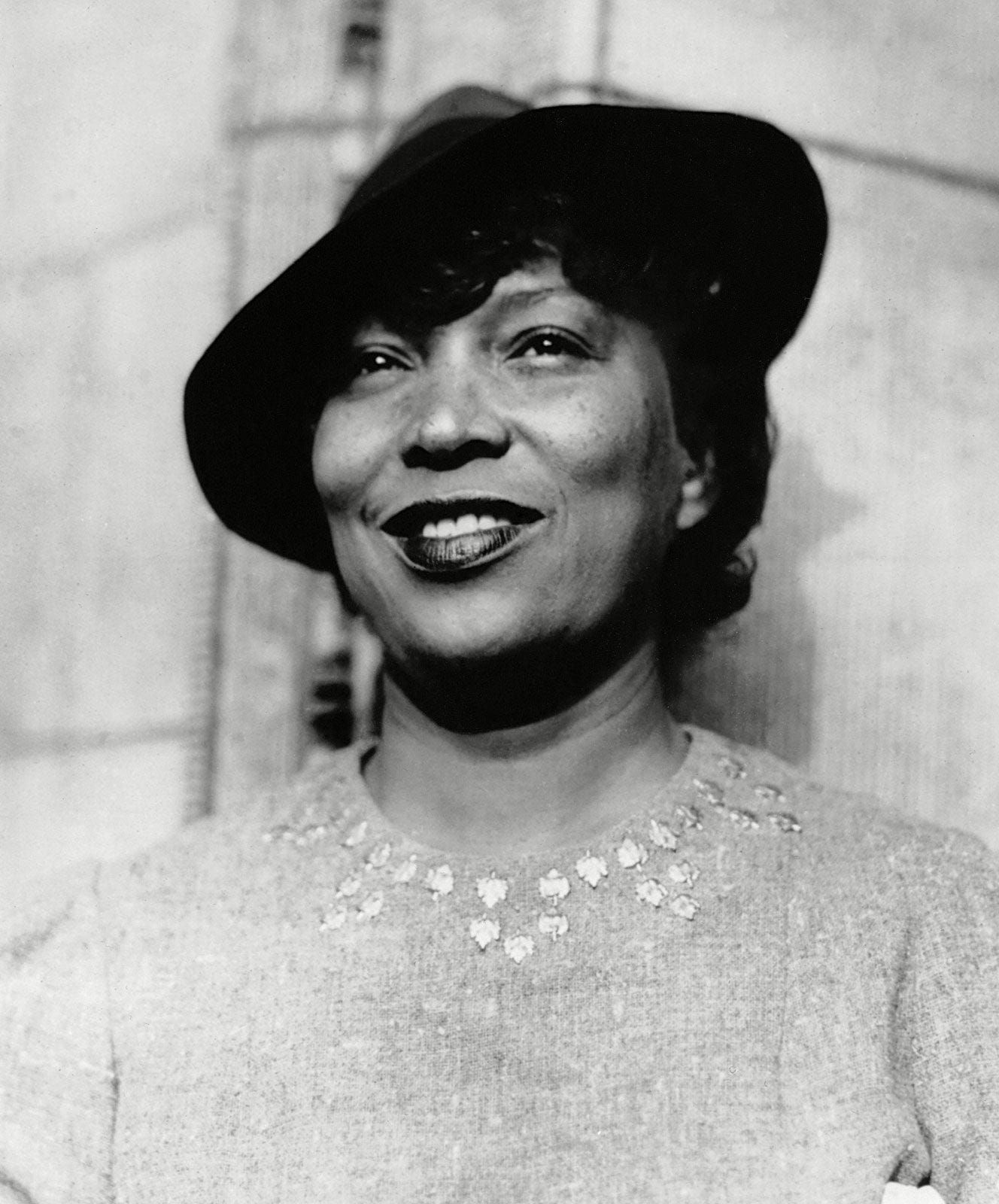
One might imagine Queen Latifah playing her in a biopic.
It’s also interesting that during the heyday of the Harlem Renaissance, from roughly the end of WWI to the Great Depression, Hurston created little in the way of original output. Most of her energy during the period was spent in school, learning anthropology from the aforementioned Boas, godfather of the field in the US. Typically, she learned a lot without bothering to finish the degree program. Pace the oft-expressed idea that culture is the product of some urban caste of experts, Hurston did nearly all of her best work either in the rural South or abroad in the Caribbean, where she would work over much of the next two decades collecting material related to black folklore, religion, and magic.
Among her more notably scholarly work, she wrote Of Mules and Men (1935), a (largely) carefully amassed collection of traditional stories from the region, an important resource for those wishing to study the rapidly disappearing world of rural black America. I can remember as a young man, working with a crew of mostly black laborers from such places as Valdosta, GA, and No F******where, AL, who would matter-of-factly describe scorned girlfriends burying their panties in the workers’ yards, or bewitching them such that they were unable to leave home. It was simply taken for granted by them that such powers existed and could be manipulated for and against them, a folklore born of the same genetic mixture in their blood- the Dark Continent, the Scots Borderlands, along with bits and pieces from the Indians and the scarier parts of the Caribbean. Of the latter, she wrote Tell My Horse (1938), which was the result of her fieldwork in Jamaica and Haiti.
Hurston was perfectly willing to immerse herself in those practices herself, both for scholarly and personal reasons. She sat at the feet of root doctors and witches, Hoodoo priests and Voodoo hougans, learning their arts in ways she would write about, but never quite fully reveal. In a scientific and materialistic age, she sought wisdom in the more primal, atavistic forces of the universe, an intuitive and pre-psychological understanding of man and his relationship with the world. In her way, she was something of the black analogue to contemporaries Evola and Guenon, save that her Tradition was ultimately rooted in the primordial spiritual landscape of Africa.
What we’re all waiting for
This approach to black life and spirituality informed all of her work. Her early novels- the semi-autobiographical Jonah’s Gourd Vine (1934) and Their Eyes Were Watching God (1937)- widely considered her masterpiece- were stories about rural black people being black people, complete with their low-coded dialect and eclectic spiritual practices, rather than making an actionable political issue out of the black condition, which further set her apart from her peers, from whom '“the movement” demanded serviceable fiction. Most notable in that regard was Moses: Man of the Mountain (1939) her most ambitious and ambiguous effort, a strange, allusive exploration of male power, faith, subversion, and magic. Always and everywhere she sought to center the black experience, but solely to showcase its depth, its particularities, and the ways in which it could be understood in terms of human universals, which to her was an end unto itself. Hurston was fully aware of the prejudice she faced and denounced the injustices and violence emanating from the wider white world, but refused to delineate the black experience as protest or suffering. Blackness, for her, was an antonymous, collectively-actualized universe unto itself, possessed of a unique spiritual presence, that produced a people with a distinct identity who yet had to struggle to become fully themselves as individuals. Race propaganda, however politically useful, was for her a degradation.
Ruby McCollum also left New York to return to Florida in the early 1930s, along with her husband Sam. They settled in Live Oak- midway between Tallahassee and Jacksonville. While Hurston pursued knowledge at the cost of money and family life, and led a peripatetic existence, the McCollums set up permanently in a large home, producing a number of children and no small amount of wealth. The latter came by way of crime. The McCollums ran a numbers racket based on bolita- an illegal gambling enterprise- as well as a network of juke joints throughout the state that provided places to consume liquor in the many counties that remained officially dry after the end of prohibition. They were perhaps the richest black couple in Florida at the time, but keeping it all going necessitated the corrupt connivance of law enforcement and politicians. It was through this relationship that they came to the attention of Dr. Leroy Adams.
Dr. Adams was the scion of a political family that dated to before the Civil War, a good-old-boy’s good-old-boy beloved by the residents of Live Oak and beyond, white and black, the poorer of either of whom he would call upon at home and treat without cost or prejudice. He had political ambitions himself, and would successfully run for state senator as what he hoped would be a prelude to higher things, which he had every reason to suppose were possible. But beneath the facade of folksy, small town noblesse oblige was a vicious, hateful psychopath and a prolific and versatile criminal. His loving care for the poor was the pretext that allowed him to scam the Department of Agriculture and Blue Cross insurance*, as well as profit from drug dealing and illegal abortions. After the trial it came out that he’d faked his way into medical school in the first place. He muscled into the McCollums’ racket using both charm and the implicit threat of his closer relationships to white officialdom to shut them down, then proceeded to force himself on Ruby, whom he made to bear a child by him as an act of domination, while also addicting her to drugs and having her forcibly committed to an insane asylum when she resisted.
[*Edit: The article originally mentioned “Medicare” mistakenly. Dr. C. Leroy Adams actually scammed a number of other institutions.]
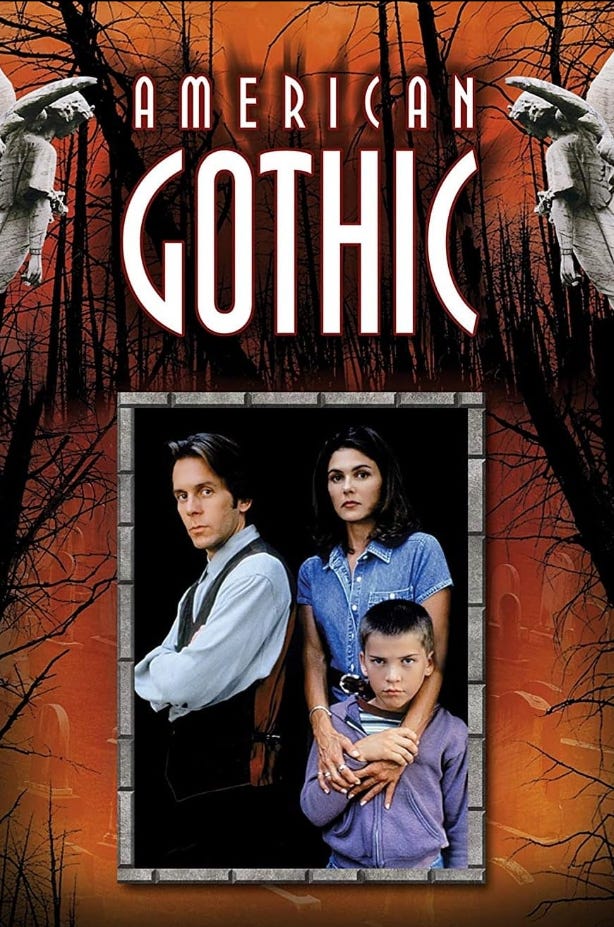
He’s legitimately like the sheriff in this awesome show you all forgot about.
As with all things racial in the South, of course, it was not simply about race. Ruby McCollum was both attracted to powerful men and resentful of their dominance. Her feelings for Adams were ambiguous, rooted in a longing for the power he could command as the town’s crimelord and her increasing resentment of her abusive and adulterous husband Sam, but repulsed by the doctor’s own brutality and his indifference to her suffering. When he impregnated her a second time, she demanded an abortion, his response to which was to threaten to kill her, which she knew would also be Sam’s reaction if she bore another child by the doctor. Her increasing desperation over the week before his death, as well as the effects of mental illness and drugs, would have made what was coming obvious to anyone who cared to notice, which no one did.
For her part, Hurston was also having a hard time by the 1950s, though of a very different nature. Whereas McCollum had all the wealth in the world but no freedom, Hurston found herself, by the mid-40s, on the downslope of her career, with little prospect of things improving-free, but with nowhere to go. Her final novel, Seraph on The Suwanee (1948) was an ambitious attempt to write about rural white people from a black perspective, but did not net her much money. She became embroiled in a bizarre scandal wherein she was arrested and accused of molesting a young boy in New York. She was able to prove she’d been in the Bahamas during the time of the alleged crime, but false accusations, then and now, linger on in the public imagination far more powerfully than the proof of their mendacity, and it made publishers leery of her at a time when she really needed their support. The incipient post-WWII Civil Rights Movement was led by exactly the sort of black people who disagreed most profoundly with her approach to politics and culture, and she found herself on the wrong side of a number of issues, most notably her disdain for the Brown v. Board of Education ruling that ended de jure segregation (she predicted it would lead to the destruction of black schools and communities). The more radical elements of the movement found her rural settings and authentic dialect as backward and patronizing, apparently on the assumption that real black people live and speak like whites.
She had never been able to bring herself to work a steady job for any length of time, but she had no interest in charity, so when the grants and advances and royalties dried up, she did what she had to do. The former student of Franz Boas should have been able to secure some comfortable academic appointment, like others from the Harlem Renaissance did, but she was as temperamentally unsuited for academia as she was for heavy industry, and alienated college presidents with her need for more freedom than they were prepared to grant. So she went to work as a technical librarian on an army base, which didn’t last. She cleaned homes as a maid. And saddest of all, she got hired on as a public school teacher, where she encountered the educational anomie unleashed by the Civil Rights Movement firsthand, but was soon forced to leave, as the other teachers were jealous of her fame and the state of Florida was unwilling to grant the foremost black woman author in the US a license to teach English to teenagers.
She had actually married several times, just as randomly as she did everything else. Her biographer Boyd herself seems surprised when her primary sources show Hurston causally announcing a wedding to some man she’d hardly mentioned in correspondence, and she is at pains to understand how the some of the relationships even came about. She never lived with any of her husbands for any significant length of time, and would causally divorce them years later as a afterthought, having had a number of other relationships in the meantime. The man she called the love of her life was Percy Punter of Barbuda, a college student in New York more than twenty years her junior, whom she refused to marry (she instead immortalized him as Tea Cake in Their Eyes Were Watching God). The man who should have been the love of her life, Langston Hughes, was indifferent to women, and the two had at any rate had a pointless falling out over a play they’d co-authored that left an unnecessarily permanent rift between them.
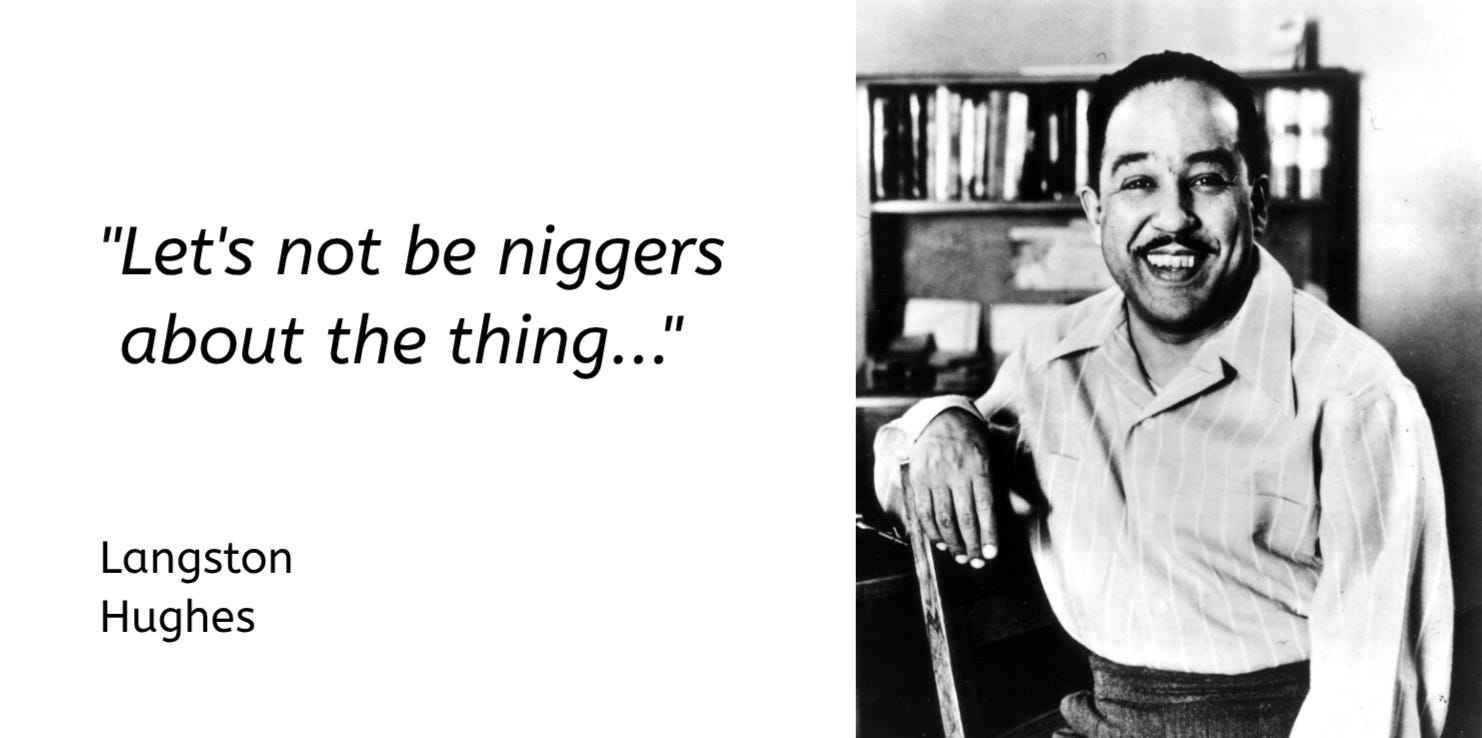
Hughes from a letter attempting to reconcile with Hurston. Frameable for your school’s Black History Month inspirational quote board.
The painful truth was that Hurston simply couldn't accept any compromise in her lifelong pursuit of knowledge and creation, nothing that the demands of a family or a career would entail. Through struggle and suffering she won the right to be herself, but at the cost of poverty and loneliness. Love was the eye she had to pluck from her face to drink from the well. She claimed no regrets.
Thus was her life when the opportunity arose to cover the Ruby McCollum trial as a freelancer for the prominent black newspaper The Pittsburg Courier. With a small stipend, she traveled to Live Oak from her latest home in Eau Gallie, Florida (near Daytona Beach) to report from the scene. As it happened, Hurston had some unique qualifications to cover the case, not only as a quasi-native Floridian, but from her research into the logging camps in the northern part of the state, where, as with McCollum, powerful white men would simply claim black women as concubines and demand children of them. In any case, she well understood the racial and sexual dynamics at play.
The verdict in one sense was a foregone conclusion. Ruby McCollum had openly stalked the doctor for a week and shot the unarmed man multiple times in the back in front of witnesses. A generation earlier, she would almost certainly have been lynched. But in the period after the war, with mass media ever more interested in covering racial issues, that was simply not going to happen.
This was unfortunate for the locals because the last thing anyone in Live Oak-black or white- wanted was a light shined on their town, given that most of the officials there and a good part of the citizenry were complicit in the McCollums’ criminal activities. The IRS was already snooping around and asking pointed question of notable townspeople. Ruby had kept the books for the racket. She could name names if it came to it, though she seemed disinclined to do so. Her defense rested on a tenuous claim of self-defense, and she was allowed to testify, for the first time in US history, to being a black woman raped by a white man, and that Dr. Adams had fathered her youngest child. But any further elaboration on their relationship was hastily shut down by the judge, who had known Adams before the trial and served as a pallbearer at his funeral. The prosecution argued that the sexual elements were all made up or irrelevant, and that McCollum was actually upset over a bill Dr. Adams had given her, which she’d refused to pay.
Sam was unavailable to testify. Realizing that his life was essentially over, he drove his children to his mother’s house and took an overdose of his heart medication. Ruby lost her unborn child in an stress-induced miscarriage while incarcerated. She’d begged Adams to kill her baby; now Adams was dead, Sam was dead, and Ruby would be sentenced to death in turn.
As it happens, she had been upset about the bill, but not in the way the state argued. McCollum of course had the money to pay. The issue was what the bill was for. What finally drove Ruby McCollum over the edge was that Dr. Adams had performed an abortion, but for Sam’s mistress. She’s discovered the note while doing the books for the criminal operation, from which Adams expected to be compensated.
Though put on death row after her conviction, there would be a reprieve. No one important in the area wanted an appeal that would drag on through less friendly venues and with increasing risk of unpleasant facts becoming public knowledge. So far, Ruby McCollum had not opened up about the dark side of Live Oak, other than to note that the bolita ring existed and that Adams had been a part of it. But he was dead, and it hardly mattered that people at the trial had testified about him concerning the envelopes full of cash he regularly received at his office. The living, however, had a strong interest in the story ending there. Thus, when the Florida Supreme Court overturned the original verdict on a technicality, opportunities presented themselves. It’s impossible to prove, but one might conjecture that all parties involved contrived to make the whole thing go away by having McCollum declared too insane to stand further trial, the plausibly of which having ironically been established by the late Dr. Adams’ paper trail when he’d had her institutionalized earlier. She was thus packed off to Chattahoochee, Florida, to the Florida State Mental Hospital, a forlorn place that remains quite rural to this day. She remained there for twenty years, until she was deemed safe to reenter society. She died in 1992, never having named names.
It’s a shame that Hurston only ever published dispatches from the trial, as the novelistic nature of the case is readily evident to anyone who knows the story. But perhaps the reason is that the Southern Gothic elements present require a Christian mindset to truly grasp. The Ruby McCollum story is one of secret sin, sexual violence, vice and greed, and the torments of souls corrupted by evils petty and grand. It’s something Flannery O’Conner, William Faulkner, or Tennessee Williams could have done much with; it would have made a Dominick Dunne masterpiece. But the profoundly pagan Hurston left it as it was. That’s tragic in its own way, because her coverage of the trial would be her last significant bit of writing.
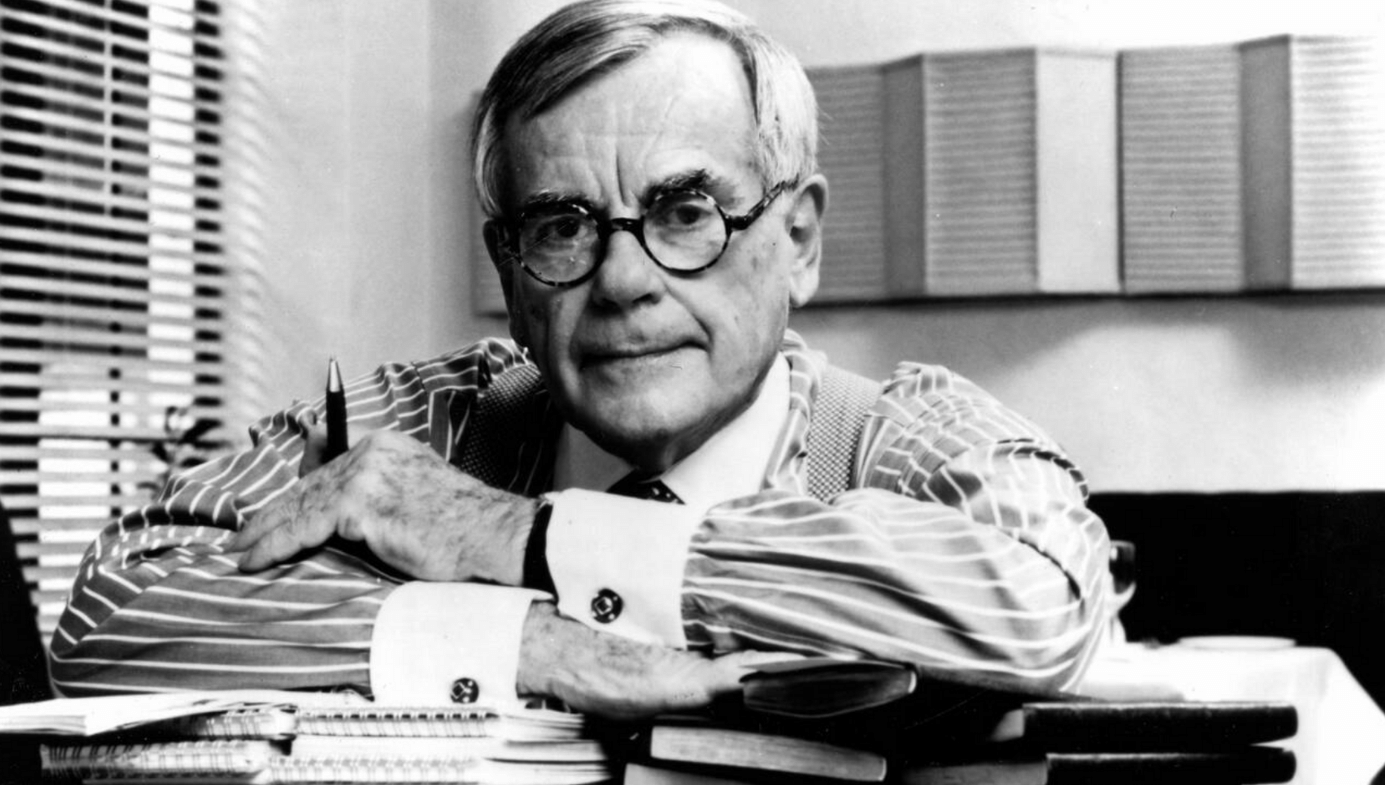
I’m honestly surprised he didn’t know Hurston; this guy knew everyone.
She was getting old now, and it was showing. The typical southern diet had done her no favors over her later years, and her chain-smoking certainly didn’t help an increasingly severe heart condition. She lived in poverty in a small rented home, gardening and gossiping until she had to be taken off to charity hospice care. Zora Neale Hurston died on January 28th, 1960. She’d been working on a novel about Herod the Great at the time. Hilariously, in keeping with her lifelong practice of obscuring her actual age, no one could agree how old she was in the announcements.
She’d never owned a house or had children, and her estate lacked the funds even to bury her. Enough in the way of donations came in from friends and neighbors for her to be placed in an unmarked grave on the grounds of what is today the Garden of Heavenly Rest Cemetery in Fort Pierce, Florida. It remained that way until writer Alice Walker became interested in Hurston’s work, leading a revival of her legacy and commissioning a proper gravestone. It’s probably fitting that Walker is another political and religious oddball (a huge fan of David Icke, Holocaust denial, lesbianism, and Transcendental Meditation) and unlike the male homosexual communists of black literature who’d worked to sideline her, could appreciate where she was coming from.
In writing an essay like this, it’s impossible not to become immersed in the person who forms the subject. You wish you’d known him or her. You wonder what you might say to the person were he or she in front of you. Could you relate? It’s here that I think it’s important to understand identity, not as a fixed and distinct thing, or at least, not as one fixed and distinct thing, but as a series of concentric rings, some of which overlap with the rings of others at points. There are ways in which I am similar to others and ways I’m distinct, and those points of contact can vary a great deal. Zora Neale Hurston was a black woman, a pagan, politically sui generis and culturally formed by a past very different from my present. I have a family and a career; she made her way through life her own way. But we are both writers, both Americans, and perhaps most significantly, both Southerners. We come from the same state, breathed the same salt air, had our very different skins warmed by the same sun.
If she were here, I would tell her about Substack and the internet more generally, how now it’s easier than ever to make your way without publishers and middlemen. She would have thrived here, with an Alice Walker-esque The Color Purple checkmark, with readers from across the spectrum of race and class and politics and religion. She would have known the security she’d given up for independence, without losing the latter in the process. I might hope she’d subscribe to me.
At any rate, one thing that unites all of us, whether we wish it or not, is the fate we all share. Mortality is our common inheritance, and suffering our lot in life, no matter who we are. It’s what unites us all across all lines of race and class and nationality. For my part, when I meet my end, I’d be happy knowing I was remembered the way Walker memorialized Hurston, right down to the words:
A GENIUS OF THE SOUTH
Note that the tombstone erroneously lists her birth year a full decade after the actual date.
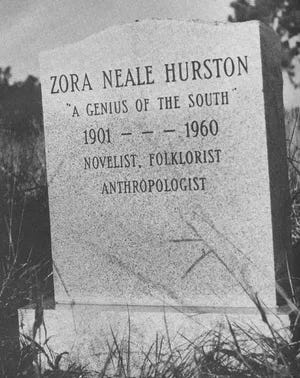
Source: The Library of Celaeno


Comments
Post a Comment