At Arm’s Length of Epstein
At Arm’s Length of Epstein
The G20 didn’t drum up the IMEC standards on the spot.
The OECD and BIS developed that architecture between 2019 and 2022, and the G20’s September 2023 announcement was merely a political sign-off.
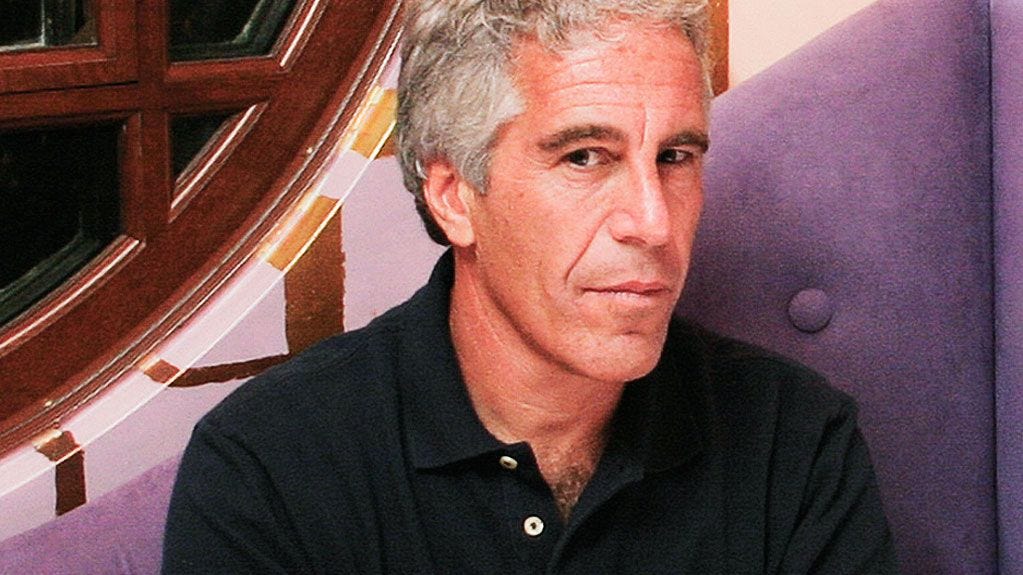

In February 2011, a blueprint for an impact-investing vehicle landed with the head of JPMorgan’s investment bank. It identified a structural flaw with precision1: ‘The tension is making money from a Charitable Org. Therefore the money making parts need to be arms length’. Within eight months, JPMorgan was building the product, and within a year the Global Health Investment Fund2 was operational.
Jeffrey Epstein wrote that blueprint.
The Partnership for Global Infrastructure and Investment3 didn’t inherit a generic blended-finance template, but a specific architecture designed through named parties at JPMorgan in 20114, and in private forums at Waddesdon Manor between 2014 and 20185. The G7 summits simply put names and figures on a system developed upstream over the previous decade.


The blueprint that arrived in 2011
Epstein laid out a Gates-linked donor-advised fund to Jes Staley on 6 February 2011. ‘You could tie it initially just to the gates program, minimum gift 100 million. It could then be opened up later. It will be the largest foundation in the world. Done right its 100 billion dollars in 2 years’. The problem was extracting returns from charitable capital without legal or reputational risk. The arm’s-length principle fixed that: the charitable purpose became the compliance layer that authorised the financial extraction, while the money-making parts sat at the necessary distance.
By August 2011, JPMorgan’s two most senior executives — Staley and Mary Erdoes6, then CEO of JPMorgan Asset and Wealth Management, overseeing $2 trillion — were writing directly to Epstein about the architecture. Erdoes sent structured operational questions from holiday: who directs investments, who directs grants, what technology platform, what governance arrangement. Inside JPMorgan, the initiative was called Project Molecule7. By the end of 2012 it was up and running as the Global Health Investment Fund, a proof of concept for a financing model that would scale across infrastructure, climate and development finance over the following decade.
The framework had already been launched publicly two years earlier. In September 2009, Bill Clinton unveiled the Global Impact Investing Network at the Clinton Global Initiative8, backed by JPMorgan, the Rockefeller Foundation and USAID. The Rockefeller Foundation had coined the term ‘impact investing’ at its Bellagio Center in October 20079. By June 2013, David Cameron endorsed the UK variant — ‘social impact investment’ — at the G8 summit10. Across three jurisdictions, the same idea carried three names: impact investment, blended finance, and social impact investment.
In October 2011, Hillary Clinton’s State Department signed off $285 million in taxpayer money for impact investing funds11 — the first major government commitment to the architecture. That same month, JPMorgan put Epstein on a call with a Gates Foundation director about a ‘unique new impact investment product’12. The Secretary of State authorising the public funding and the bank designing the private product were working in parallel, connected by the same intermediary.


The constraint was specified at Waddesdon
A parallel process ran at Oxford. From March 2014 to June 2018, the Smith School of Enterprise and the Environment held forums at Waddesdon Manor — Jacob Rothschild’s estate in Buckinghamshire — funded by the Rothschild Foundation13. They produced the vocabulary that now governs climate finance worldwide: transition risk, physical risk, and stranded assets.
The first forum in March 2014 identified the strategic problem14. Risk-averse investors wouldn’t move early on climate-aligned investment. The solution was to capture the regulators and force everyone to move at the same time. It worked. By the fourth forum in October 2015, senior staff from the Bank of England, the Prudential Regulation Authority, and the European Central Bank were taking part15. Three weeks earlier, Mark Carney had delivered the ‘Tragedy of the Horizon’ speech at Lloyd’s of London16, translating the Smith School framework into central bank doctrine.
Two months later, Carney’s Financial Stability Board launched the Task Force on Climate-related Financial Disclosures17, with Michael Bloomberg as chair. In December 2017, the Network for Greening the Financial System launched at Macron’s One Planet Summit18. By 2018, the framework had reached ISO Technical Committee 322 for sustainable finance19. By June 2022, the Basel Committee had published Principles for the Effective Management and Supervision of Climate-related Financial Risks20. A pension fund holding senior debt in a fossil fuel project now faces capital requirements that make the position uneconomic.
A parallel public track ran at UNEP across the same window. The Inquiry into the Design of a Sustainable Financial System21 operated from January 2014 to October 2018, with co-directors Nick Robins22 (formerly of HSBC’s Climate Change Centre) and Simon Zadek23. It produced ten major reports including The Financial System We Need24 (2015) and Roadmap for a Sustainable Financial System25 (2017, with the World Bank). The UNEP track did the institutional architecture work — which existing bodies acquired which new responsibilities, which new bodies needed founding, how the framework integrated into the existing financial governance landscape. The Waddesdon track did the function specification — what stranded assets meant technically, how impairment cascaded through balance sheets, what disclosure obligations applied. Personnel moved between the two tracks. Ben Caldecott moved between Waddesdon and UNEP26. Robins moved between UNEP and the LSE Grantham Research Institute and the Bank of England27. The two tracks converged in the TCFD as the joint operational deliverable.
The architecture is circular. Carney launched the Glasgow Financial Alliance for Net Zero in April 2021 alongside the COP26 presidency28. It reports to the Financial Stability Board29 — the same body he chaired when he launched the TCFD30. The regulatory framework receives compliance reports from the private-sector coalition implementing it, with the same person at both ends.
The Waddesdon and Epstein tracks were built to complement each other. Epstein’s blueprint specified how the money would flow. The Waddesdon framework specified what it couldn’t flow toward. Together, they produced a system where capital could only move toward SDG-aligned, ESG-compliant, taxonomy-classified projects31, because the regulatory architecture made the alternatives commercially unviable.


The four-layer architecture
Epstein’s system has four layers, each with its own job.
Blended finance is the engine32. Public money take the losses, while private investors take the senior slice of profits, while being insulated from downside risk. The result is a product that generates private returns from cash flows paid by the population the project nominally serves, with public money covering the downside.
Impact investing sets the direction33. Capital has to flow toward SDG objectives — climate, health, gender equality, education, sustainable infrastructure. These goals are set externally by standards bodies the affected population doesn’t elect. Meeting them is the condition for capital to flow, and falling short is the trigger for withdrawal.
Stranded assets supply the constraint34. The Waddesdon framework, now baked into NGFS scenarios35 and Basel risk weightings36, turns political preference into fiduciary duty. A pension fund manager can be sued for breach of duty if they invest in a non-conforming project, whatever its commercial return. They can also be sued for failing to invest in an SDG-aligned project that meets the impact criteria.
Layer four handles enforcement at the individual level through Central Bank Digital Currencies with embedded conditionality37, and it developed alongside the financing layers with its own history. Epstein paid for the technical parts from his research budget. Ben Goertzel got funding for OpenCog38, an open-source artificial general intelligence framework, while Joscha Bach39 got about $300,000 at the MIT Media Lab. In December 2016, Bach told Epstein what’d replace failing Western institutions: ‘Our best bet currently seems to be AI: an API for integrating all fields of knowledge and control’40. Madars Virza got funding for zero-knowledge proofs — cryptographic methods that verify rules have been followed without revealing the underlying data41. Joi Ito used Epstein’s money to set up MIT’s Digital Currency Initiative42, which built Project Hamilton with the Federal Reserve Bank of Boston43. This central bank digital currency prototype handled 1.7 million transactions per second and finished in December 2022, with Virza co-authoring the transaction processor.
In April 2016, Ito sent Epstein a paper called ‘Reinventing Bookkeeping and Accounting’44. It proposed replacing 700-year-old double-entry bookkeeping with algorithmically computable accounts, making every contract, obligation, and financial dependency visible and computable in real time — not just for one bank, but for the whole system of banks and investors. Epstein added locality, while Ito said the Financial Stability Board would run stress tests on the architecture. The BIS Innovation Hub opened in 201945. Project Hamilton finished in December 2022, and the BIS published the unified ledger blueprint in June 202346, six months later. Over seven years, the architecture moved from private specification through research funding and prototype to international deployment.
The premise behind the architecture was spelled out clearly. In his Bannon interview, Epstein said political leaders ‘don’t come out of a background of finance’, and even those at the top ‘don’t understand the complexity and all the moving pieces and how they interconnect’. The conclusion followed: if elected officials can’t understand the system, those who can must run it. If no human fully gets it, machines must. AI wasn’t separate from the financing architecture. It was the very premise the architecture rested on, said by Epstein on tape.
These four layers make up one designed system. Blended finance is the mechanism, impact investing the direction, stranded assets the constraint, and programmable money the individual-level enforcement.


How PGII operates as the political wrapper
The Partnership for Global Infrastructure and Investment was announced at the G7 summit in Germany in June 202247, with a $600 billion mobilisation target by 202748. But that figure is overwhelmingly mobilised private capital, not committed public money — perhaps $200 billion in actual public commitments across five years, with the rest routed through blended finance structures that steer private capital toward PGII-aligned projects.
The PGII fact sheet names the toolkit explicitly49: the World Bank’s Public-Private Infrastructure Advisory Facility50, the Global Infrastructure Facility51, the Quality Infrastructure Investment Partnership52, and the Debt Management Facility53. Each is a blended-finance vehicle. The Global Infrastructure Facility, housed at the World Bank, packages deals into investable form for private capital, with public-sector de-risking absorbing the downside — much as the Global Environment Facility54 does for ecosystem projects.
By 2018, the OECD’s Development Assistance Committee55 adopted the architecture Epstein helped design in 2011 as the standard for development finance. By the time PGII was announced, the four-layer system was the default operating model for any G7-endorsed infrastructure initiative.

IMEC’s financing pipeline
When IMEC was announced at the G20 summit in New Delhi in September 202356, the financing followed the same pattern. The Saudi $20 billion commitment, the EU’s contribution through Global Gateway, the World Bank’s involvement, and the US DFC role57 — each is structured as blended finance, with public money de-risking private capital that captures the yield.
The corridor’s revenues — port fees, rail tariffs, energy sales, fibre lease payments, transit charges — will service the senior debt and equity tranches held by private investors, with public balance sheets underneath to absorb the downside. A Senegalese consumer paying for solar power and a European shipper paying transit fees through Haifa will be servicing the same financial product.
The same stranded-assets framework that absorbs the risk also creates the demand. European banks can’t finance domestic fossil fuel development at competitive rates because the assets are classified as stranded through the NGFS-Basel chain58. Russian pipeline gas was destroyed in 2022, eliminating the closest alternative59. The corridor’s energy pillar — green hydrogen produced to EU taxonomy standards — is one of the few options the regulatory architecture allows European utilities to finance60. The same forum proceedings that defined what would be stranded also defined what could flow.
The investors holding the senior tranches in IMEC’s financing are the same institutions that participate in GFANZ61, hold senior debt in the Just Energy Transition Partnerships62, fund the Global Infrastructure Facility’s portfolio, and form the asset-management side of the architecture Epstein designed with JPMorgan in 2011: BlackRock, Vanguard, State Street, the major sovereign wealth funds, the GFANZ-aligned pension and insurance funds.


The switchboard’s function was completed
Epstein’s network ran from the late 1990s to 2019. By then, its job — linking design, finance, regulation and politics — was largely done. Gary Gensler had gone from Epstein’s Sunday schedule to SEC Chairman63, while Caroline Atkinson and Kathryn Ruemmler had been placed in senior finance jobs64 and Larry Summers remained involved65. The Waddesdon framework on stranded assets was up and running66, NGFS scenarios were being mandated67, and taxonomy classification criteria were being baked into EU regulation68.
By 2022, when PGII launched, the people who’d been on Epstein’s switchboard were running, advising, or sitting on the boards of the institutions running the architecture. The four-layer system had shifted from informal email coordination to formal institutional machinery operating under multilateral mandates.
This kind of architecture finishes its move from design to operation when the designer is no longer needed. The elimination of Epstein in 2019 didn’t disrupt anything. By then, it was running through institutions that didn’t need him anymore.

What this means
The cascade established in Ratified by G20 — standards that now shape everything from cross-border trade to the individual transaction — rests on a financing structure designed by a man with no formal institutional role and the senior executives of the world’s largest investment bank, plus an enforcement framework drawn up at private forums on a Rothschild estate in Buckinghamshire. The financing structure launched at a Clinton Foundation event in 2009, got taxpayer funding from Hillary Clinton’s State Department in October 2011, scaled through the Global Health Investment Fund from 2012 onwards, and was politically ratified as PGII in 2022. The enforcement framework moved from Waddesdon through the TCFD, the NGFS and the Basel Committee to GFANZ, with the same people showing up on both tracks at different stages.
If you pay a utility bill in Senegal, a transit fee through Haifa, an electricity bill in Germany, or a service charge on a digital wallet, you’re helping service senior debt held by private investors de-risked by public capital. That public capital also funded the architecture’s design. The standards bodies certifying ongoing eligibility are the same ones staffed during the design phase. The architecture is closed.
Old-style ownership has been replaced by conditional access rights. You hold a credential that grants access to a settlement layer you don’t control. The state runs infrastructure on terms set in capital structures designed elsewhere. The capital holder holds a contractual claim on cash flows whose continuation depends on certification by bodies they fund but don’t control. At every level, conditionality routes back to the same standards architecture and financing mechanism.
No one was consulted about the architecture they live inside, or asked whether their tariffs, bills and service charges should service the returns of capital holders whose risk was absorbed by their own taxes. Impact investing gets framed as virtue and blended finance as efficiency — political covers that make taxpayer extraction invisible and the asymmetry look rational.
The reality is the structure described in a February 2011 email: charitable purpose as the compliance layer, with the money-making parts at the necessary distance. And the same ‘ethical imperative’ will soon be embedded in CBDCs with conditionality, ensuring every single transaction of yours abides the sustainable development goals.


Comments
Post a Comment