The Home-Grown Shahed Drone Threat to America
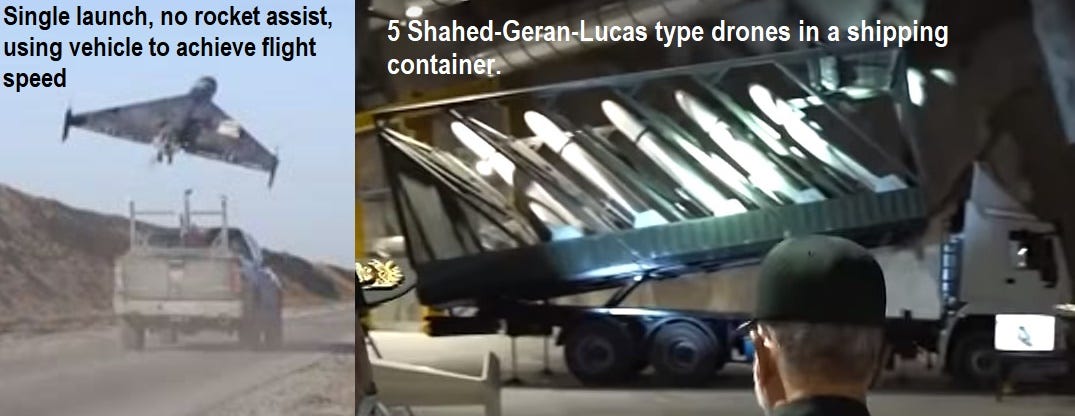
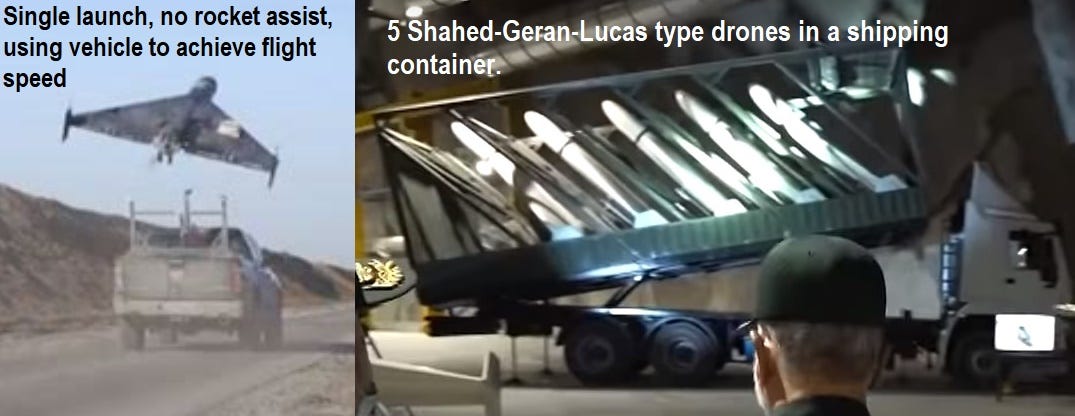
First, watch this very short video: “Launching Shahed-type drones from a moving pickup truck.” (So there is no need for rocket assisted launching)
Folks, we are going to see this attack vector spread around the world, including in the United States. The Iranians invented and developed the small attack drone niche, the Russians copied it with their Gerans, and now even the USA is belatedly copying it with the Lucas.
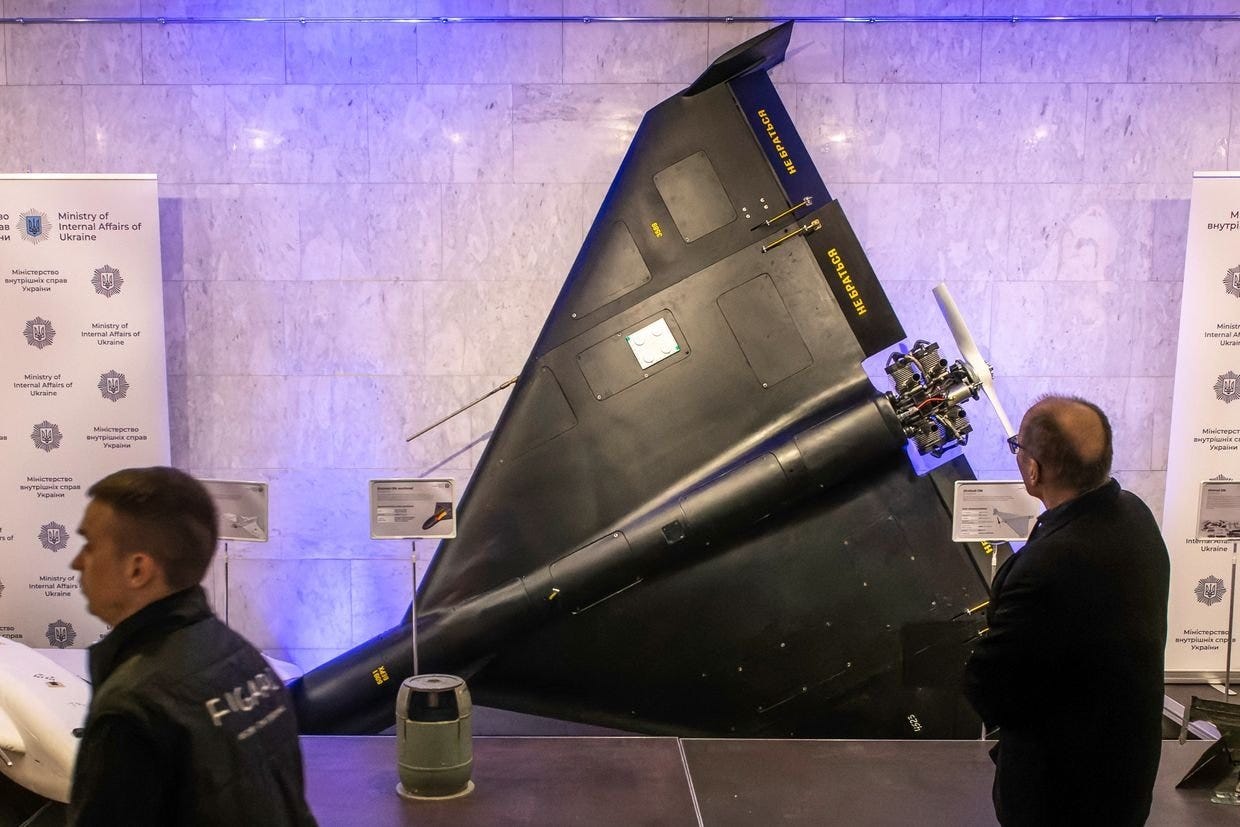
But the most important point is that ANYBODY can make these in a garage. The plans are so basic any competent hobbyist can produce them. Two fiberglass shells, top and bottom, other parts that are not difficult to fabricate, a small gasoline engine and a prop in the back. Steer it with a camera in the nose by Starlink plus GPS or other means.
WHAT DOES THIS MEAN? It means “the genie is out of the bottle,” and it will never be put back in. One example. America is now riding high in the global LNG market. We liquify natural gas in Texas and Louisiana and ship it out to the world for massive profits. (LNG is 4X more costly than pipeline natural gas, depending on some factors.)
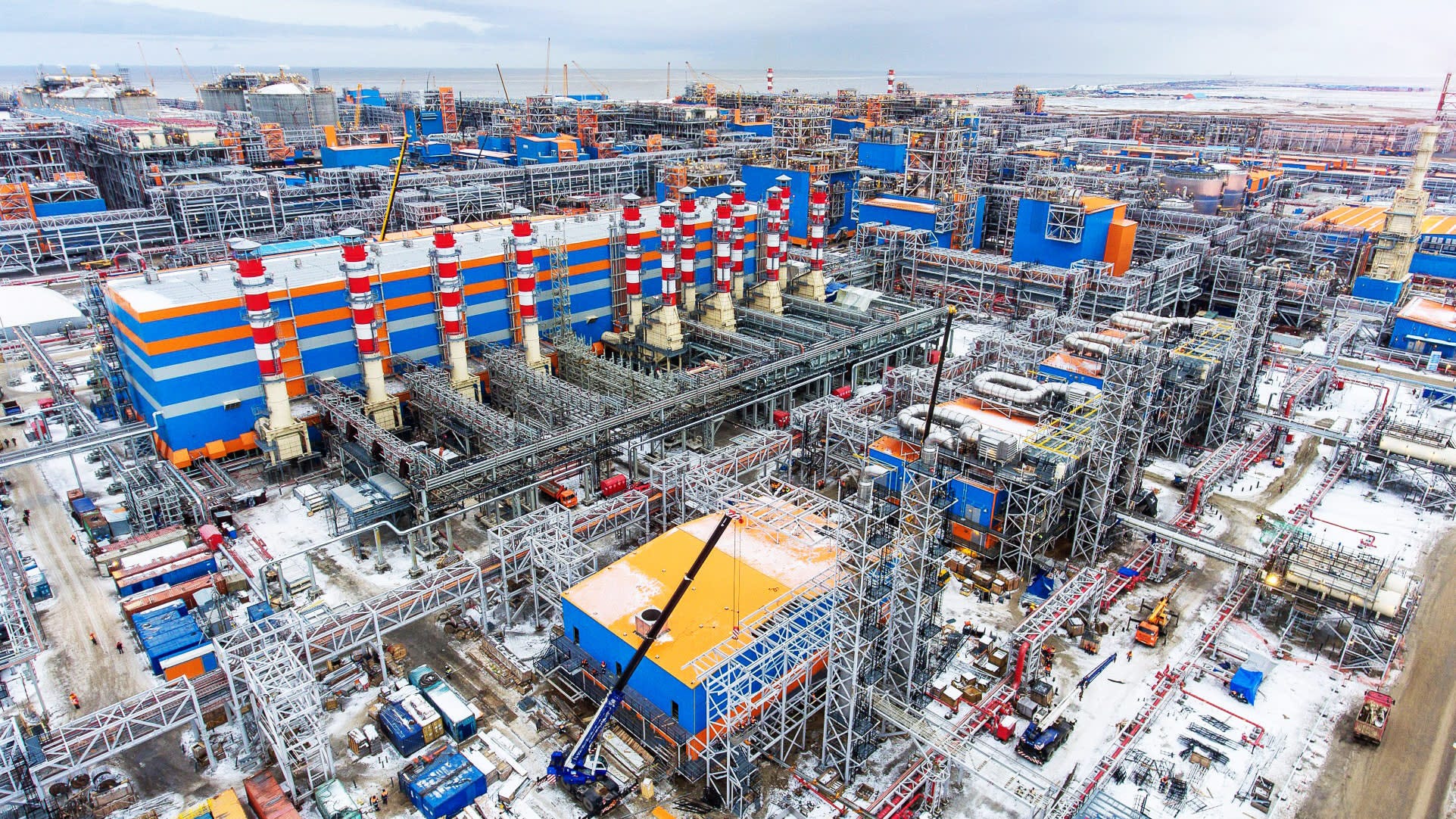
But the massive liquefaction and gasification plants at either end of the sea voyage are extremely vulnerable to attack, either by sabotage from a worker inside, or by a drone attack from outside. They cost billions and take years to build.
So what I project: disaffected migrants or foreign agents currently in the USA and other countries can easily set up shop and produce a dozen or more home-made Shahed-type drones. Foreign agents will even be given the blueprints, so there is no need for them to reinvent the wheel. The Wright Brothers figured it out, and it was easy for those who followed to duplicate and improve upon their prototypes.
The most difficult part of building a Shahed is creating the rocket motor for the assisted launch from a stationary position. (Difficult, but possible.) But there is no need for a rocket if the attack drone is mounted on a pickup truck that accelerates down a straight highway until the drone reaches flight speed between 60 and 100 mph.
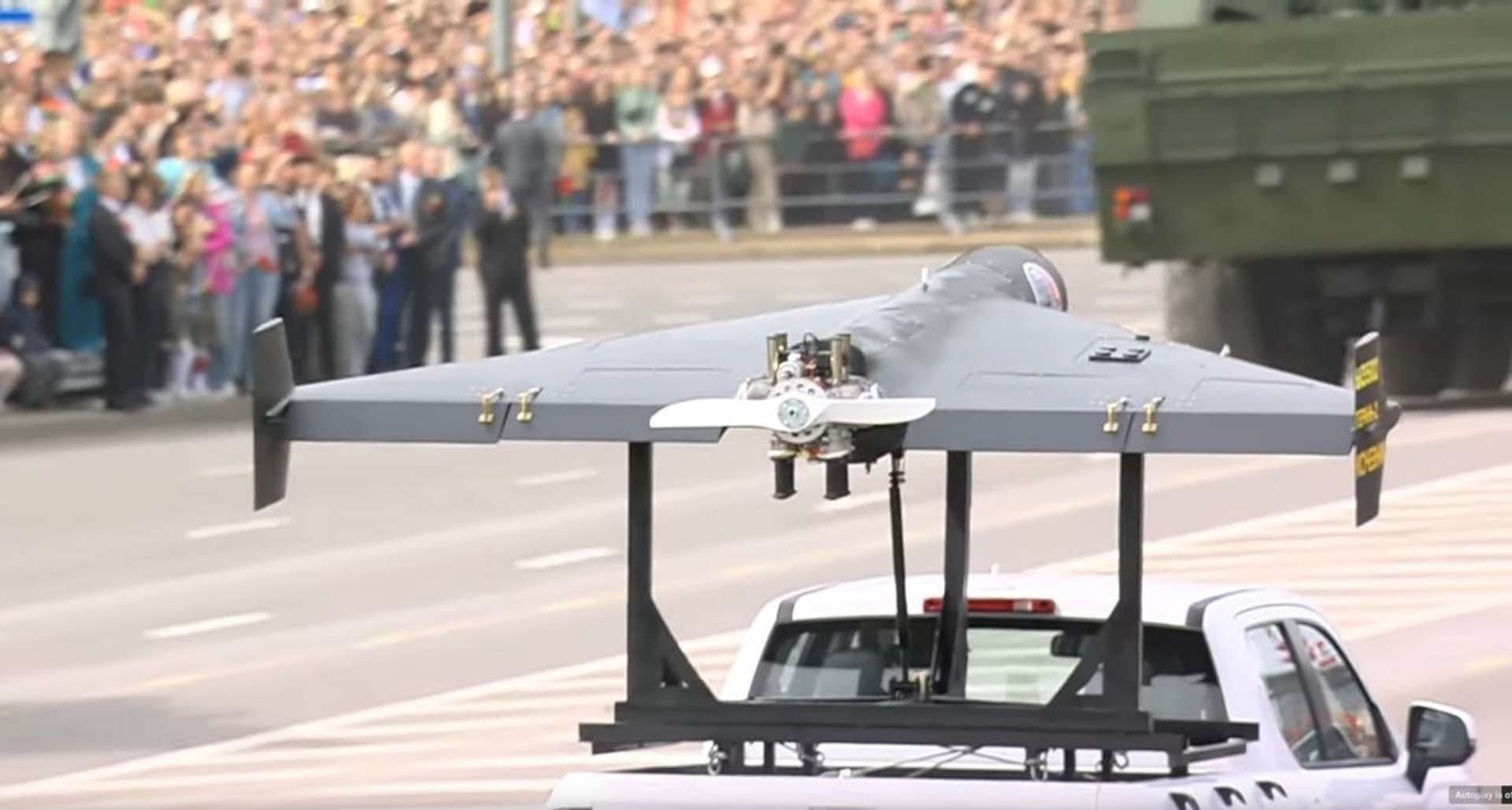
We may see critical infrastructure attacked with home-built Shahed type drones. I don’t see how we prevent this. Going back to our gas liquefaction plants, I’m sure there are people who are thinking, “Why should America make out like bandits by selling expensive LNG to the world, after they wrecked the global economy on February 28 with their sneak attack war of choice on Iran?”
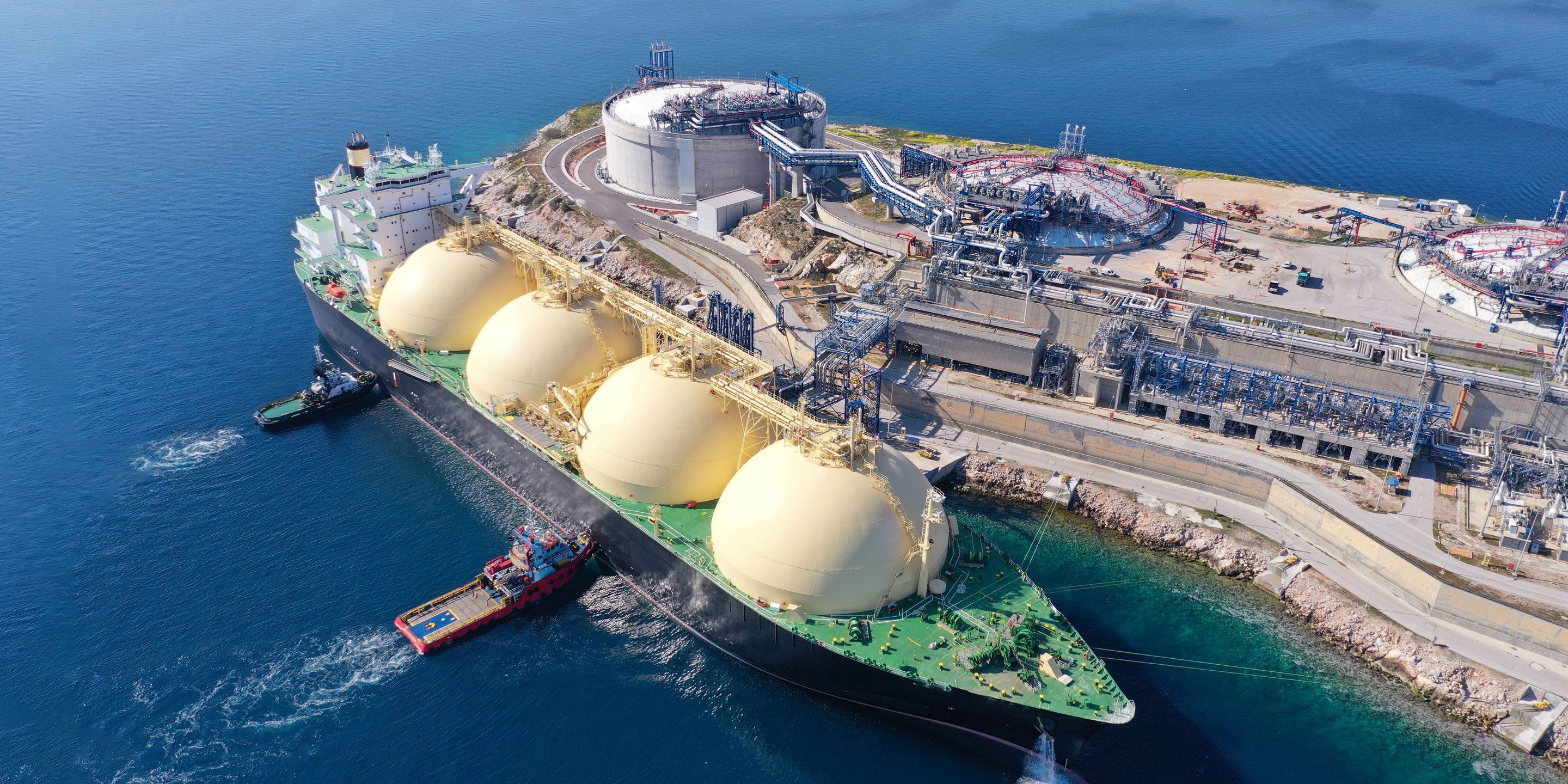
Between internal sabotage and drone strikes, we should expect attacks on our critical infrastructure such as oil refineries, fuel tank farms, chemical plants and LNG liquefaction plants.
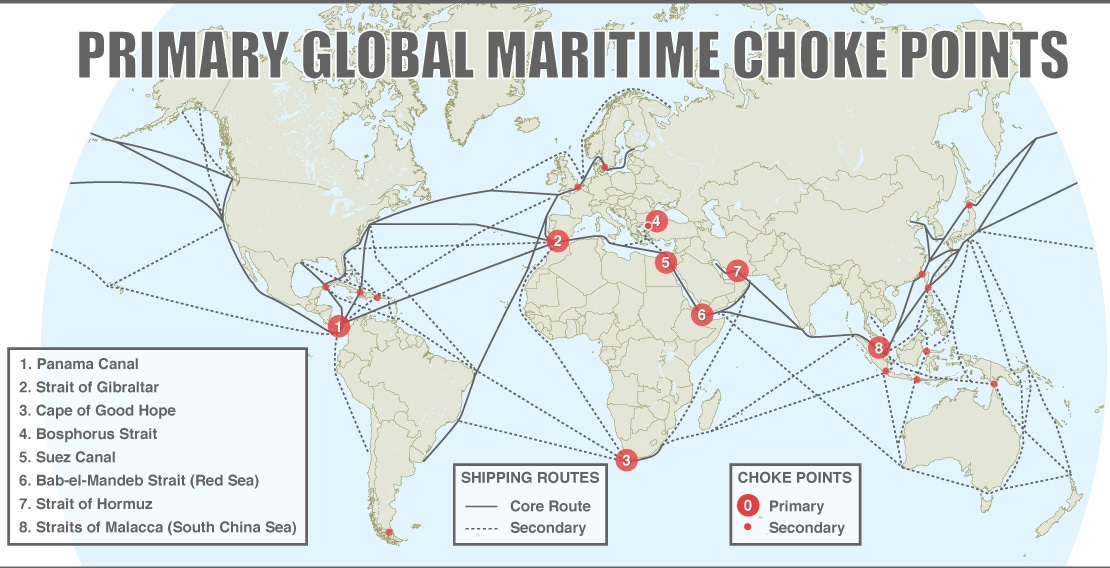
And as the “Energy War” spilling out of the Iran war catastrophe spreads, shipping may be attacked in any narrow straits, such as the Dardanelles, the Denmark Strait, the Strait of Malacca, the Red Sea, the Panama Canal and so on.
Multiple Shahed-type drones can be launched from a "standard shipping container" that you would not look at twice passing on the highway.
Or they can be launched singly without a rocket-assist from a moving pickup truck.
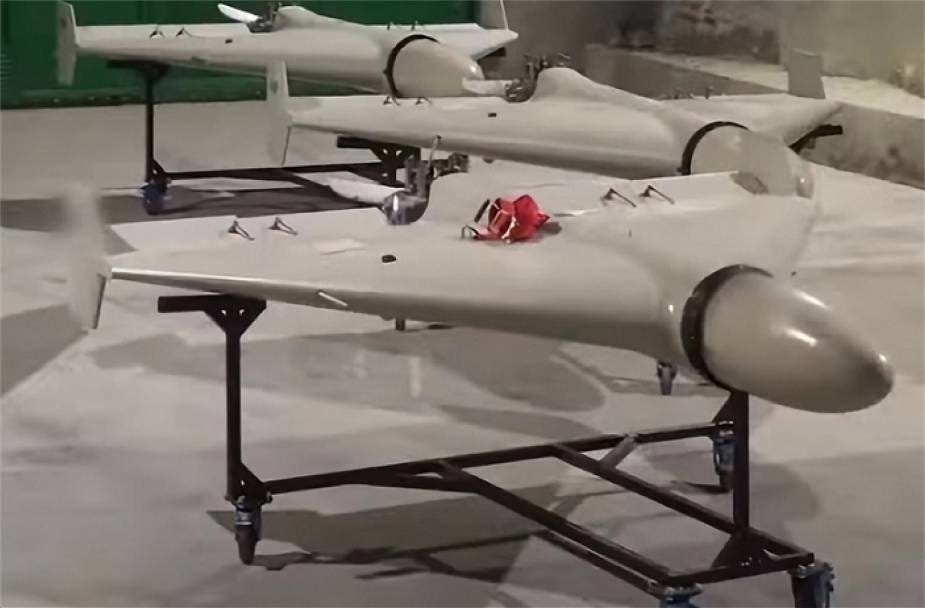
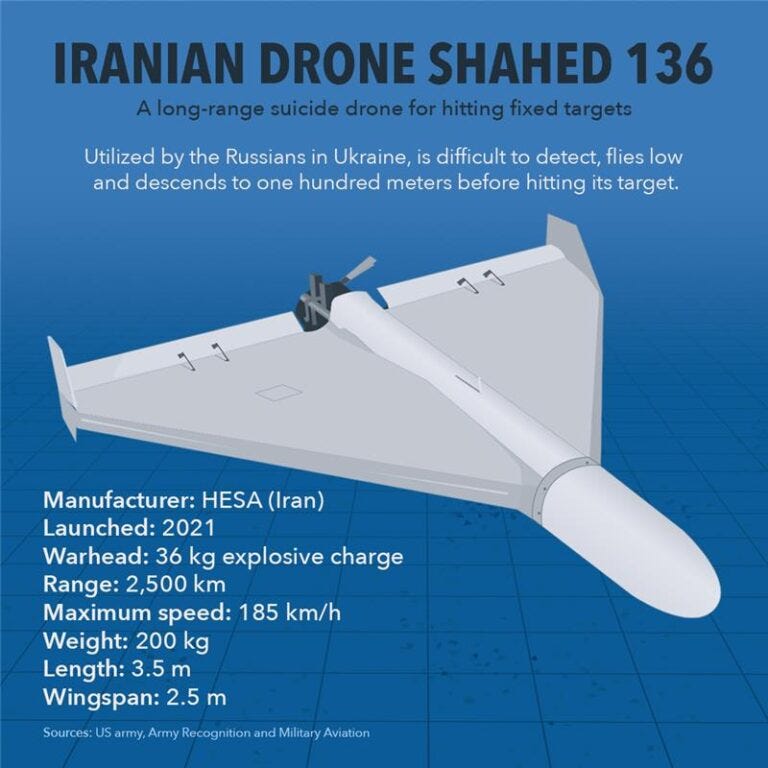
I personally know a dozen people who could produce one of these in a barn in a month, start to finish, given the proper incentives. This means there are thousands of enemies of America inside the USA who can and very likely will do it. And they will be given the blueprints and training to fabricate them. Below is a large long-range Russian variant, but they all follow the same basic pattern.
These liquefaction and gasification plants cost billions of dollars (or euros), and take years to build. As well as oil refineries, chemical plants and other major and complex infrastructure.
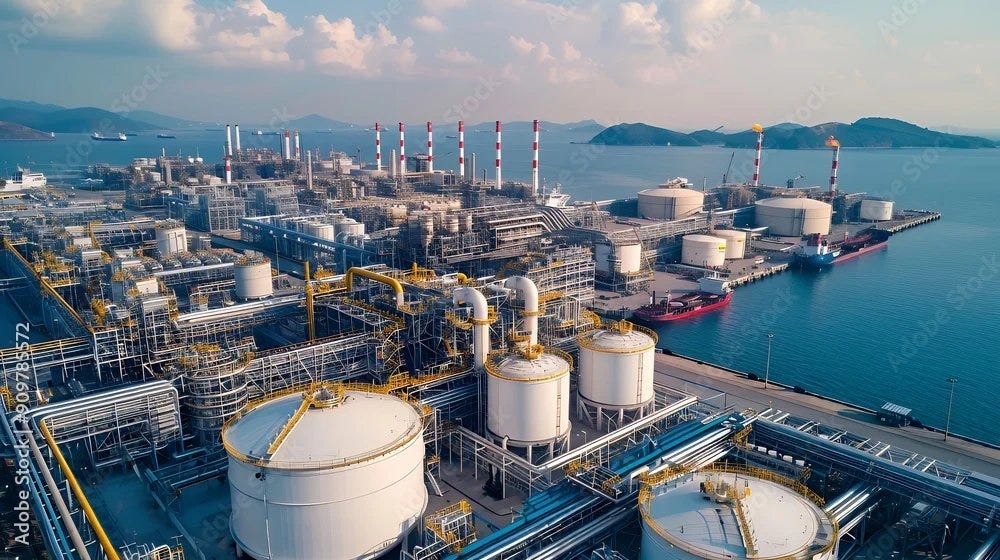
As we are seeing in our insane Persian Gulf War of Choice, simple Shahed-type attack drones can destroy them overnight. Our own American gas and oil infrastructure is just as vulnerable to attack. Folks, even without drone attacks or sabotage, these plants are EXTREMELY dangerous. Read the below article.
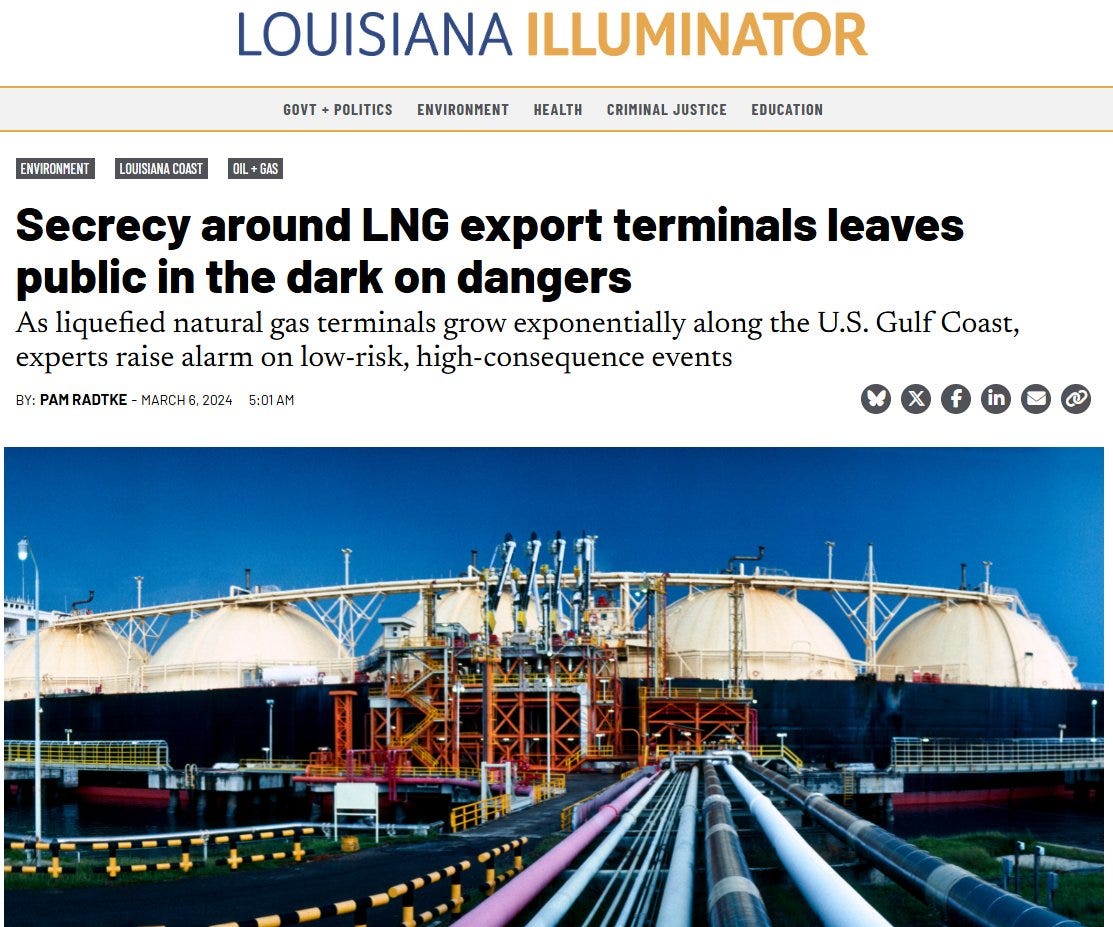
During a summer’s afternoon in 2022, a 450-foot fireball exploded at a liquefied natural gas terminal south of Houston, rocking sunbathers on Quintana Beach, adjacent to the Freeport LNG terminal, and rattling homes for miles around.
Eighteen months later, residents around the plant have yet to receive any information directly from Freeport LNG about what caused the explosion, or what to do if it were to happen again, said Melanie Oldham, one of the founders of Better Brazoria, an environmental and public health advocacy group who felt the blast in her living room, 3 miles from the terminal.
John Allaire frequently hears the internal alarms go off at Venture Global’s Calcasieu Pass LNG terminal, just a mile from his home on the Gulf Coast in southwest Louisiana, but he never knows what’s causing them. He said when he asked about the alarms, a Venture Global executive told Allaire to call 911 if he was concerned.
The Biden administration recently paused permitting for new LNG terminals to consider the macro implications such as climate change and national security of the U.S. becoming the world’s largest exporter of the super chilled, super condensed methane gas. But those living near the eight terminals already operating in the U.S. and the seven that are under construction have more immediate concerns — their safety.
Unlike other industrial facilities, such as chemical plants and oil refineries, LNG operators don’t have to share with the general public information such as what chemicals are being used onsite and how an accident could impact the people who live around the facility.
“If people knew the risks around LNG, there would be so much public outcry that this buildout wouldn’t happen,” said Naomi Yoder, who researched the safety of LNG facilities as a staff scientist at the environmental watchdog Healthy Gulf.
[MUCH MUCH MORE at link]
I anticipate some of your replies. "Matt, you are scaring me with this doom and gloom stuff. And you are giving our enemies ideas!"
Folks, our enemies already have the ideas. We triggered a cascading global catastrophe with our insane sneak-attack war of choice. Now we will pay the piper. Nobody should expect the American homeland to be immune from the disastrous and 100% predictable chain of cause and effect that we ignited on February 28.
If a simple barely-educated nobody like me can figure this out, you know that our much smarter enemies already have. They are probably building and stockpiling Shahed-type drones in the USA even today.
When the attacks come, please don't anybody dare say, "Oh, my! We had no idea this could happen!"
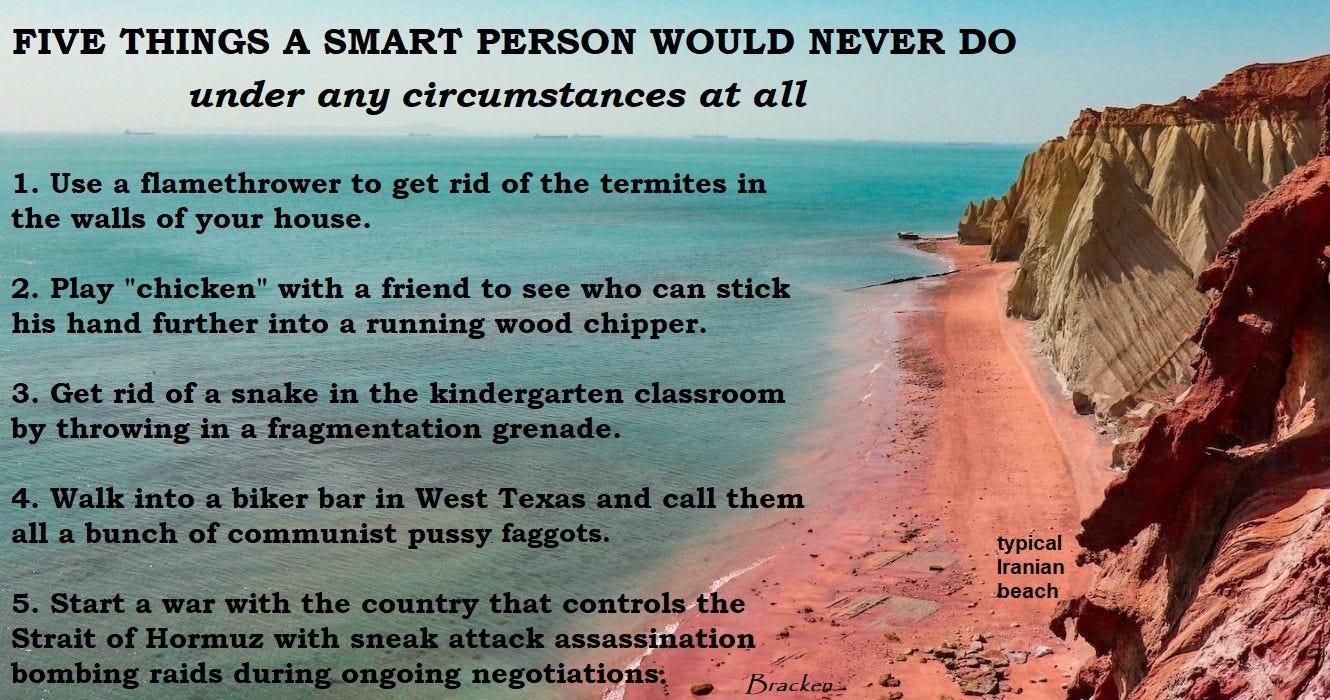
As far as my prognostication record, I wrote this Substack article last year in early April, two months before the "12-Day War."
If we go to war against Iran, the world economy will crash
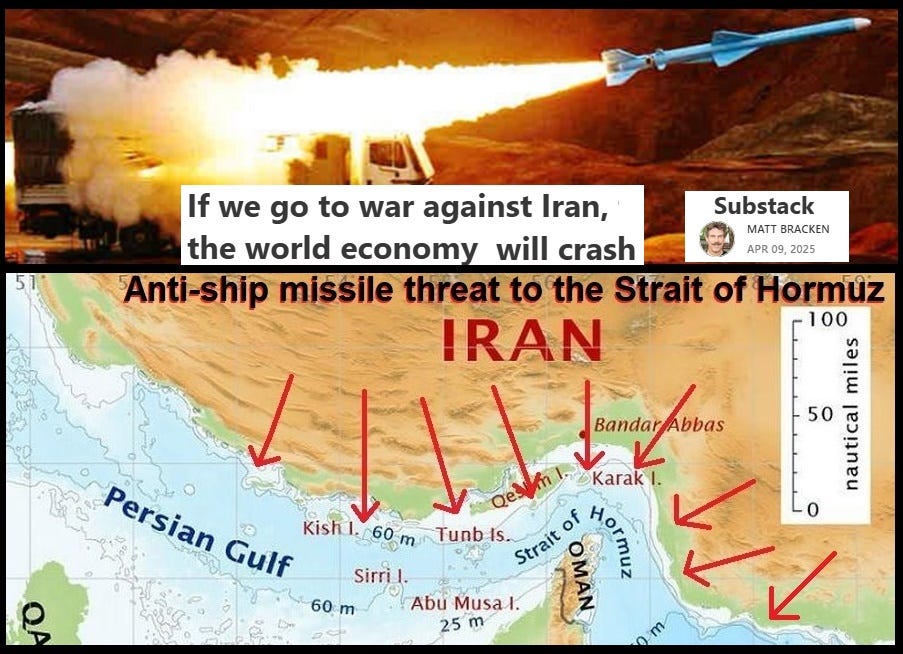
First two paragraphs:
"In the event of a kinetic war against Iran, all petroleum tankers will be blocked from leaving the Persian Gulf, not only Iranian ships. Iran has hundreds of mobile truck-mounted anti-ship cruise missiles hidden in rugged mountainous terrain on a wide arc north of Oman and controlling the Strait of Hormuz. This arc is 300 miles wide and 100 miles deep. Iranian missile forces may well act under standing orders to attack all shipping once an American attack on Iran begins. Even a total decapitation strike against Iranian communications will not prevent these standing orders from being carried out. Iran will be determined to share their pain across the region and around the world.
Iranian anti-ship missile forces will not fire all their rockets at the beginning of this conflict. Instead, missile teams will have separate standing orders. Teams will be instructed to scout for shipping and fire at anything in the strait on different timelines after the war begins. Their goal will be to prevent the resumption of shipping for weeks or even months. The Iranian Revolutionary Guards in charge of these missiles will not care about the pain being inflicted upon civilians in Teheran. They will follow their orders with the dedication of Japanese holdouts in the Pacific."
Back to today: And they will. Guaranteed. Even if we nuked Teheran, which is 700 miles north of the Strait of Hormuz. No matter how much destruction we rain on Iran, it will not reopen the Persian Gulf, and until shipping traffic is restored to pre-28-February levels, WE ARE LOSING, and the entire world is blaming us for the unfolding global economic depression that now appears unavoidable. Like a stroke victim who can’t breathe, more permanent damage is being done to the world economy with each passing day that the strait is closed to normal traffic.
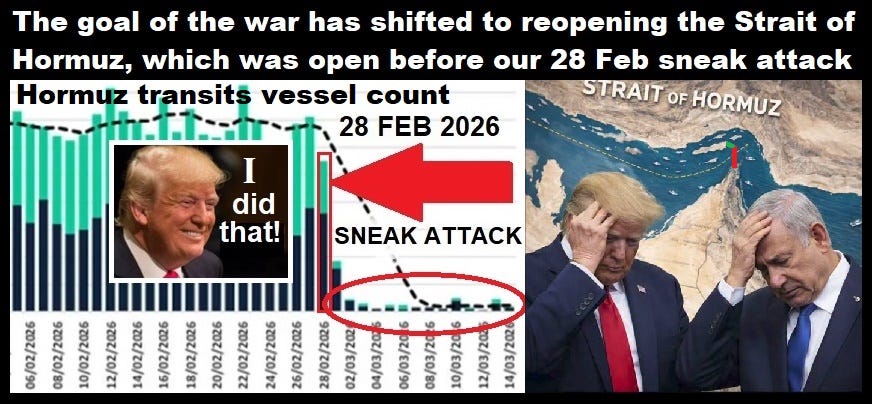
Bracken—Out!
Source: Matthew's Substack


Comments
Post a Comment