The Age of Drones has Come: the End of Cities as We Know Them?
The Age of Drones has Come: the End of Cities as We Know Them?
Never ask for whom the drone is coming, it is coming for thee.
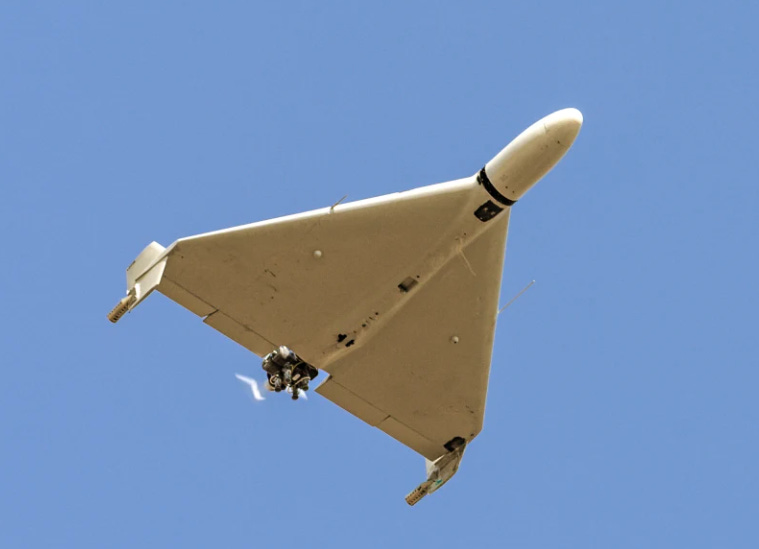
An image of things already coming. The Iranian Shahed (“martyr”) drone is an example of a new generation of killing machines. In themselves, drones are just a further step forward in the human capability to kill people at a long distance that started with slings and bows, went through firearms and artillery, and is now mainly based on these nearly autonomous murdering tools. These things are manufactured by the millions and then handed to psychopathic criminals who use them as extermination weapons. How can we defend ourselves? It may well be that we are watching the end of a cycle nearly 10,000 years long. Cities have become a target, no longer a safe haven. We may have to abandon them to move to low-value targets in the form of small villages.
The story of human warfare is an arms race between attack and defense, mainly driven by range. In early historical times, people were fighting mostly in close combat. One of the reasons why the first cities appeared, some 10,000 years ago, was that they could provide a certain capability of defense to their inhabitants.
Here, you see a reconstruction of Catal Huyuk, one of the first known cities. It was built some 9000 years ago in the area that is now Turkey. It had about 10.000 inhabitants.

Removing the ladders, the enemies couldn’t get in, but it was a poor defensive technology. There was no way that the defenders could create a defensive barrier to block the enemies.
In time, cities became walled almost everywhere. Still today, the Chinese term for “city” 城市 (Chéngshì) implies a walled city. Some very ancient walls could be truly impressive. Here, you see the walls of the ancient city of Norba, in Latium, Italy. Founded in the 5th century BCE, it was first a Latin town, then a Roman one.
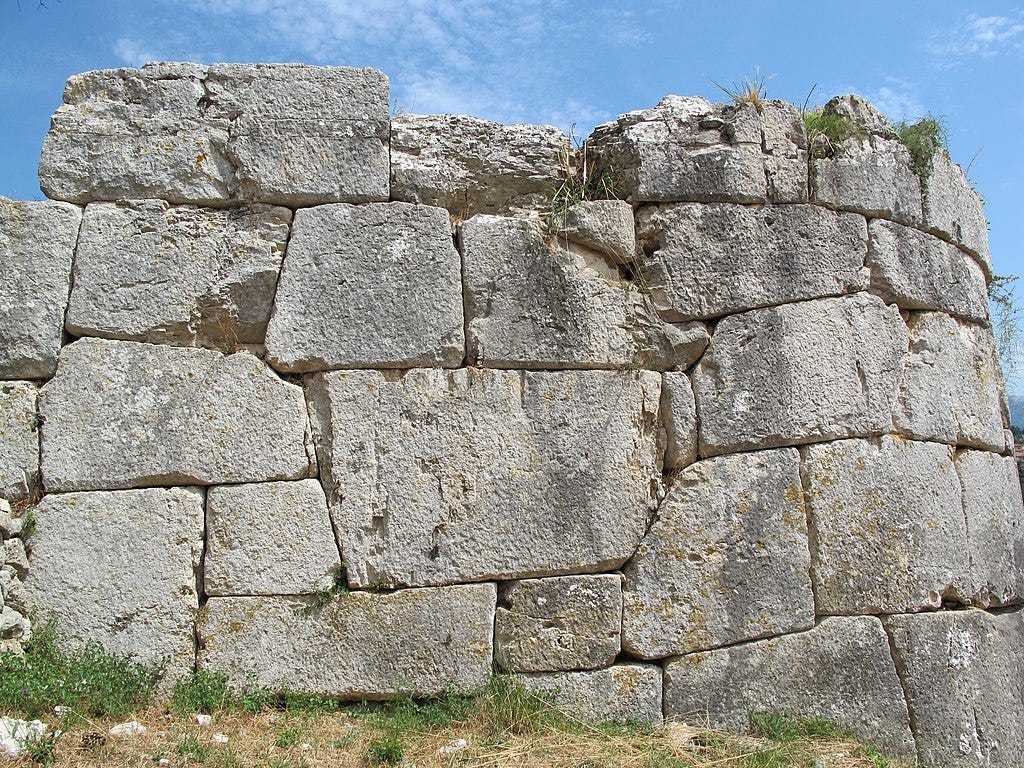
These polygonal walls are typical of the 1st millennium BCE in Europe. The amount of work needed to create such walls must have been enormous considering that it was all done by hand. But, evidently, it made sense to do that in an age when long-range weapons did not exist, or were scarcely effective. A wall like this one was a way to pin down attackers to a disadvantageous position and fight them there.
In time, long-range weapons started becoming commonplace in the form of catapults that could project stones and javelins over a wall. Walls had to become taller, and that made them less robust. So, towers had to be built in order to defend the walls. Here is a typical Medieval walled town: Monteriggioni, in Tuscany, Italy.
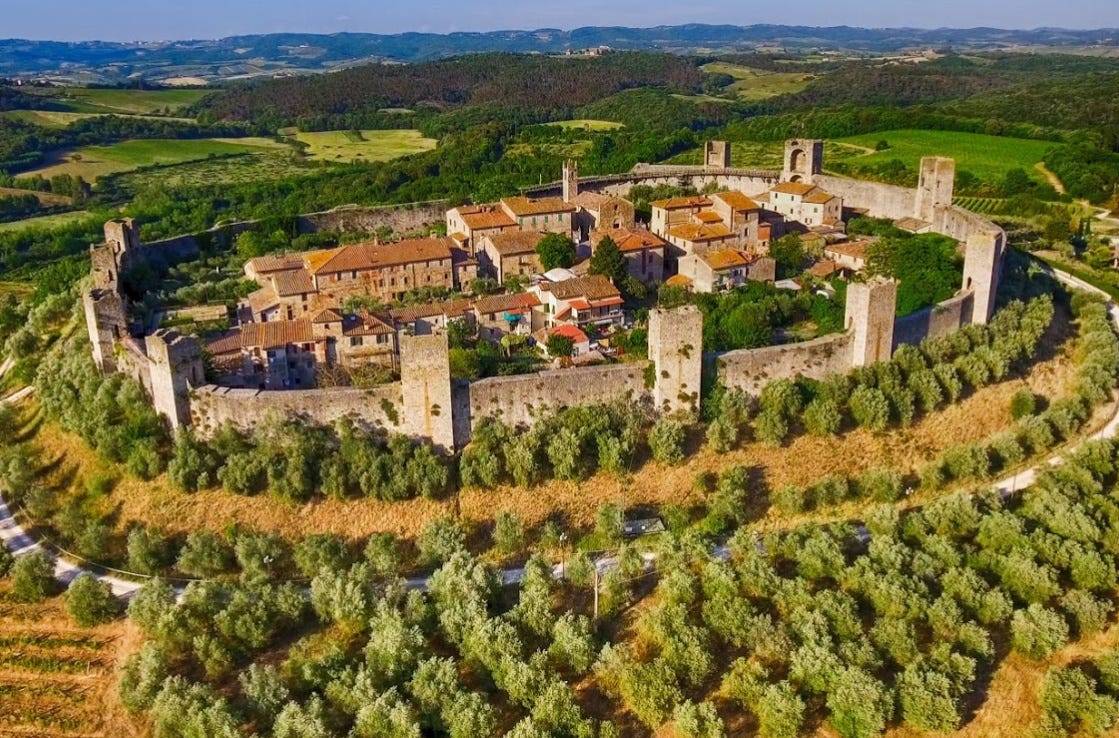
Note that the walls are relatively thin; they wouldn’t stand a determined attack by heavy rams. Evidently, the defenders trusted that the towers could harass the attackers and keep them at some distance.
Artillery made these Medieval defense systems obsolete. Here is the cittadella of Alessandria, in Italy, an especially sophisticated example of a defensive system designed to work against artillery.
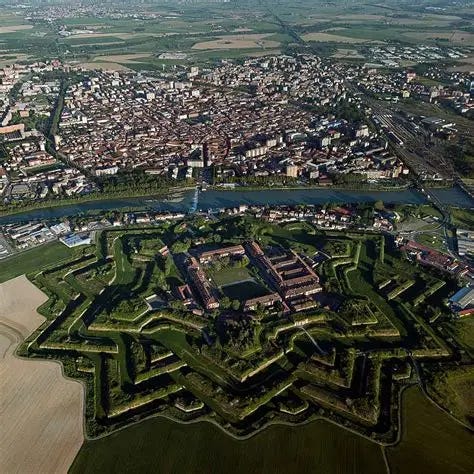
These fortifications were built up to the mid-19th century, but this style of defense became popular already during the 16th century: massive, low-height embankments, conceived to resist artillery bombardment. Their star-shaped symmetry created strong points hosting artillery pieces to keep the enemy artillery away, as well as enemy troops. Note that these structures were not designed to enclose a whole city. They were fortresses designed as strongholds to keep a defensive capability alive.
This architecture was often associated with in-depth defensive structures. Here is an example: this is a detail of the Asagaya Quarter, in Tokyo. Most buildings are modern, but the layout is typical of Tokyo:
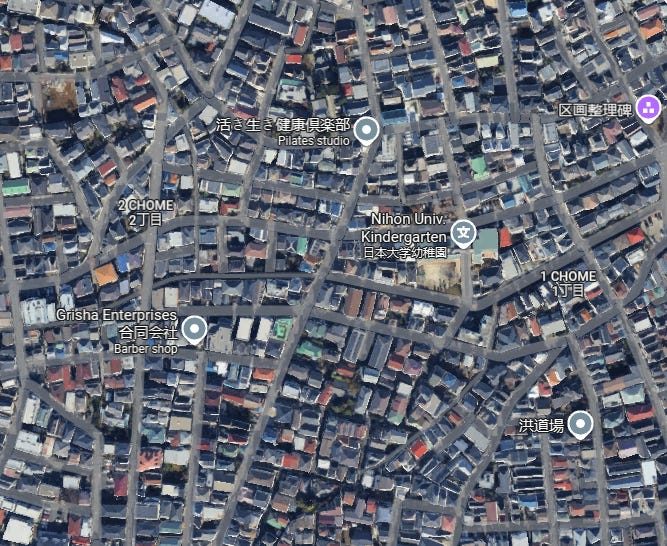
The idea was to use an “in-depth” defense. Let the attackers enter, and then wear them down while inside the city. It was called the 鉤の手 (kagi no te, "hook-shape"). These bends were supposed to confuse invaders. They have the same effect on foreign tourists, as you can experiment yourself in Tokyo today. You see this strategy used in the movie The Seven Samurai by Akira Kurosawa, where the attackers are not stopped at the edge of the village. They are let inside, and then killed one by one.
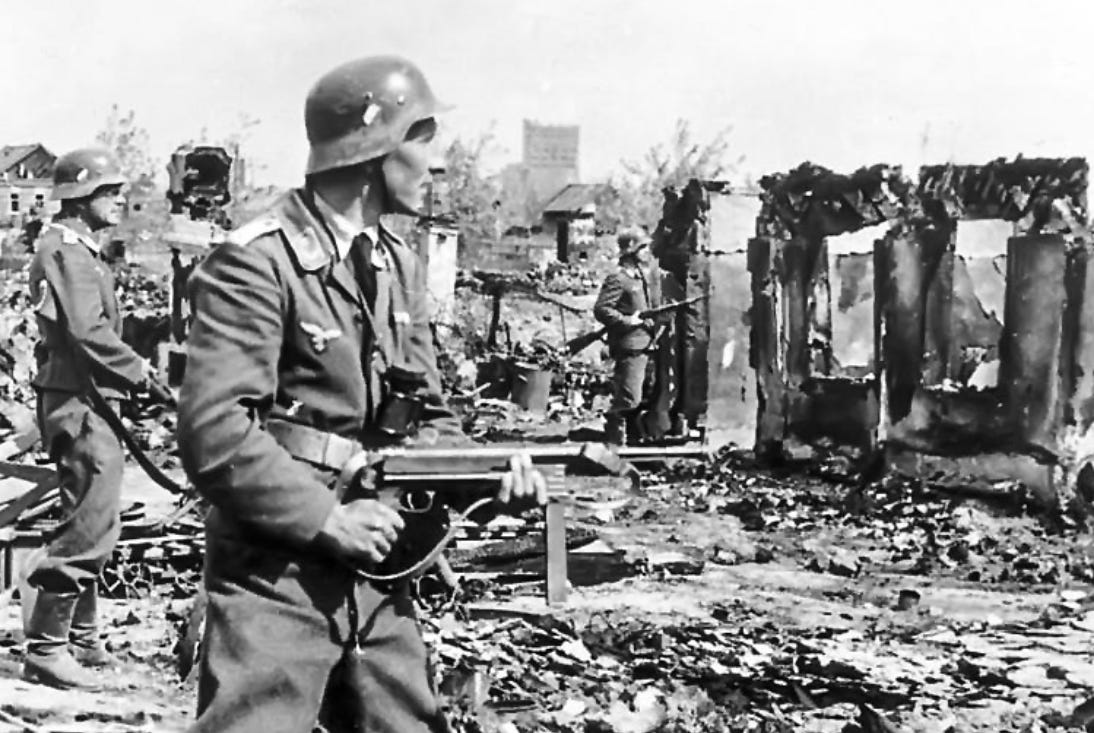
The bent street strategy is useful against attackers who use short-range weapons, and in this situation, cities can become traps for attackers. A good example is how the German army was bled to near complete destruction at the siege of Stalingrad, 1942-1943, when the Soviets used the destroyed buildings as strong points for defense. That battle was truly brutal and expensive for both sides.
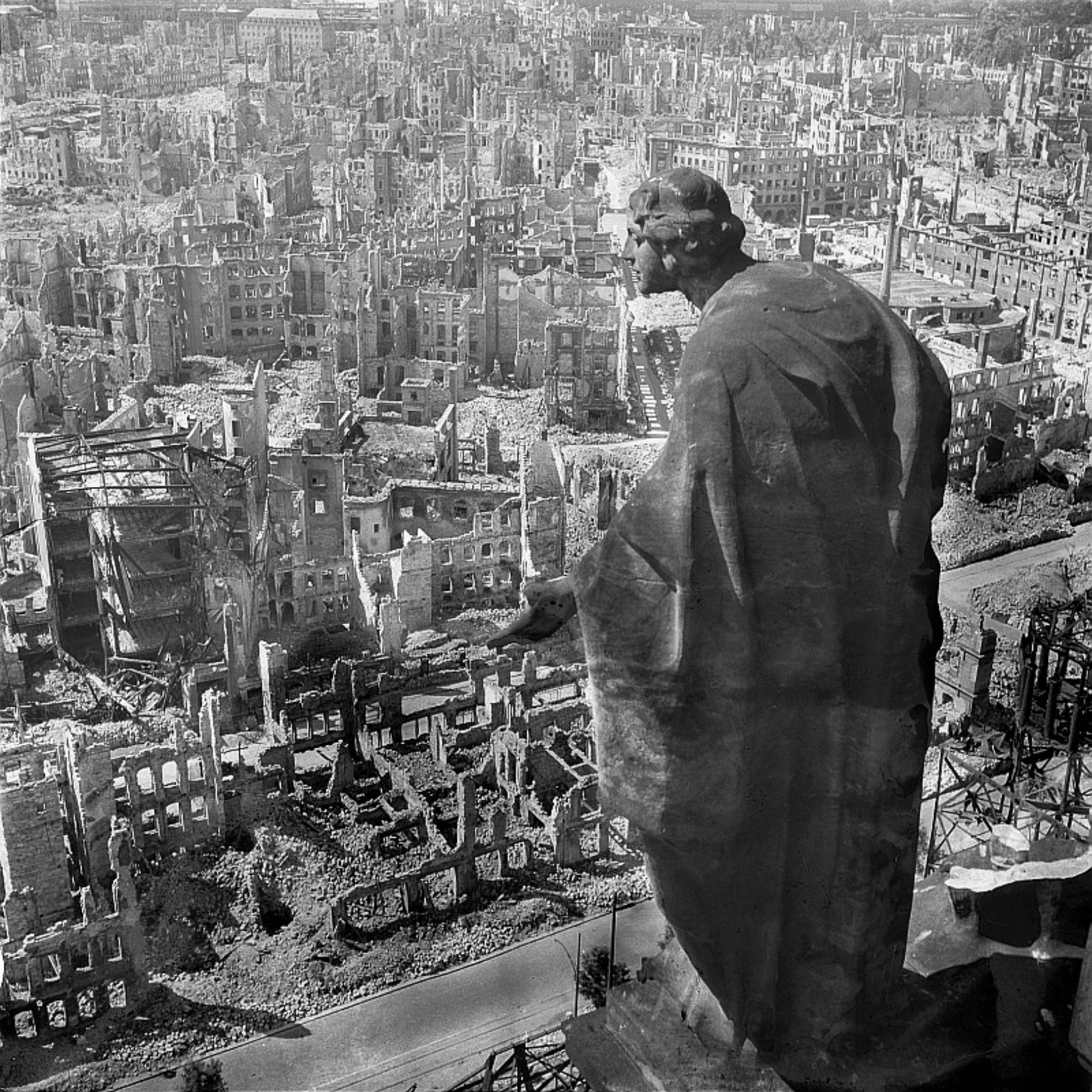
But, of course, already during World War II, this kind of street fighting became obsolete. The new thing was aerial bombing, designed to flatten entire quarters of cities, leaving only rubble and dead bodies. Almost by chance, it was discovered that bombs could trigger large-scale fires, called “firestorms,” and much of the Allied strategy during WWII was to create firestorms in German and Japanese cities to torch to cinders as many inhabitants as possible. Dresden is perhaps the most famous case. Below, you see the results.
After aerial bombing became fashionable, the problem of defending cities became truly intractable. The Germans tried a strategy similar to the fortified strong-points of Japanese cities, creating flak towers designed to host a heavy concentration of anti-aircraft artillery. Below, you see one of these towers still standing in Hamburg, where it was built in 1943. Most of the others were demolished after the war.
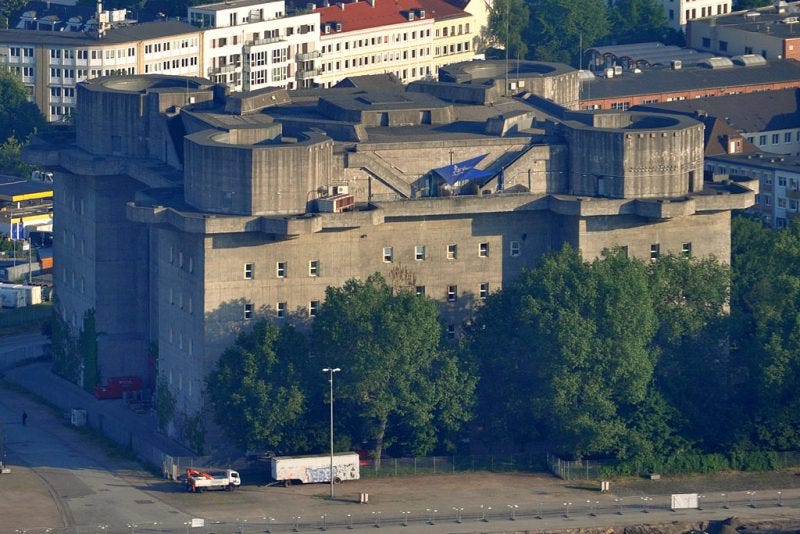
These fortresses were impressive, but couldn’t do much against the waves of Allied bombers that pounded German cities. The Hamburg flak tower couldn’t avoid the firestorm that destroyed most of Hamburg in 1943, although it could save a few thousand civilians who took refuge inside.
Then, of course, there came the atomic age. Here is Hiroshima, Japan, flattened by a nuclear bomb in 1945.
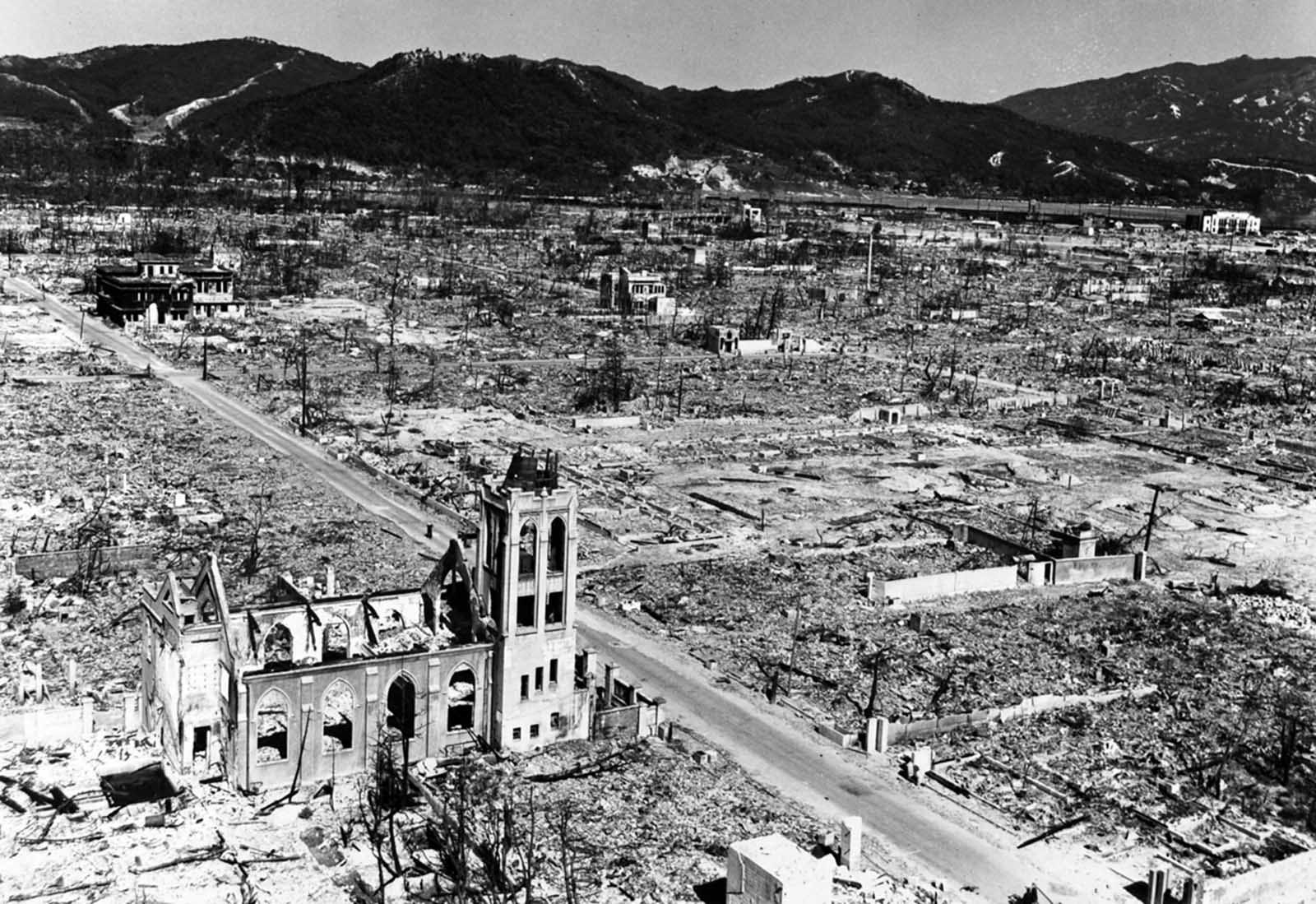
Note the large avenue that crosses the image. Probably, the city authorities were planning fire-stopping barriers, but they were useless against nuclear destruction.
How could future cities develop a defense against aerial attacks by drones and missiles? Clearly, creating strong defense points only invites attack by unstoppable weapons, such as bunker busters. The opposite solution could be to disperse the city, creating a low-density inhabited space. Something not unlike the US suburbs. Below, you see a typical suburban area in Long Island (NY). Incidentally, I used to live in a house on Clymer Street in the 1970s.
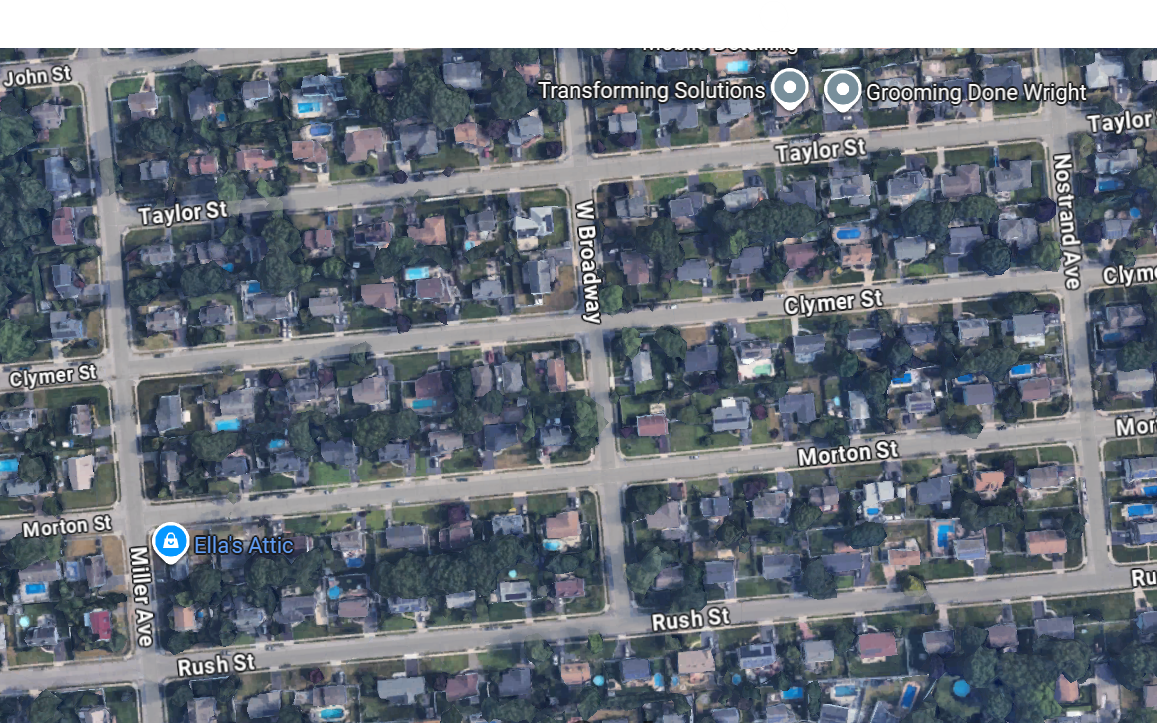
Would these houses prevent firestorms generated by aerial bombardment? A test has not been made so far. But they are made mostly of wood, and a firestorm would turn this green suburban area into something looking like Hiroshima after the atomic bombing.
But there is no need for a firestorm to destroy a city. Here is Gaza, destroyed by conventional bombing and artillery in 2025. Drones were not normally used, but it made little difference when the purpose is to flatten a city with little regard on the life of the inhabitants. Gaza was mostly built of concrete, so there were no firestorms, but almost nothing remained standing.
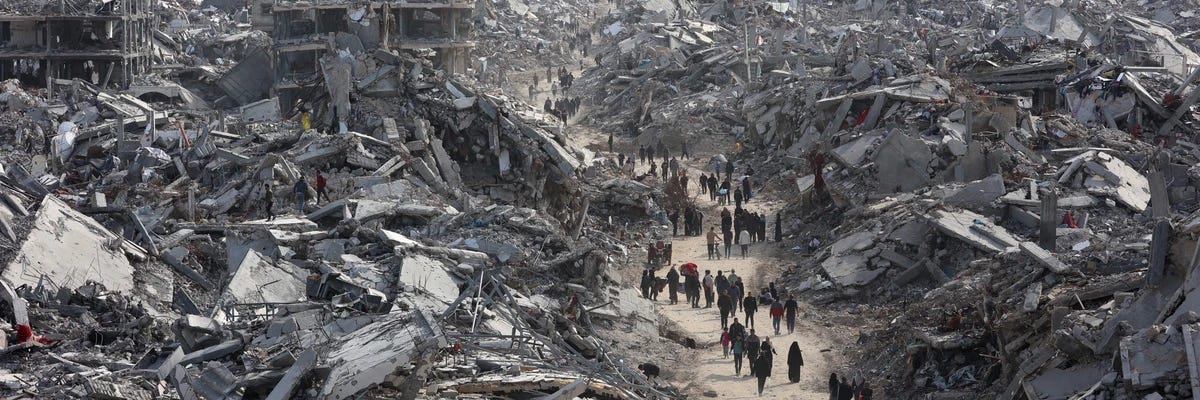
As things stand, it looks like civilians are completely defenseless against the modern generation of drones, missiles, and other smart weapons, or even simply long-range artillery. Anti-drone weapons exist: lasers, rapid-fire guns, electromagnetic jamming, and others, but defending entire cities? How could one deploy an effective defense system for a large and thinly spread city such as Los Angeles?
Maybe we could think of a low-cost solution, such as the small reinforced concrete shelter you see in the image (with the author standing).
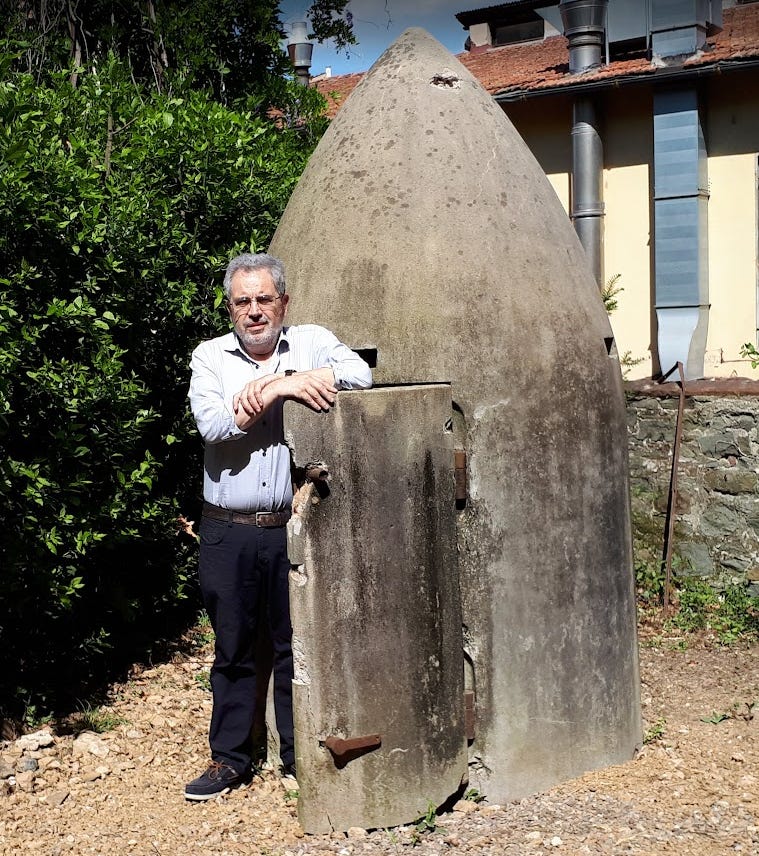
This shelter was built in Florence, Italy, during WWII, probably around 1943, when Italy was under heavy Allied bombing. It stood in a private garden (it still stands there), and it was supposed to host the family of the owners during bombing raids. Sitting there in near darkness while bombs were falling was surely not a pleasant experience, but it protected the people inside from shockwaves, splinters, and, in the worst case, from being buried under the rubble of a fallen house. Note that it wouldn’t protect from the updraft that firestorms create, which pulls air and oxygen out of low-lying areas. You would need to have a specific air or oxygen supply inside. Not impossible and, in any case, it is better to have a shelter than to have none.
Today, emergency bunkers in Italy are listed as costing around €2,000 – €6,000 per m². A small one like the one shown above would probably cost around $30,000 -$40,000. It is a sum beyond the finances of most impoverished families in the West. Nevertheless, with some help from the government, these bunkers could provide emergency shelters for the civilian population in case of aerial attacks; something that becomes more and more probable as more drones are being built and deployed. Most people in the West seem to think that drones hit only bearded lunatics who spend their time chanting “death to America.” But, as I said at the beginning of this post, misquoting John Donne, “Never ask for whom the drone is coming, it is coming for thee.”
Yet, the point is, does anyone really want to save ordinary citizens when the drones hit the fan?

From what can be read on the Web (see, e.g., this article on the Guardian), it is clear that a good fraction of the elites have entered “apocalyptic mode” (although they won’t admit that). They are building sophisticated emergency bunkers in areas not supposed to be subjected to the worst. But how about the rest of us, those who can’t afford bunkers in Alaska? Does anyone care about us? Nearly nothing is being done to protect city dwellers from the various disasters that could befall them, whether in the form of climate events or wars.
Are there other possible survival strategies? The only good strategy would be to eliminate drones and similar weapons, or, at least, avoid placing them in the hands of psychopathic criminals. But how much do you bet on this happening? At this point, we need a different strategy.
If cities cannot be defended any longer, then why not abandon them for good? If you live in a small village, you offer a low-value target to attackers and, maybe, you can make it through.
Look at this Pueblo village, Taos, still inhabited in New Mexico.
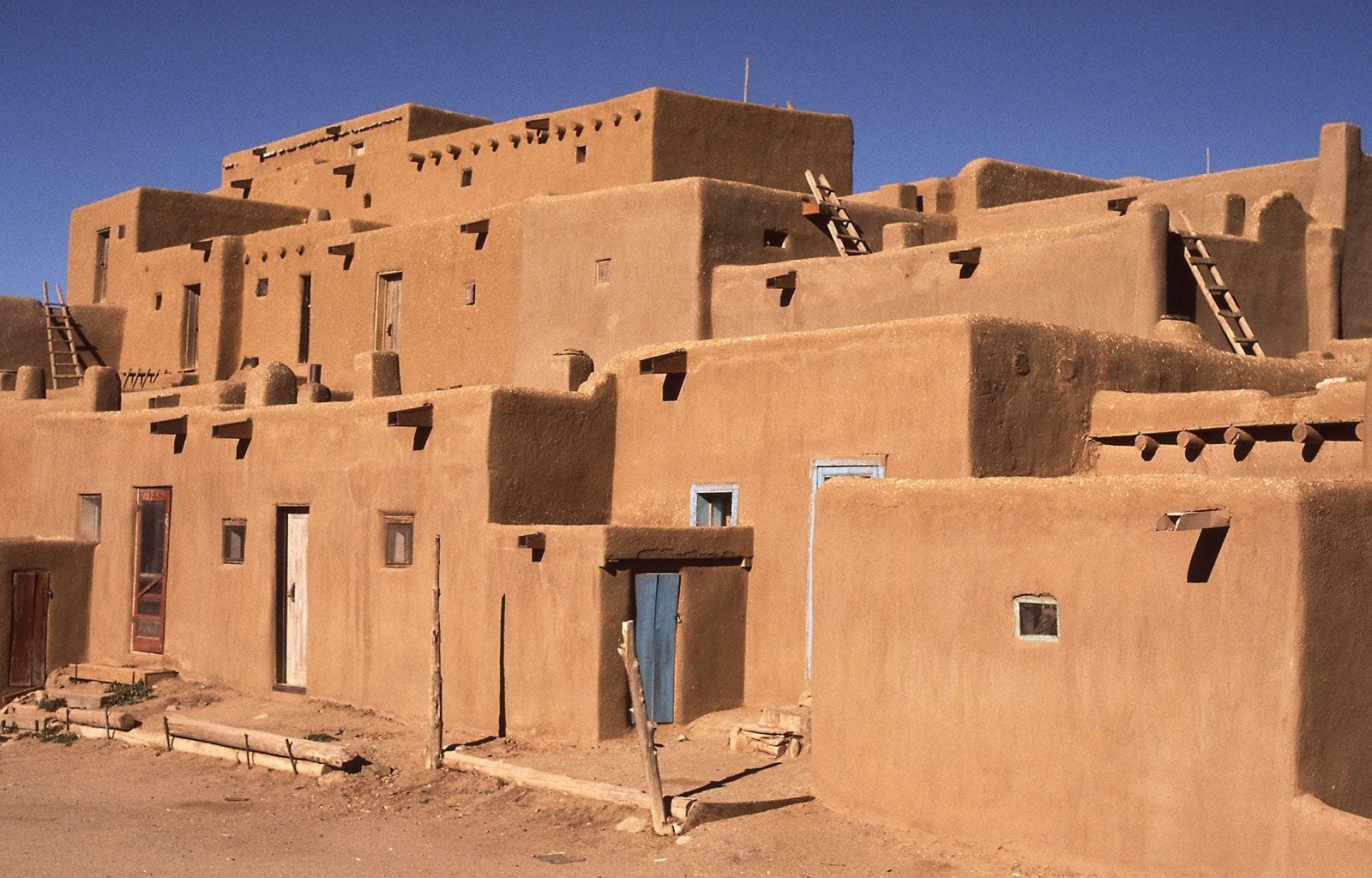
Its structure is nearly identical to that of Catal-Huyuk, of 10,000 years ago. Houses clustered near each other, accessible via ladders. It is a structure that offers defense against disorganized attacks, such as bands of marauders, which is probably the main threat that villages will face in the future. If drones will still be a threat, these structures could be equipped with anti-drone weapons, sufficient to stop small killer drones — even a good shotgun can do wonders against them. But the main defensive asset of these villages would be to offer a low-value target against the most destructive and expensive drones. Nobody would waste an Oreshnik missile or a nuclear warhead to destroy Taos.
Maybe what we are watching is the end of a cycle nearly 10,000 years long. Cities were born, among other things, as a defensive technology. That function died about one century ago, when artillery and aircraft made walls useless — and yet cities kept growing, held together now by trade and the economies of scale. What is new, now, is not just that cities can no longer protect their inhabitants; it is that population concentration has turned from an asset into a liability. They are no longer defensive structures; they are targets. And if so, the slow ten-millennia rise of the city may be followed by a far faster decline — the Seneca curve once more — as people disperse back into small villages that offer an attacker nothing worth the price of a missile.
That will turn out to be easier as population declines, as I describe in my book The End of Population Growth (2026)

Source: The Seneca Effect


Comments
Post a Comment