You're Not Allowed To Look Away
You're Not Allowed To Look Away
A Reality Check about Civilization
J. Daniel Sawyer
Killing What You Eat
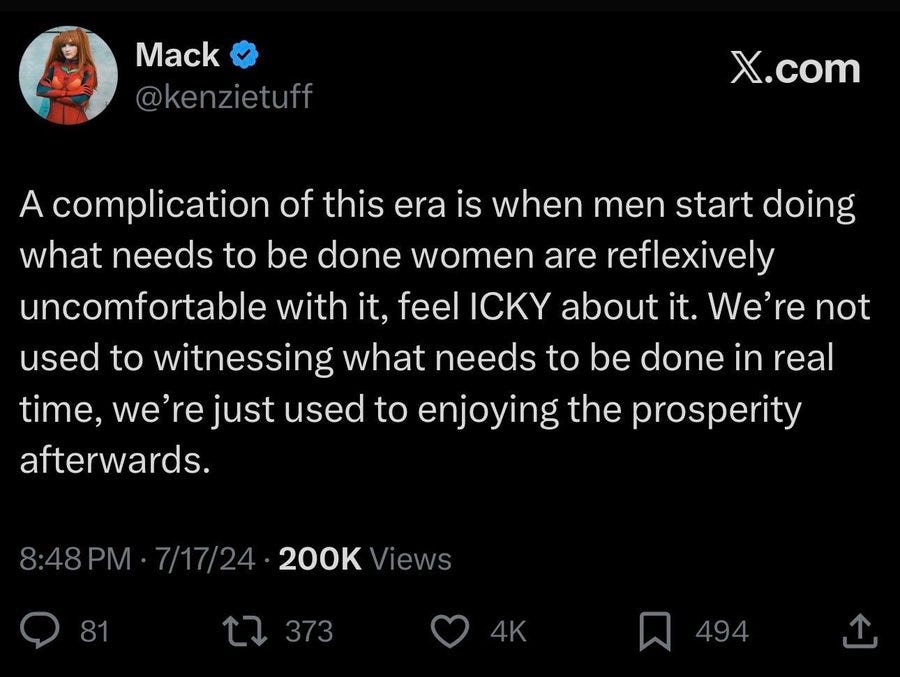
This tweet crossed my feed a few days ago. Although the original poster is talking about men and women, I don’t think what she’d observing is really about men and women at all. In fact, believe it or not, it made me think about steak.
When I was four years old, my grandfather came for a visit—a rare treat. He spent most of his time on his little cattle ranch in a foreign country, and only returned to the states once every few years.
Dinner, too, was a rare treat: steak. This was back when steak was rich-people food—the poor (such as we were) ate hot dogs, chicken legs, and (if it were a very special occasion) hamburgers.
I’m not sure I’d ever had a steak before, or if it was just unusual. I do remember being very excited about it. I had paid attention during ad breaks in my favorite cartoon shows and I had learned from the all-powerful television that there was a right-and-proper way to eat a steak. So, just as I was about to drown the medallion of meat in the then-popular A-1 Steak Sauce, my grandfather put his hand on my shoulder.
“Wanna know what you learn about steak when you raise cattle?”
I did. So he told me:
“If it doesn’t taste good with just salt and pepper, then it’s not good enough to eat.”
I was skeptical, so I poured some A-1 on the side of my plate and first tried the meat with salt and pepper. Then I tried a bite with the A-1. I went back and forth, trying to figure out which one was better.
As I ate, I asked him more about the ranch, and the cows, and the injuries he’d gotten wrestling them (he raised a particularly ornery breed—some years later one of his older females would get annoyed with the food he brought her, spear him in the arm where her horn lodged between the bones in his arm, and drag him 200 yards across the pasture and toss him against the barn. Surgeons saved his arm, and he carried a pair of foot-long scars on his left forearm until his dying day).
When I finished my first steak and decided to go get seconds, he grabbed me gently by the shoulder.
“You shouldn’t do that,” he said.
“Why not?” I asked.
“Because you didn’t kill it. A man who can’t kill his own food is cheating.”
“Cheating?”
“Meat isn’t free. An animal died for that steak. Someone had to kill it and cut it up. It’s hard, ugly work. Most people pretend that meat comes from the grocery store, but it doesn’t. It comes from animals that used to be babies, and grew up to be as big as this table.”
“But I’m not big enough to kill a cow.”
“Well, what makes you think you’re big enough to eat one, then?”
“Because when I grow up, I’ll kill my own food.”
“If you mean that, then go get seconds.”
He never mentioned the subject again.
Five year later, nine-year-old me found a fishing pole at a garage sale and learned to fish. A neighbor took me out on my first successful expedition, and I returned with a beautiful 5lb catfish. It lived in the kitchen sink overnight, and when the time came the next day to kill and clean it, I became so squeamish that I broke down crying and nearly threw up. My mother took pity on me and called the neighbor over to help. I could barely hold myself together as I watched him slit the animal down its length, dug a practiced thumb into the cut below its cloaca, and ran it up to the throat, stripping all the innards out as he went.
The fish fry that night was delicious, but afterwards I felt horrible, because I knew I’d welshed on that promise to my grandfather.
I never forgot that promise.
I finally kept it in my twenties, when I forced myself to swallow my gorge and get over my squeamishness. I learned to slaughter and butcher my own food because I’d promised I would.1 It was not a pleasant experience, but my grandfather was right:
It was important.
And, as it turns out, necessary.
Not just with regards to killing what you eat (at least once, so you understand what your life depends on), but with regards to the basics of being a conscious, self-responsible adult with access to the franchise.
What It Takes
What does it take to make your life work?
What are the things you outsource?
It’s not just your food, your power, your entertainment, your education, your sewage, your water, your internet service, your auto maintenance, your fuel…well, you get the idea. All of the things that keep you breathing and walking and paying bills are probably outsourced—and most of the time they’re done so well that you don’t even think about them.
Now consider the things that your outsourcing protects you from; the ugly parts of the world you don’t have to experience because you can pay other people to do it for you. Have you ever dug an outhouse or debuged a septic system? Unclogged a sewer? Cleaned out a fermentation cellar when the food in it has gone off? Dealt with dead body outside of a funeral? Killed a rat? Reached your hand into the body cavity of a goat pulled out the organs? Cleaned up the blood from a slaughter? Shoveled out the back of a restaurant’s garbage to feed a compost pile or a pig? Wound the coils on an electric motor? Used your whole body to wrangle a half-fallen tree, or a well drill bit, or an oil rig cap? Cleaned out the underside of an industrial oil bath in a heat treating plant?
I’ll wager most of you haven’t. Why would you? When you can pay someone to do those things (either directly or indirectly), one of the things you’re buying is the freedom from the horrible smells, exhausting toil, and the difficult emotions that come with them.
For the right price, you can always make a problem go away—out of sight, out of mind.
Sometimes, opening your eyes is a pleasure; entire (very popular) swaths of YouTube are dedicated to showing the process and the craft of everything from tanning leather to growing potatoes to smelting iron from sand.
Sometimes, it’s interesting even if it’s off-putting. Mike Rowe has made a career showing suburbanites the thousands of invisible and disgusting tasks that our civilization requires below its gleaming-if-tarnished surface.
And sometimes, no matter how necessary, it’s just ugly.
The Hidden Work
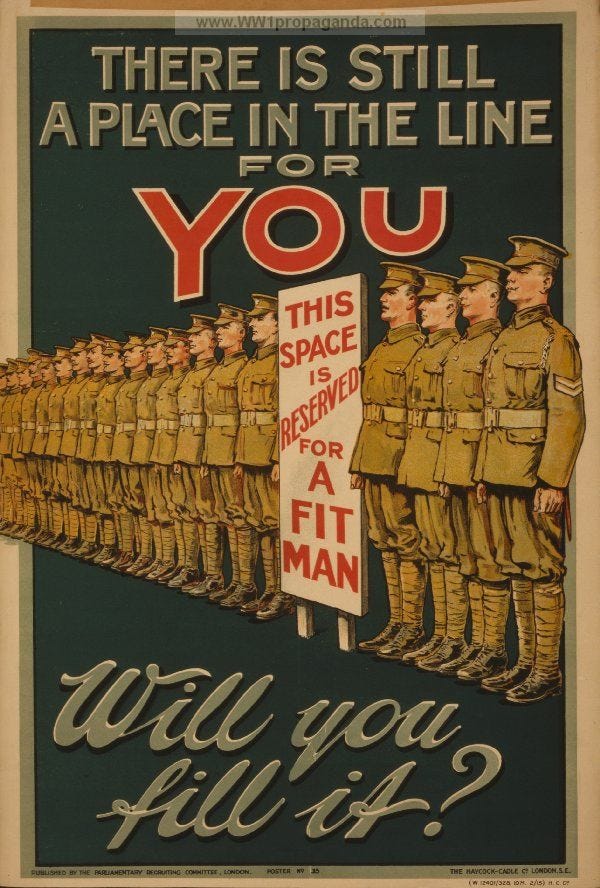
There is a class of work that civilization absolutely depends on. It has generally been invisible to those who don’t actually study the field, or do the jobs within it. Oh, normal people know it exists, but they almost never know anything about the day-in-day-out realities of the job.
The first time in living memory that the American public got a glimpse of how this work is actually done was in the late 1960s, and that glimpse was so disturbing that it fractured the consciousness of the entire country. The powers that be made sure that this work would thereafter be kept carefully behind a veil of careful editing, censorship, and silence.
They were so successful that it took several generations for anything like general access to this work to happen again, and in the meantime the United States had changed so much that even those who might once have known what was truly involved in this work—even those who officially work in this industry—often are impressively insulated from the work itself.
It’s one of the oldest forms of work, and it’s easily the ugliest, but it solves a persistent problem that occurs everywhere, in all cultures, throughout history.
The work goes by many names, because it happens in many contexts, but the actual job boils down to attending to one simple, ugly fact:
Some people have to be killed.
And they have to be killed for your benefit.
The Blood On Your Hands
Killed? I hear you say. Surely not! You’re talking about criminals, right? We don’t have to kill them. That’s why we have prisons—so we can keep them alive while protecting the rest of us.
Yes, it is. And people who go into prisons are removed from life for a while. Maybe they don’t come out again, either because they’re killed in prison or because they have a life sentence. But we do have a prison system that is so brutal, and so brutalizing, that it would often be kinder to simply shoot people in the head instead of throwing them in a cage—and the people who commit crimes know this, which is why they are so often willing to risk death-by-cop to avoid arrest on a serious charge.
But even if you remove from this category all but the most violent criminals, the fact remains:
Some people have to be killed.
In the 21st century WEIRD world, we are squeamish about violence. We’ve been taught, from a young age, that we must play nice so that we can continue to have nice things. Other people have a right to live, just as much as we do. In some circles, it’s not even politic to stand up for yourself—the only time you can get away with unpleasantness or violence is if you stand up for other people, and only then if those other people are part of a protected class.
But even if you take away the political angle, the fact remains that we have grown a deep aversion to violence in all forms outside of entertainment, and the idea that some people have to be beaten, brutalized, or killed—that it might even be a good thing to do these things from time to time—is horrific, uncomfortable, and feels like it just might be evil.
It’s ghoulish to rejoice in the death of someone, even someone we don’t like. It’s horrible to decide that the world might be better off without some people. No matter what side of the various cultural or political divides in our society you sit on, I am confident that you can come up with a hundreds—or thousands—of ugly-hearted social media posts celebrating the death of one or another recent public victim of violence (whether that death came at the hands of an assassin, or a cop, or a criminal, or a situational vigilante).
One of the most widely agreed-upon rules of decorum in our society is that we do not celebrate these things. We agree on this because we don’t want these things to happen, and we don’t want to reward them when they do happen. We agree on it because we like to think that every life is sacred, and every death is a tragedy.
We like to think this because it makes us feel good. It makes us feel safe. It makes us feel moral.
And it lets us look away from a deeper, even uglier truth that kept men in power (and women out of power) for thousands of years.
It’s the truth that combat veterans know, but won’t talk about.
It’s what cops know, and the reason why cops’ wives so often leave them.2
It’s the truth that we carefully hide from children, lest they grow up broken.
It’s the truth usually reserved for those who are responsible for meeting it, and hidden from everyone else.
But even as the franchise has expanded from a subsection of men to all men and all women (as well as a great number of dead people and non-citizens), somewhere along the line we tacitly decided to hide that ugly truth from everyone, instead of just from women and children.
But we’re all adults here, and we can all vote, so we are all responsible for it. Therefore, here is the truth that defines the world:
Every good thing that exists in the human world—every single good thing without exception—exists, persists, endures, and is maintained through the judicious, constant, and ruthless application of violence.
I live cheek-by-jowl with several species of large predators, but they usually don’t bother me. My neighbor’s great-grandfather, who lived here when the population density was less than one person every ten square miles, was not so lucky. His generation drove the wolves and the grizzlies and the cougars almost to extinction, because it was the only way their families could live in peace. The fearfulness these men instilled in the surviving animals stayed with their germline, and their descendents remain fearful to this day, even when they have superior numbers and a raging hunger. As a result, I can keep them all at bay with a dog, big arm movements, and some loud noises.

I didn’t have to watch that slaughter. I read about it in history books when I was in Jr. High, and thought (as we all did), “What a terrible thing! All those animals wiped out, and for what? So some railroad/miners/loggers could make money?”
The taming of the American West was full of episodes like that, just as it was full of episodes of the wholesale slaughter of aboriginal tribes, and for exactly the same reason. The tribes of the American West were sophisticated societies, but they weren’t gentle in the ways that the tribes of Appalachia and the East Coast were. They were complex, hierarchical societies complete with caste systems, aristocracies, and warrior codes. Many (though not all) were high-violence slave-trading cultures that raided settlers, raided each other, waged brutal wars and tortured and/or sexually enslaved captives for entertainment—and in this way they weren’t all that different from most other cultures, in most other places and times in world history (including a lot of the European and American settlers that were invading their territory).
If you’re reading this somewhere east of the Mississippi, you’re the beneficiary of the work of men who lived 4-6 generations ago who realized that, for their families and friends to survive, some people had to be killed.
The bubble of safety you live in exists entirely because someone else took it into their hands to kill people that would compromise it. It continues to exist because men with guns (and fists, and knives, and baseball bats) are willing to enforce it. Those men may stand a post on a frontier, they may chase the Sineloa through the desert, they may patrol your streets, or they may be neighbors who are quietly armed and who come out at night when they notice someone sniffing at your bedroom window.
And it’s not just the death of other people you depend on. The food you eat exists because someone decided that they would rather feed you than keep their animals alive (don’t think you get a pass if you’re a vegan—vegetable farming kills far more animal life3 than does animal agriculture).
This blood is on your hands. It sustains your body. It secures your home. Get used to the scent, and the ruddy hue, because you’re in the thick of it. You wanted the power you have. You wanted to have a voice, and a choice, and that means that—be you man or woman, young or old, any race or faith at all—you are bathing in the blood of other people and other animals. You have killed—at least by proxy—and you will keep killing until your dying day.
So open your eyes, and see what you’ve done.
You don’t get to look away.
An Unblinking Stare
The difference between a peaceful, freedom-filled society and a repressive, crime-ridden one is not found in the presence or absence of violence, it’s found in the answer to this question:
Who needs to be killed, and why?
If you’re reading this, I’m assuming you’re a grown-up.
That probably means you’re also a voter.
If you are, then you wield political power (however small). Every time you cast a vote you are dictating how you want violence to be used, and against whom. If you pick up a ballot, you don’t get to pretend ignorance. You don’t get to look away. That piece of paper with the bubbles and check boxes is a weapon, and it deals in deadly force.
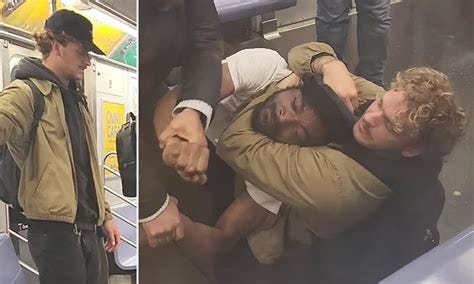
Do you want to walk down the street in safety? You better hope you’re surrounded by people who will kill to make it happen. And you’d better hope they’ll do it even if it risks their freedom, or their lives
Do you want secure borders? Then you want babies and children to die—because if you secure the borders, they will. Some will die in transit to clandestine crossing points that are dangerous. Some will die of exposure when their parents scatter to avoid the border patrol and they get lost in the confusion. Some will die in violence south of the border because they couldn’t find safety in the US.
Do you want to be protected from invasion? Do you want your supply chains, your “way of life,” your national allies, or your sentimental compatriots (such as the Iranian protesters) to be protected and secure? Then you are content to see people enslaved, women raped, civilians slaughtered (including children), entire species extinguished, and environments razed—because that’s what it takes to do these things. These things require war on scales grand and small. That is what war is, and that is what war does, and anyone who tells you differently is lying.
If you want these things, then these are the people that have to be killed.
This is how the world works.
From the meanest bacterium to the grandest animal, every single living thing4 survives on the death of other living things.
Your safety and lifestyle depends on violence, ruthlessly applied, to exclude from your sphere those who would do you harm.
And if you are not willing to use violence to secure your life, then those who want your possessions, or your body, or your land, or your wealth, or your family, or your life will take them from you.
If you’re not willing to use violence to support your body, you will starve.
If you’re not willing to use violence in your own doorway, you will lose your home.
If you’re not willing to use it in your community, you will lose the safety of your streets.
If you’re not willing to use it in your country, you will be invaded.
If you’re not willing to use it in war, your culture will eventually cease to exist.
And the good things of your world will pass away, and your world will be replaced by another, one filled with people who are willing to kill, and you’ll know it.
Because one of the people they were willing to kill was you.
The skill set later stood me in good sense during a period of thin work, when I could buy animals from a farmer in the area at spot price (which is usually about 1/3rd of what you pay at the grocery store) and put in the unpleasant work of turning them into food.
Well, the second reason. The most common reason for cops to get divorced is because they’re abusive at home, but domestic abuse among police is often downstream of the burden of living with this truth and not being able to share it with their spouses.
Rodents and other small mammals, birds, and insects who are killed through the cycle of tillage/planting/harvest and with all the pesticides used throughout the process.
Except perhaps for some of the species that live around hydrothermal vents in the deep ocean, and some very primitive forms of bacteria.
Source: Unfolding The World


Comments
Post a Comment